
Kent History Postgraduates plus Gloucester
Interest in the Canterbury Medieval Weekend is growing, and we now have fliers at museums, libraries and exhibition centres in many parts of Kent. If you haven’t yet investigated the programme, which covers events from Friday 1 May to Sunday 3 May 2026 at the University of Kent campus in Canterbury, please do have a look at Canterbury Medieval Weekend 2026 to see our wide range of great speakers and fascinating topics.
However, more on the Weekend in the New Year and for now I want to report on two events that took place since the last blog before I offer a round-up of events early next year. This means I’m delighted to report that the Kent History Postgraduates group has reformed, and it held its first meeting at Kent earlier this month, while secondly Kieron Hoyle and I were in Gloucester last Saturday to commemorate Peter Hobbs, a long-standing and greatly missed friend of Kent history and archaeology.
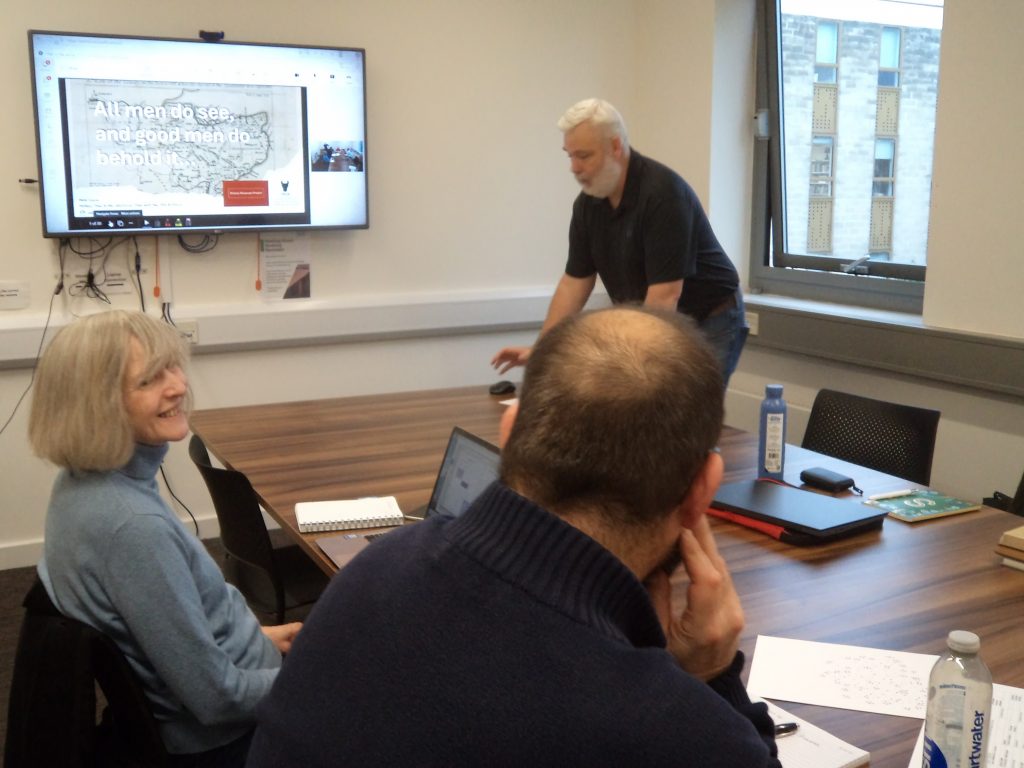
Turning to the KHP group meeting, the presentation last Wednesday was given by Peter Joyce whom hopefully many of you will know from the Medway History Showcase. Peter is researching charity in Elizabethan times, with special reference to the lower Medway Valley, and he is therefore investigating contemporary benefactors and beneficiaries. To understand more about the beneficiaries, he is examining documentary sources relating to poverty and the poor, which includes matters concerning criminality. For the purposes of his presentation, he focused on Kent’s very good records from the county quarter sessions of this period, being keen to demonstrate how they are providing him with insights into such matters as the geographical spread of those indicted for specific offences, as well as ideas about occupation, gender, conviction rates and punishment that he can then set within the context of the socioeconomic conditions pertaining to the lower Medway in relation to Kent more broadly.
Consequently, he took his audience through the analytical methods he is using before offering some of his findings and how he is seeking to deploy these within the chapter which he is currently writing on criminality in the period. For he is interested to bring this into dialogue with such matters as periods of dearth and disease outbreaks, in addition to national political responses regarding the growing vagrancy legislation to explore levels of correlation for different topics. As he said, he is dealing with an extremely large dataset, which, of course, in some ways is excellent, but does need to be handled careful to try to ensure his analysis is as robust as possible. Nevertheless, even with such caveats, Peter feels he has found a major opportunity to provide a much clearer picture of how different groups within Elizabethan Kent were operating and responding to local, regional and national conditions, including central government directives – the interplay between micro and macro.
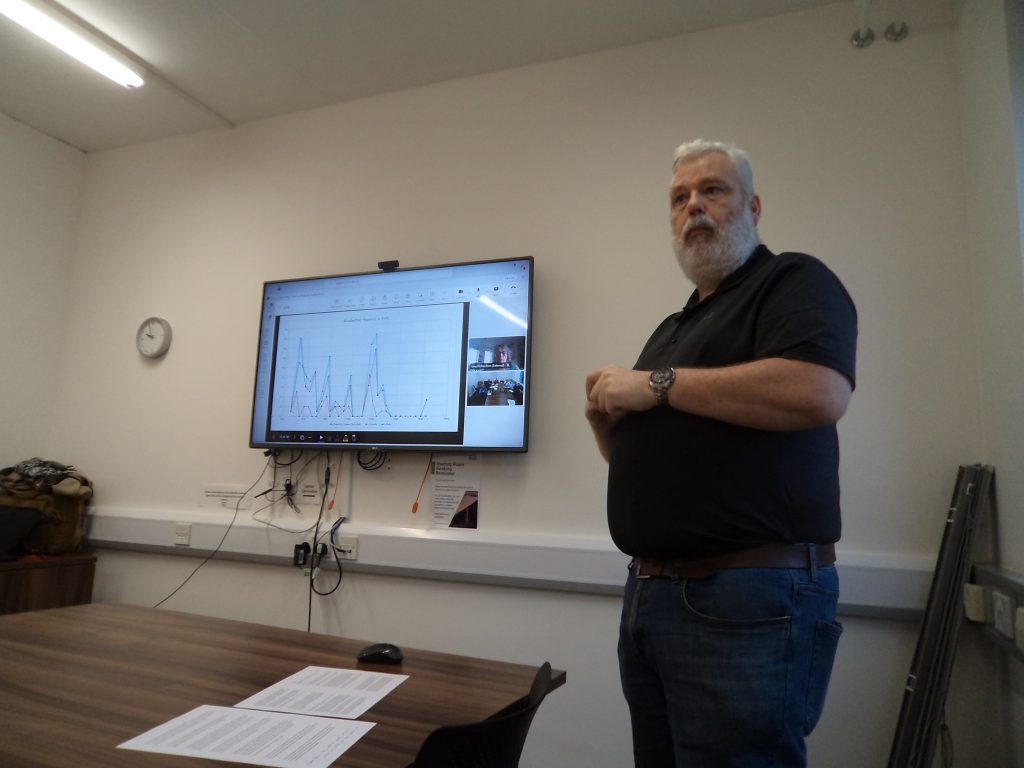
Peter’s thought-provoking presentation was greatly appreciated, drawing all those in the room and online into the subsequent discussion. For there are some interesting parallels between his findings and the research on the same period in different avenues being undertaken by others in the group. Consequently, people were extremely keen to discuss both his analytical approaches, including network analysis, and the results of his research. This meant, as has happened very often in the past, most of the group headed to the Gulb. to continue the discussion over coffee – a good result! And we will be staying with the same historical period next month when the presentation will be given by Jason Mazzocchi before going late medieval for February and March when we will be hearing first from Angela Broomfield and then Christine Brandl.
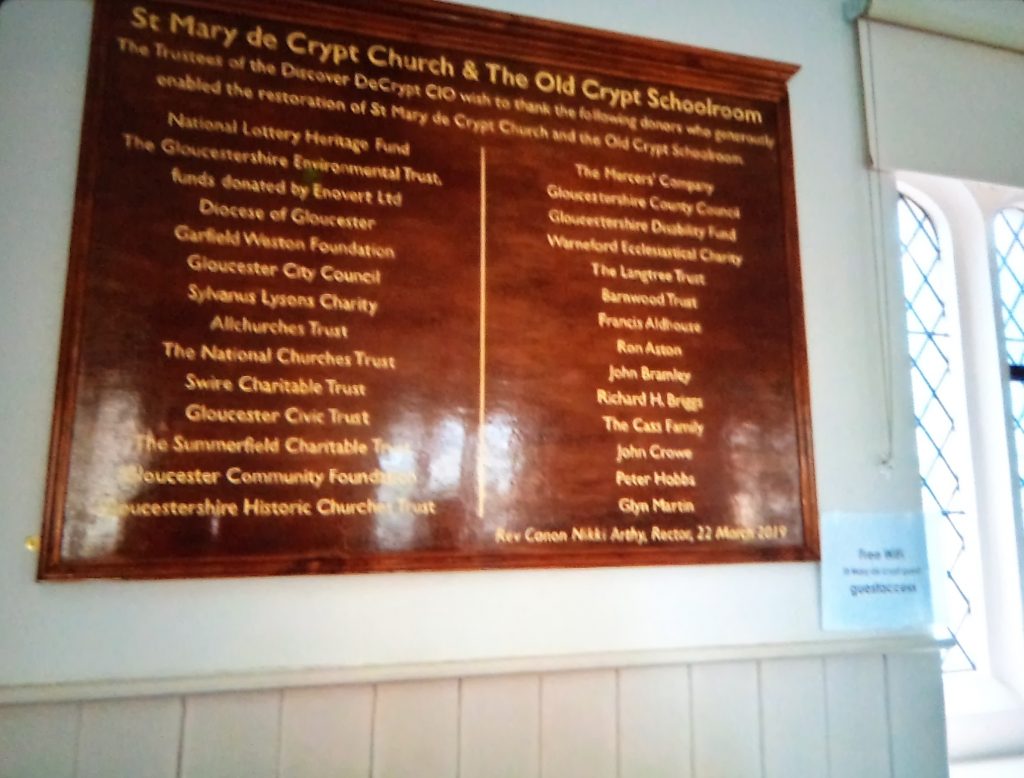
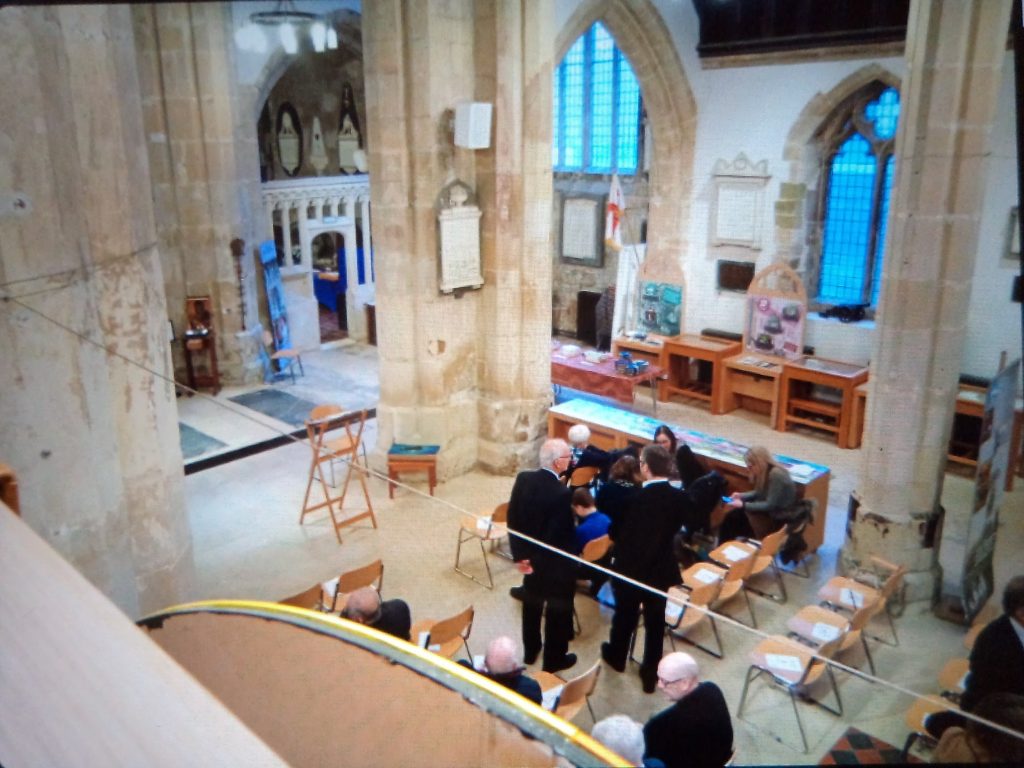
Even though my next event did not take place in Kent and focused on Peter Hobbs’ long-time involvement with the Crypt School at Gloucester, it is pertinent to the KCHH blog. On Saturday 6 December there was a memorial service for Peter in the Gloucester church of St Mary de Crypt at which were gathered Peter’s daughter and grandson, his brother and a strong contingent of Old Cryptians, including the current president of the Old Cryptians’ Club. Also present at the service was the school’s headmaster and other members of staff, and Kent was represented by amongst others Kieron Hoyle and me.
Now you may be wondering what this has to do with us, and the answer is that I had known Peter for several decades, beginning when he first moved to Kent having bought Old St Albans Court at Nonington. In addition to having a considerable interest in the history and archaeology of his house and grounds – the early Hammonds leased the ‘manor’ from St Albans Abbey – when the CKHH came into being and we held our first History Weekend; he was an active supporter.
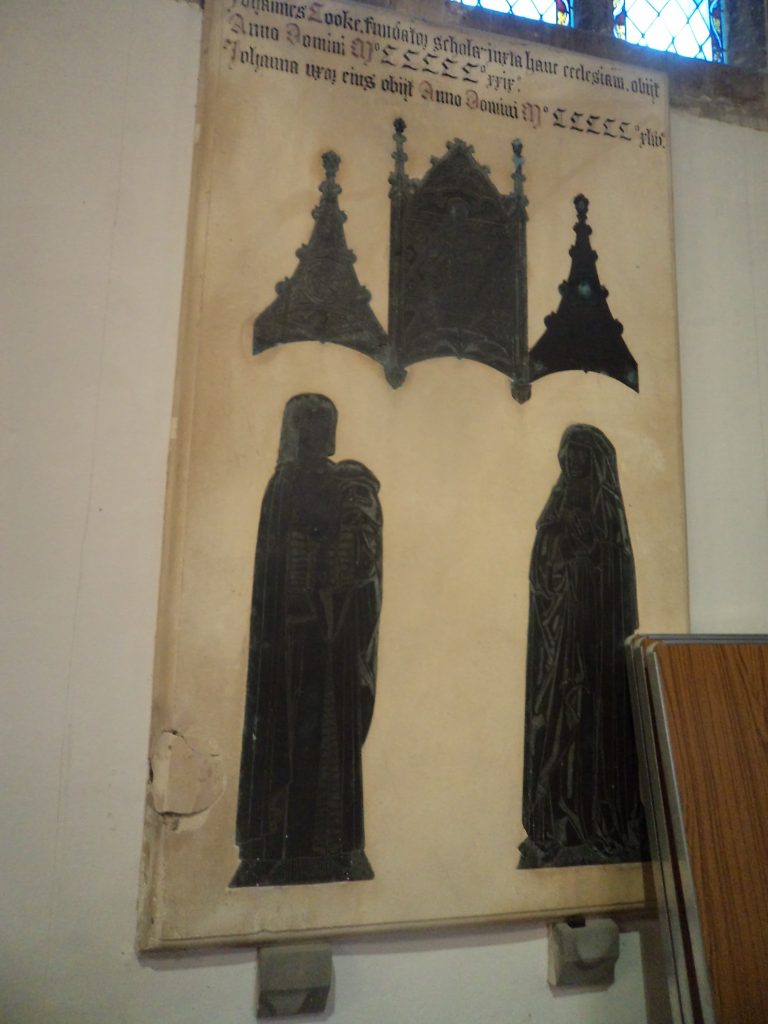
From this developed a funded MA by Research into the foundation and early development of the Crypt School because even though there had been an earlier history, Peter felt there was far more to be investigated. He was right and this study was conducted by Kieron, and while not wishing to spoil things, she was able to prove that while John and Joan Cooke were indeed the founders, the previous emphasis on John needs redressing in favour of his wife and then as his widow. For as a powerful woman it was her single-minded drive and foresight against considerable odds that drove the school project to a successful conclusion in late Henrician Gloucester. As a result, Kieron and Peter had been turning her MA thesis into a book, and it was pretty well complete and ready to go to the printers when he died. Even though Peter did not see a copy of the finished book, his daughter will see it through, and it will be another fitting tribute to his dedication to Gloucester and the school he cared about passionately, a link between two cathedral cities through education then and now.
To finish, I thought I would draw your attention to three upcoming events in February 2026. Firstly, although I don’t yet have booking information, which hopefully will soon be on the CAMEMS website, here is the description of the study day, entitled ‘Exploring Kent’s History: documents, maps and other sources’, which will take place on Saturday 14th in the University of Kent’s Special Collections and Archives, starting at 10.30am. So “Join us for a study day to explore a range of sources, from pictorial maps to textual indentures, as well as examining the early development of antiquarian scholarship beginning in the Tudor period with William Lambarde’s Perambulation of Kent. Through a series of workshops, we will investigate how historians assess and employ such sources in their own research into the county’s history. The day is designed to appeal to those new to studying regional history and those with some experience – together we will explore ideas about researching and writing about Kent’s past.” Like the Canterbury Medieval Weekend 2026, any income after costs will go towards CAMEMS bursaries for postgraduates studying at MEMS.
Moving into the city, the next event chronologically will be on Thursday 19th February at the Beerling Hall for an evening organised by Professor Jackie Eales in association with the Saint Peter’s Residents Association. Entitled ‘From Dominican Friary to Secular Uses: Canterbury’s ‘Blackfriars’ Buildings Through the Ages’, the likelihood is that there will be 4 short talks, probably kicking off with mine on ‘Supporting the friars: the Dominican Friary in late medieval Canterbury’, other speakers to include Clive Bowley and Jackie herself. Once I have confirmation of the programme, timing and other details, I’ll let you know, but please if this too sounds interesting do hold the date.
Finally for February in terms of another special history event in Canterbury, the Kent Archives and Local History Service on Tuesday 24th will be hosting a lecture by Dr Barrie Cook on ‘The coin hoards of medieval Kent 1180–1560’ at the Westgate Hall. The lecture will start at 6.30pm and Dr Cook will explore the 24 recorded medieval hoards from across the county. He will be examining the collections he personally catalogued while he was curator of medieval and early modern coins at the British Museum, as well as earlier finds, placing them within their local settings and wider national context. If this sounds of interest, tickets at £10 each can be booked by emailing [email protected] with the number required and a contact phone number.
Just to say, the last KCHH blog for 2025 will come out in a fortnight’s time as the usual top ten of the year. I must admit I had hesitated about whether to do this because it has been something of a tricky year. However, as well as the lows we have had some high points so on balance please do look out for it in the run-up to Christmas Day.
Categories
academic Blog Posts Canterbury Early Modern Events Kent Lecture local and regional history NewsHome