
Nightingale Lecture 26 plus
Having just received this very sad news, I want to pass it on to readers of the KCHH blog because Prof. Paul Bennett was such a great person in so many ways and a stalwart of the many events undertaken by first CKHH and more latterly KCHH. I appreciate he will not be known to some of you but his knowledge of Canterbury’s history and archaeology and of many other places in Kent and beyond was enormous, and one might even say legendary. Moreover, he was generous to a fault and loved any opportunity to provide audiences with insights into past societies, whether that was medieval Canterbury or classical North Africa. He will be sorely missed!!


These last two weeks have been very busy with lots of exciting events in Canterbury and Maidstone. Consequently, I’m hoping to get this blog out later today (Wednesday) with another at the weekend. Furthermore, it is great to be able to report that I now have all my speakers for Tudors and Stuarts 2027, which will be from Friday 30 April to Sunday 2 May, please do save these dates!
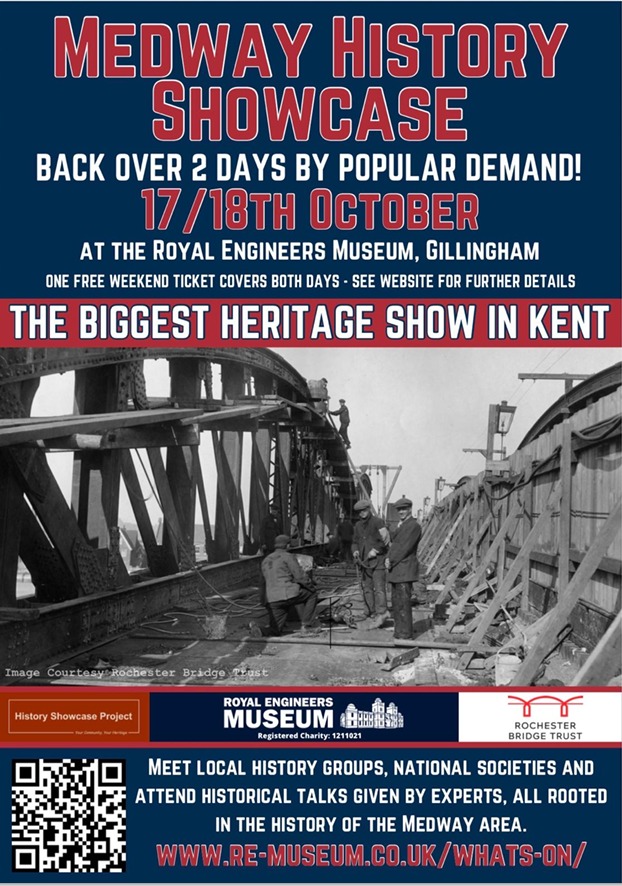
Before I come to reports on the first two events, please do note that the Medway History Showcase in 2026 at the Royal Engineers Museum, Gillingham will be on 17 and 18 October. Members of the Kent History Postgraduates will be there as usual with a stall, as well as contributing to the programme of talks that has been compiled by the organisers, Peter and Jane Joyce. Among the speakers this year will be: Dr Jack Newman – Marian burnings in Maidstone; Laura Dix – The Huguenots and their legacy and Lt Cdr Small – Fort Bridgewoods.
Additionally, last week there was the monthly online meeting of the wills group, a volunteer group whose members come from across Kent and over the border into East Sussex, that is continuing to work on the probate materials (c. 1400 – c. 1600) from parishes in Kent within the Rother Levels. As usual we had some good discussions with two of the main topics being how we can harness AI, especially concerning the group’s transcripts of inventories, to help with the analysis of these documents concerning the communities they highlight. The second topic to mention here is the exciting work as a spin-off on the Tenterden Custumal, a project that will bring this fascinating manuscript and associated documents to a much wider audience than so far, thereby providing far-reaching educational and heritage opportunities for Tenterden and Kent more broadly.
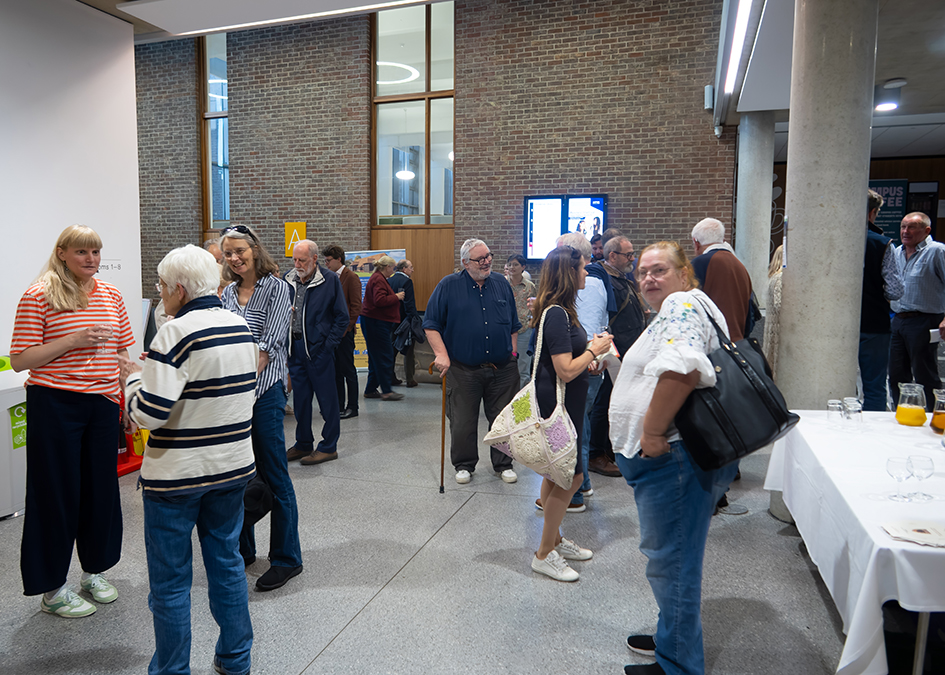
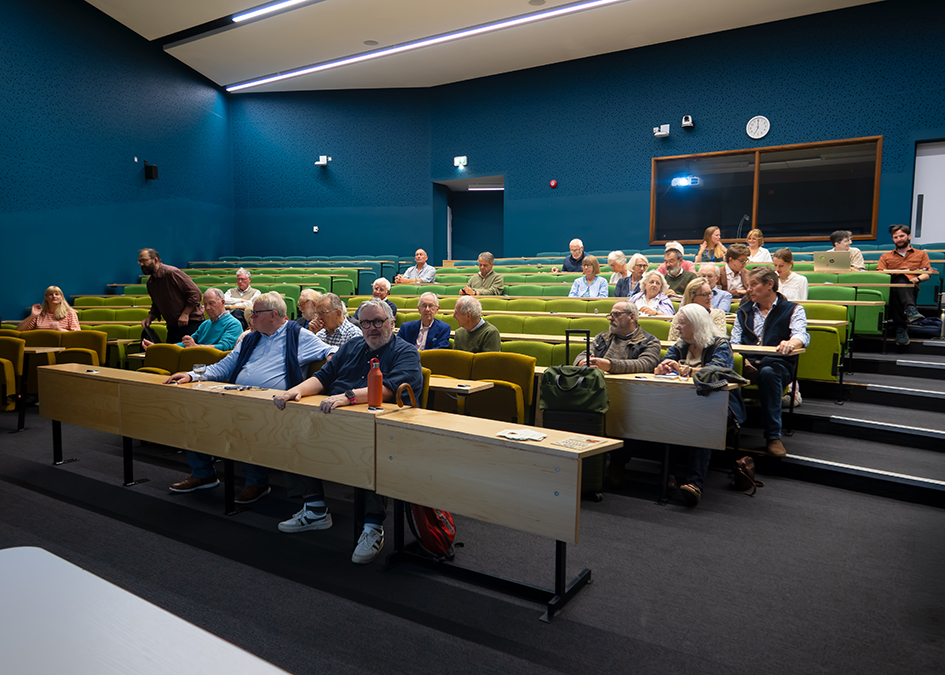
So to the first of my two events and I’m going to reverse the chronological order in that I’ll concentrate on the Michael Nightingale Memorial Lecture which took place yesterday (Tuesday) evening, with a short piece at the end on my talk last week for the Kent Archives at Maidstone as part of their ‘lunchtime talks’ series. Back to the Nightingale Lecture, and it was great to welcome an excited audience of Kent MEMS staff, postgraduates and friends, as well as CAMEMS trustees, trustees and staff from Brook Rural Museum, and members of the public to first the wine reception (sponsored by CAMEMS – many thanks) and then Professor Mark Bailey’s Nightingale Lecture in the Templeman Library.
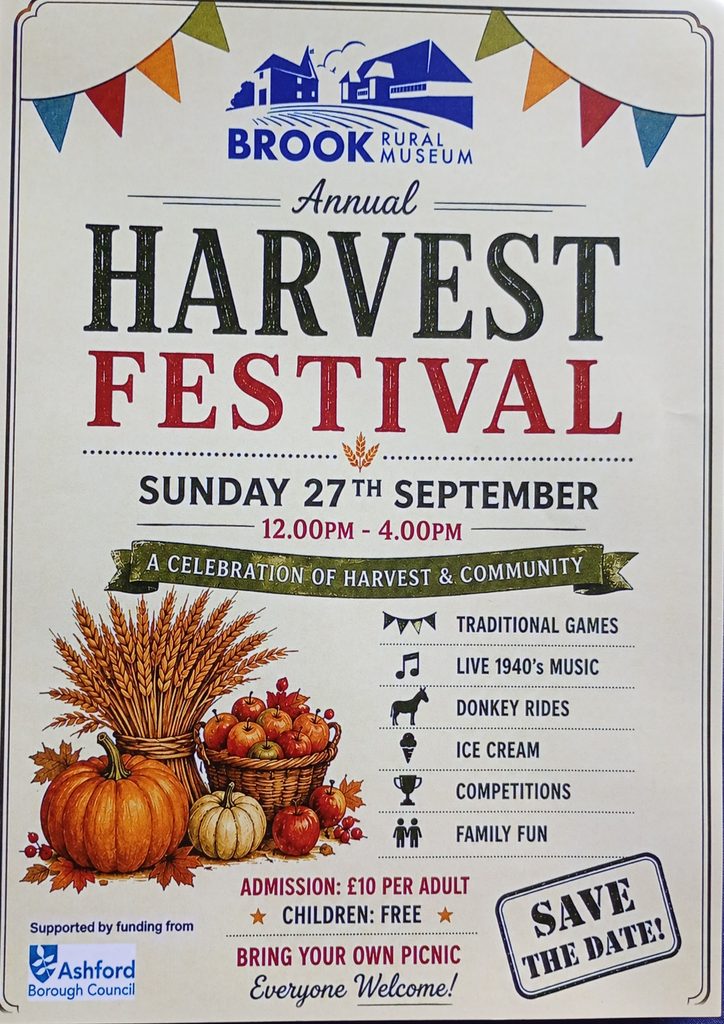
As is customary at the Lecture, having opened the proceedings, I passed the baton (mic) to Professor John Nightingale, the chairman of the Museum’s trustees, to say something about the pivotal role his father had in the setting up and organising of Brook Rural Museum in the late 14th-century aisled barn and splendid round oast house with its collection of horse-drawn agricultural equipment, small tools and early M-F tractor. As John said, if you haven’t been to the Museum, do think about going, albeit this weekend is the last time it will be open until the spring next year. However, this Sunday marks the Harvest Festival, which is a great opportunity to experience the Museum, as well as visit the church next door with its fabulous medieval wall paintings.
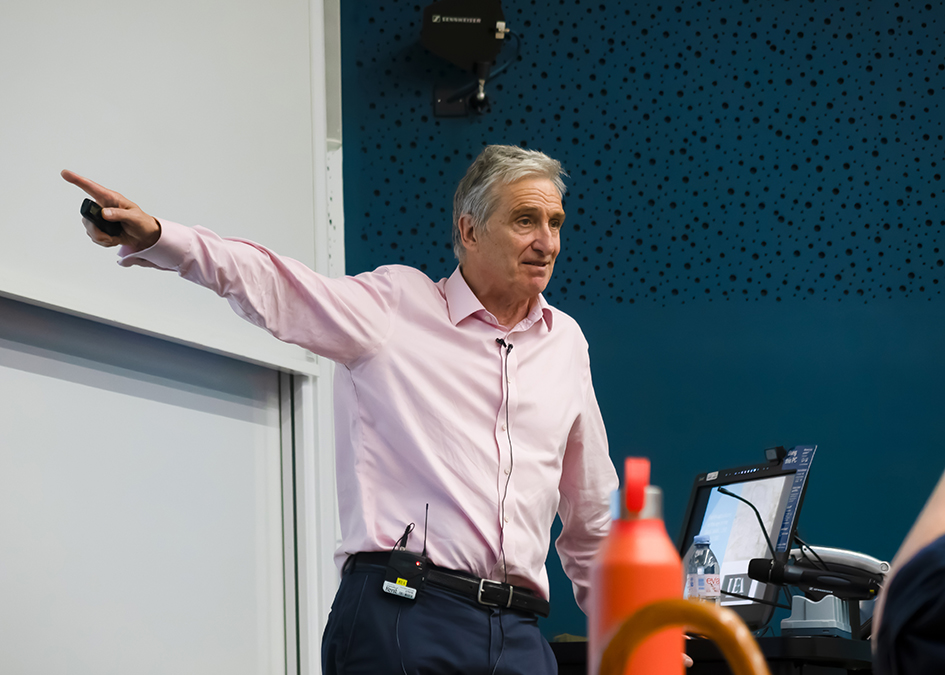
Now to Mark’s lecture and he started by outlining just how catastrophic the Black Death had been, especially bearing in mind the subsequent very high mortality from plague in 1361 and the further outbreaks that continued at least once per decade throughout the 15th century and beyond. Nor was high mortality the only issue that contemporaries had to contend with in the 3rd quarter of the 14th century because climatic factors were similarly catastrophic – by turns exceptionally cold, wet and hot, while livestock mortality was also an issue. Taken together with a bullion crisis, it is perhaps hardly surprising that the middle decades of the 15th century witnessed the deepest economic depression, known to historians as ‘the great slump’.
Yet, as Mark pointed out, for the survivors GDP per head went up, ‘ordinary’ people had money to spend as real wages rose and there was a distinct fall in the number of landless as well as the disappearance of serfdom as money rents replaced labour services. He then outlined what people spent their money on – better and more varied food, including more protein whether meat and/or higher quality grains, which was in part fuelled by the shift from arable to pasture. Moreover, in talking of fuel, consumption of that also increased – it was colder, also better and more varied clothing (hence the sumptuary laws), more household goods, more substantial housing and more on religion – see the number of parochial new west towers, for example. What I also found interesting is that archaeology is showing that cattle bones were heavier, thus it was not only the surviving human population that was better fed but the cattle too.
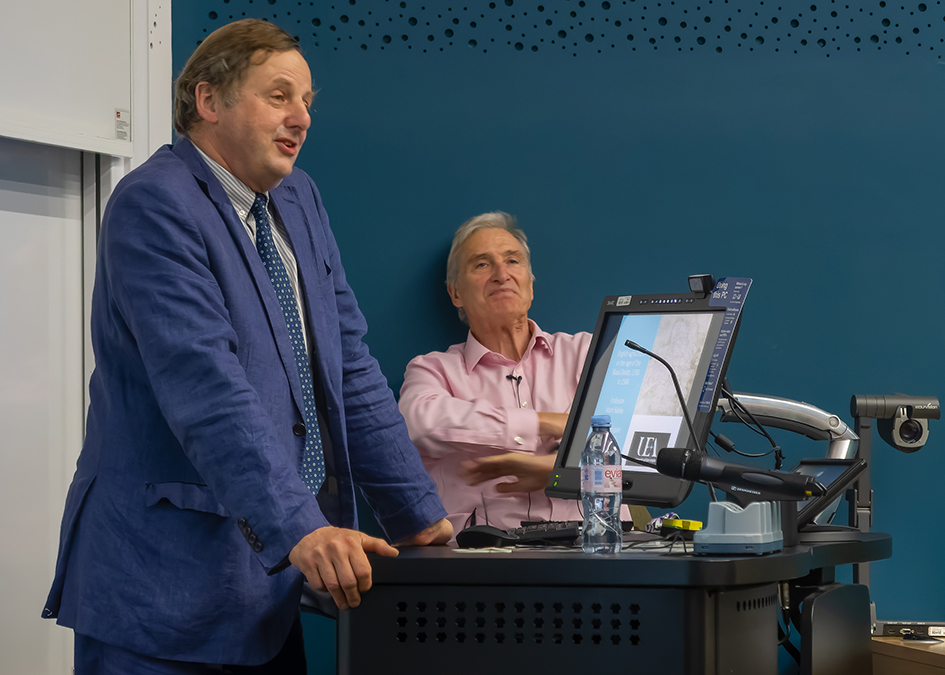
Mark also discussed changes in rabbit production, including the shift to commercialization and the massive growth in rabbits – as meat and fur for the London market. This idea of commoditization he sees as key to the shift to modernity and that this needs to be seen as a factor in this post-Black Death period. Alongside this the importance of the land market, the growth in the size of farms and changes in the way farmers described themselves, as well as increased literacy and the role of these yeomen in the running of their communities. Additionally, and this might be seen as especially pertinent in the counties surrounding London, the interchanges and networks between those from the capital and those from Kent, for example, including purchasing manors and building substantial houses.
An interesting comparison Mark drew out was the very different experience of this post-Black Death world between England and Egypt, in large part due to the catastrophic problems affecting the Nile and thus Egyptian agriculture. Although not nearly as extreme, he similarly highlighted the different experiences of north-west European compared to a number of Mediterranean countries, that is the differences between the two regions and within each.
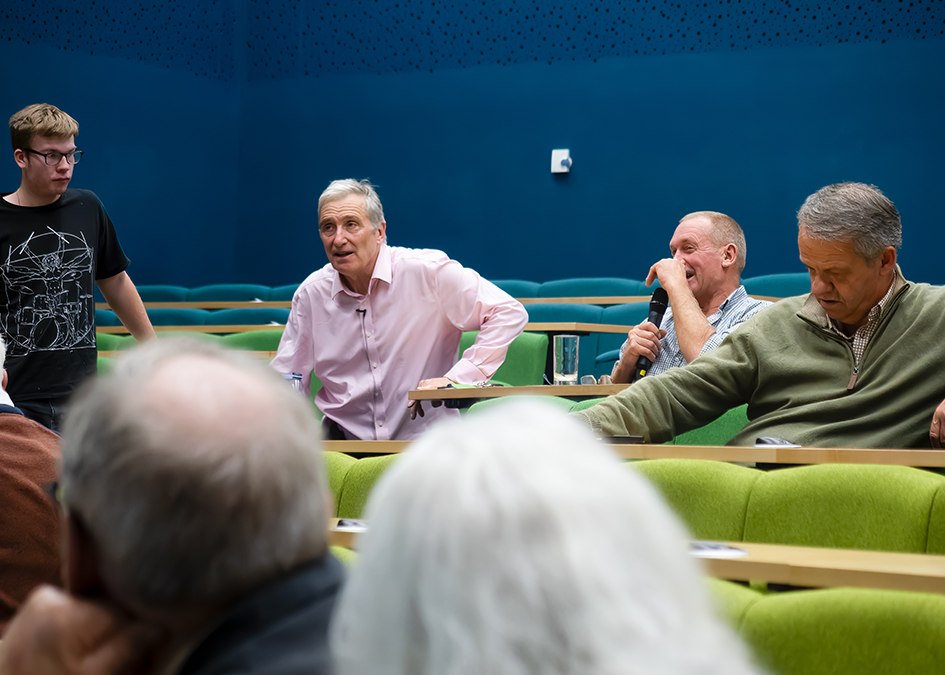
This fascinating exploration of the period generated a wide range of questions to Mark and after the lecture others came to discuss matters with him too. Consequently, you could tell from Robert Pay’s vote of thanks that it had been a very successful evening. Robert, as the chairman of CAMEMS also drew the audience’s attention to the work of this charity and how it is supporting both taught MA and doctoral students within Kent MEMS. So thanks John and Robert, and most particularly Mark for making it an evening to remember!
Turning finally to the lunchtime talk for Kent Archives, we were in Sessions House because that can accommodate a larger audience than the Kent History and Library Centre. Before looking specifically at Kent’s medieval hospitals, we explored briefly images of the Last Judgment and Seven Works of Mercy as seen in many parish churches to consider links between medieval charity and the role of the hospital for both benefactors and beneficiaries. For, as I pointed out, saving souls was given a higher priority than saving bodies, while at the same time being aware that ideas about the common weal and the body politic were also part of medieval culture.
Having in a sense set the scene and then looked at what might be envisaged as the ‘classic’ hospital layout, we considered whether Kent’s hospitals did or did not conform and the reasons for the variation seen in the county. Added to this, we looked at changes in hospital layouts over time and the high proportion of urban hospitals, a product in part of the high number of Cinque Ports in the county. In turn, this took us to an exploration more broadly of the location of these hospitals across medieval Kent, as well as the significance of patronage, especially episcopal and civic.
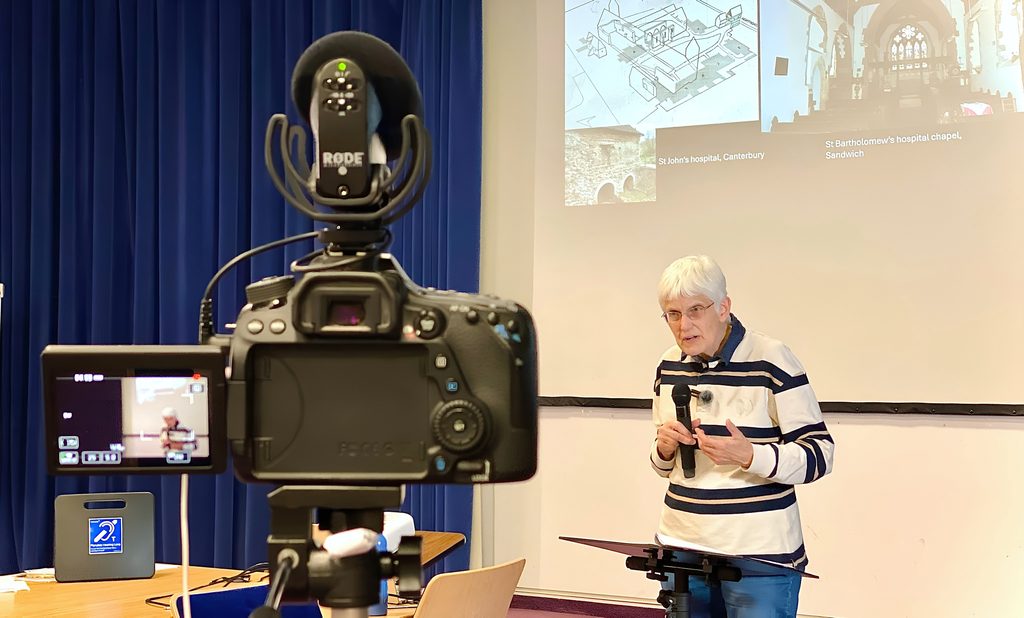
With this as context, I then explored the 4 types of hospital based on those housed: leper hospitals, for the poor and infirm, for poor pilgrims and the two types of later medieval almshouse – the well-endowed and the ‘maisondieu’ type. This meant using examples from across the county – from Rochester and Dartford to Sandwich and Dover because Kent had a larger number of hospitals compared to most counties. Moreover, as part of this I showed how there had been significant adjustments for the brothers and sisters in the late Middle Ages, some of which were in a sense echoed in Mark’s lecture such as better food, the move away from dormitories to separate accommodation, the incidence of corrodians and the greater emphasis on such features as chantries.
To conclude, I looked at the situation in early Tudor times and the impact of the Reformation, and that while there were losses, a large proportion of the county’s hospitals survived. Furthermore, if they are examined across the long 16th century, it is feasible to see continuity as being more important than change. Altogether, this generated a good number of questions, and the talk was seemingly enjoyed by the audience, thereby making it a successful occasion, so thanks to Dr Mark Bateson from Kent Archives for organising it.
Categories
academic Blog Posts Canterbury Events Heritage Kent Lecture Middle Ages NewsHome