

Richard Eales plus the new generation of medievalists
Next week will bring Paul Bennett’s memorial service in Canterbury Cathedral’s Western Crypt on Wednesday 2nd December which will be a further occasion to remember Paul’s very great contribution in so many different ways to history and archaeology of Kent and far beyond the county.
However, I’ll save that for next time and today I want to remember Richard Eales and I’ll do that using Jackie’s article for the Kentish Gazette with some extra comments that have come in from some of his students at the University of Kent and CCCU. From Jackie’s article: “Richard Eales died on 10 November 2026 just two days after his 77th birthday. He was a distinguished medieval historian and Chess Master, who lectured at Kent University for thirty years on a wide range of subjects from the Norman Conquest and the Angevin Empire to the Wars of the Roses. From an early age he developed a fascination for castles, both on and off the chess board. He was a Fellow of the Society of Antiquaries, the Representative for England for the Castle Studies Group and a Trustee of Canterbury Archaeological Trust.
Richard Geoffrey Eales was born on 8 November 1949 in Grappenhall, Cheshire and attended the King’s School Chester (1959-68). In 1968 he was awarded the Duke of Westminster Medal for the outstanding scholar of the year along with two other prizes for academic excellence and also won a scholarship to study History at Christ’s College, Cambridge University.
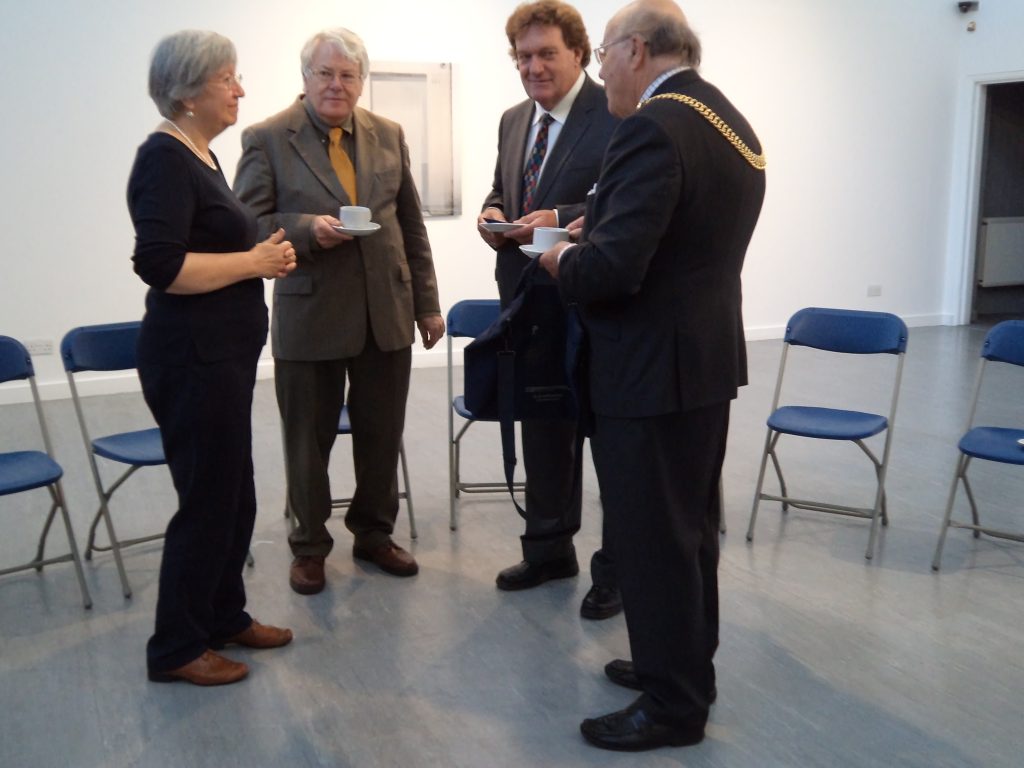
Richard developed an exceptional talent for chess at an early age. He won the British Under-16 Championship in 1966 and Under-21 Championship in 1969. He met his wife, Jackie, when they were both playing in the British Junior Chess Championships in Bristol in 1968 and they were married in 1992. While at Cambridge, he represented Cambridge in the annual Varsity Chess Matches against Oxford between 1970 and 1972 and came equal second in the 1970 British Championship. He also played for England and was awarded the title of Chess Master in 2002 by the international governing body of chess The Fédération Internationale des Échecs. In 1985 he published his most significant work on chess – Chess: The History of a Game (B. T. Batsford) telling the story of chess from its origins in the East to the emergence of modern international chess.
Richard was the acknowledged expert on both Norman Castles and medieval Kent, and his publications in these fields were important contributions to medieval studies. He wrote the Introduction to the Alecto Press Facsimile edition of Domesday Kent (1992) and the English Heritage Guide to Peveril Castle. He was a regular contributor to conferences on castles across the UK as well as in Ireland, Denmark, France, Germany and Poland. Richard travelled extensively to study historic fortifications in France and the Middle East including sites in Syria and Lebanon, which have since become inaccessible or seriously threatened.
He was a popular speaker for local societies across Kent and beyond, as well as being a university lecturer. After Cambridge, he taught at the University of East Anglia for two years and then moved to the University of Kent in 1976, where he later served as Head of History (1991-94), retiring in 2004. He subsequently taught in the History Department at Canterbury Christ Church University (2005-18) where his wife, Jackie, was a Professor.”
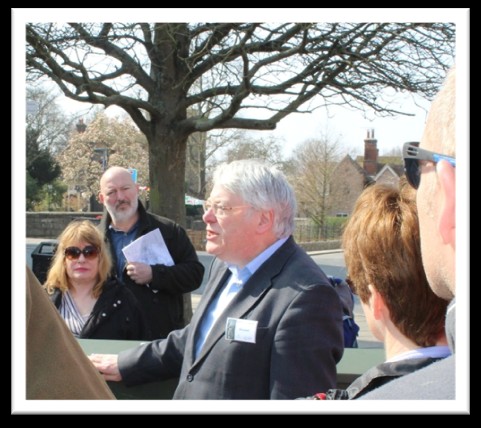
Turning to some tributes from his former students and starting at Kent: “Richard ran one of the modules on my BA course. He was a highly knowledgeable man. He used to go through the whole evening each week, no notes, just extemporising for the whole two or three hours – totally riveting, on topic throughout. One of the best tutors I came across at the University of Kent. He will be much missed.” Similarly remembered: “For an undergraduate, Richard Eales’ course ‘The Crusading Kingdom, 110-1187’ was invaluable for learning the importance of primary sources and of interrogating those sources, often line by line. He was a methodical, fair and committed teacher, and has left a lasting legacy.” He is also remembered by students at CCCU, including “I remember Richard as an extraordinary teacher, with a remarkable depth of knowledge and a gift for bringing the past vividly to life. He took over teaching us partway through our undergraduate course, but made the transition feel completely seamless. In his lectures on the French Revolution, he could draw us right into the period, while encouraging us to look beyond the obvious, ask better questions and keep widening our understanding. He was generous with his time and interested in what his students had to say; he challenged us because he believed we could think more deeply. I feel very fortunate to have been taught by him at Canterbury Christ Church, and I will remember him with great respect and affection.”
For the remainder this week, firstly a reminder that it is the Canterbury Expo this Saturday at the Westgate Hall between 10am and 4pm – lots of local society stalls, including us as the Canterbury History Weekends and CAMEMS, as well as a series of talks – do please come along if you can. Now to two reports: Sarah James’ extremely interesting lecture last week, and then this week Jack Newman’s presentation to the Kent History Postgraduates group.
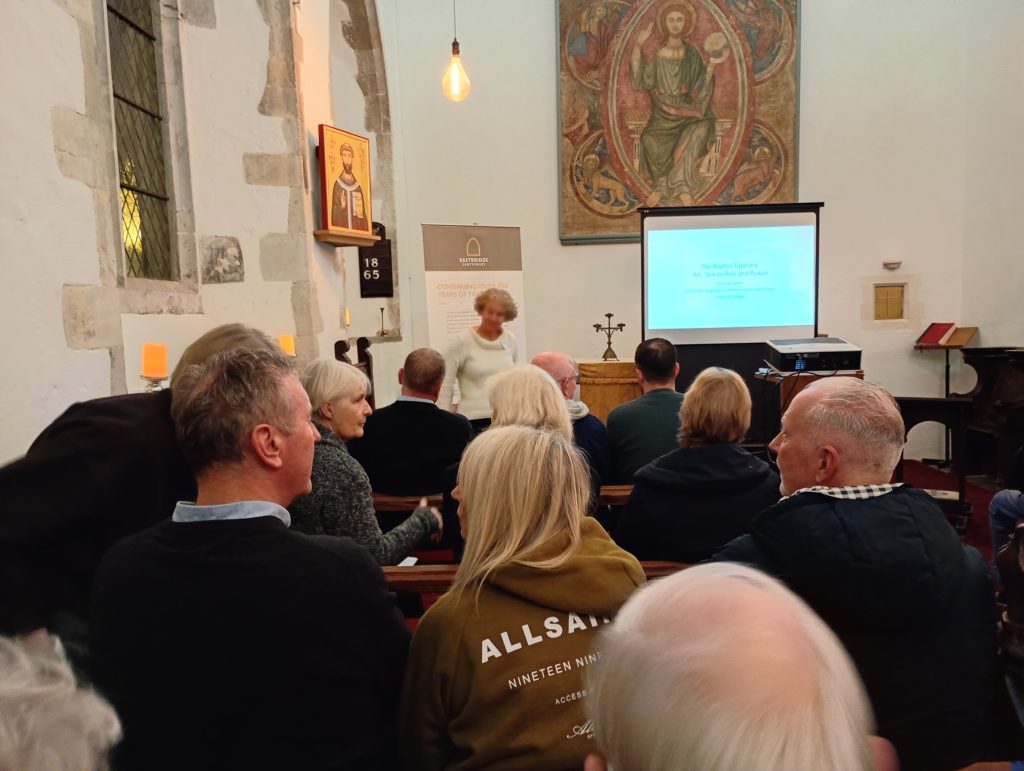
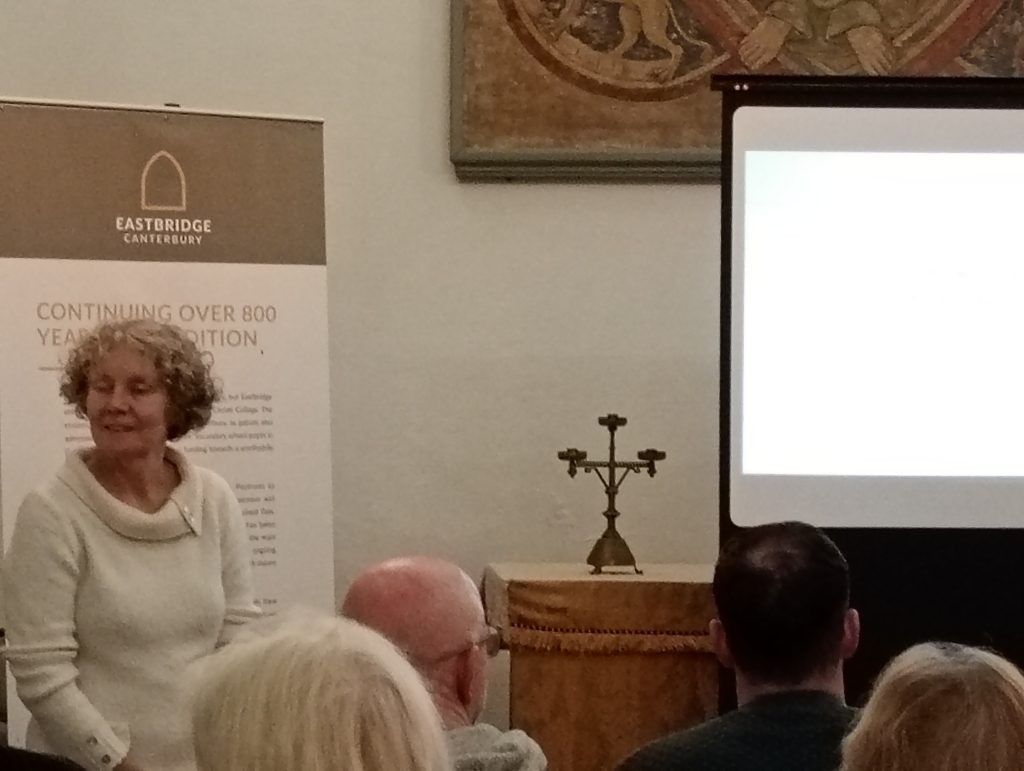
Starting with Sarah James, a lecturer at Imperial College University of London, her expectant audience of over 30 people had gathered in the fabulous Upper Chapel at Eastbridge Hospital to learn about the Bayeux Tapestry. To begin, Sarah considered what we can understand about the tapestry from its physical structure. For instance, she talked about its size, its composition, the dyes used, the placement of Latin captions, the different colours, how the Normans and English are shown, the use of costume and what we know about potentially similar contemporary hangings, all matters that relate to production and producers, consumption and audience. Yet, as she said, we know very little at all for sure about who, how, where, when, and for what purpose the Bayeux Tapestry was commissioned, planned, executed and displayed until the 15th century, when it was in the nave of Bayeux Cathedral, albeit she explored a number of possibilities which was very interesting. Similarly, matters relating to the 19th-century restoration of certain key areas, including the arrow in Harold’s eye, a factor that seemingly was not reported until the 12th century.
She next took us back to the events of 1065. For as she said, even though the battle of Hastings is an important element, the narrative displayed concerning the relationship between Duke William and Harold, as well as what King Edward was doing in terms of the English succession are crucial to the unfolding narrative because it is seemingly more than the victors constructing the history. Consequently, we followed Sarah as she took us through what might be called Harold’s story before we then came to William’s story in the events leading up to the invasion and subsequent battle, albeit originally, it had presumably concluded with William’s crowning at Westminster Abbey – the missing final section.
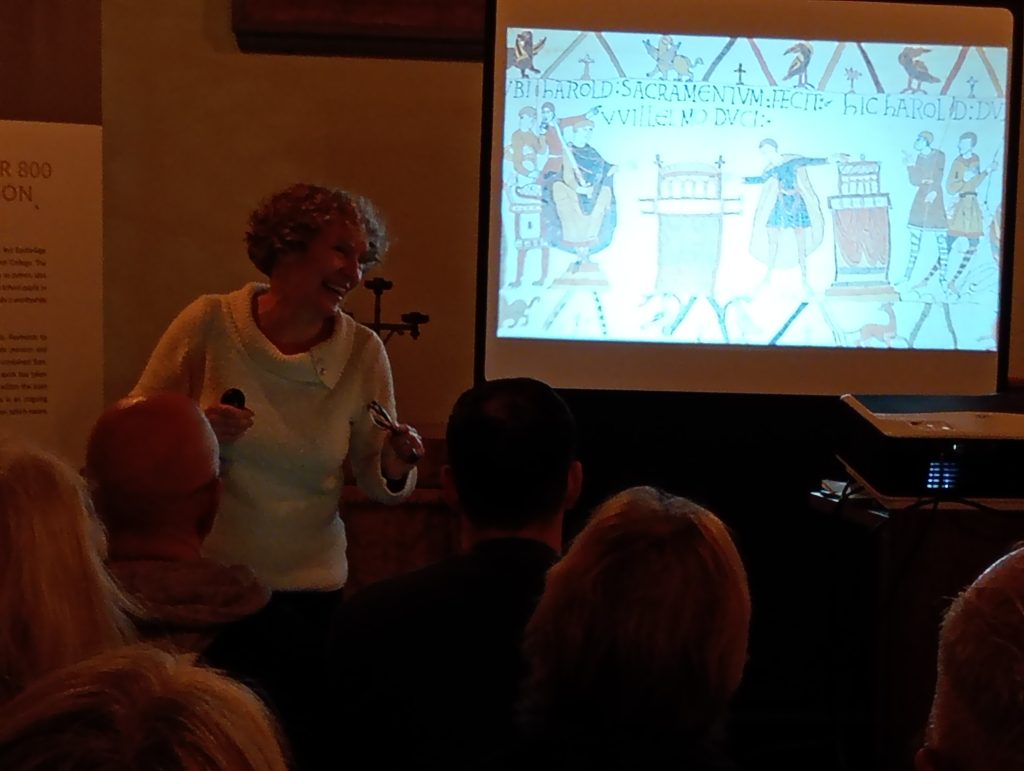
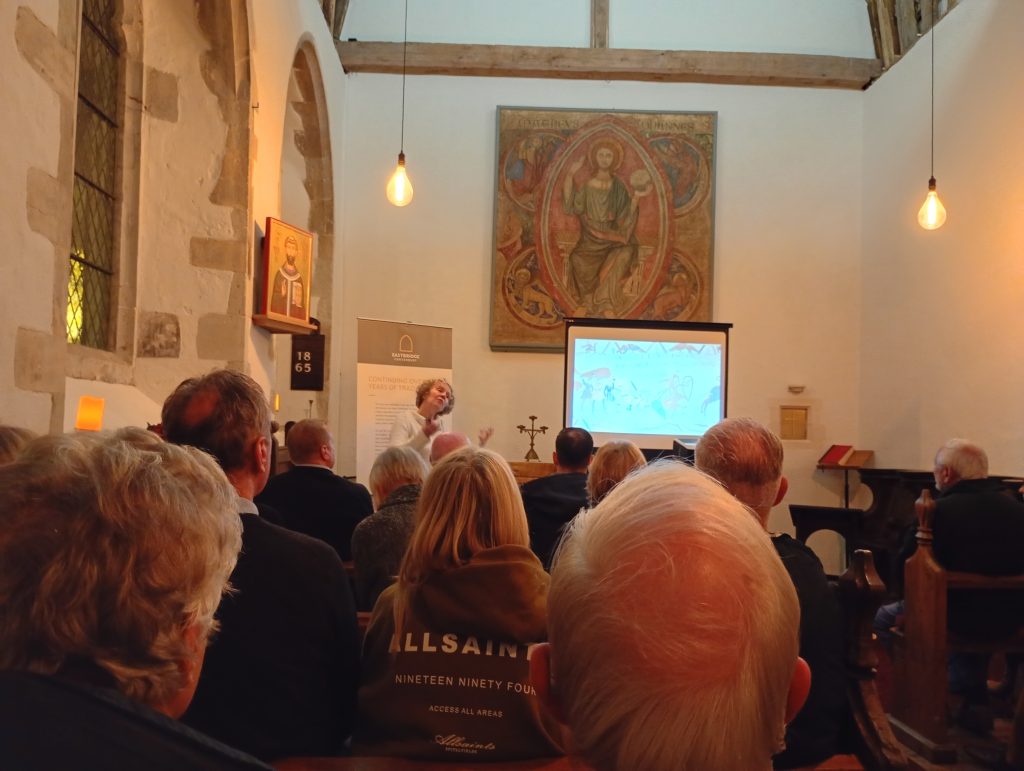
At this point we had a refreshment break down in the Refectory before Sarah continued the story of the tapestry through to its recent arrival in London and thus how it again can be seen as part of a political negotiation between nations, including the French concern about English potholes! Thus, as Sarah said, the Bayeux Tapestry was never a neutral object! As you can imagine her presentation sparked a whole series of questions and comments and the buzz as people left afterwards was still clear – so a very successful evening for all concerned.
Equally political in that sense, Jack Newman in his presentation to the Kent History Postgraduates group focused on a fascinating early 14th-century poem from the Ludlow area. He had discussed the poem as part of his doctoral thesis and is now in the process of working it up into a journal article. As he said that part of the Welsh borders saw the use of four languages – Welsh, English, Latin and French and ‘his’ scribe who had been collecting, reworking and composing texts – scribal authorship – was comfortable in all four. The specific poem Jack wanted to focus on is a critique of royal justice in the form of the courts of Trailbaston at a time of considerable political upheaval, revolt, corruption and instability on the Welsh Marches, as elsewhere during the later years of Edward I and perhaps even more during the reign of his son.
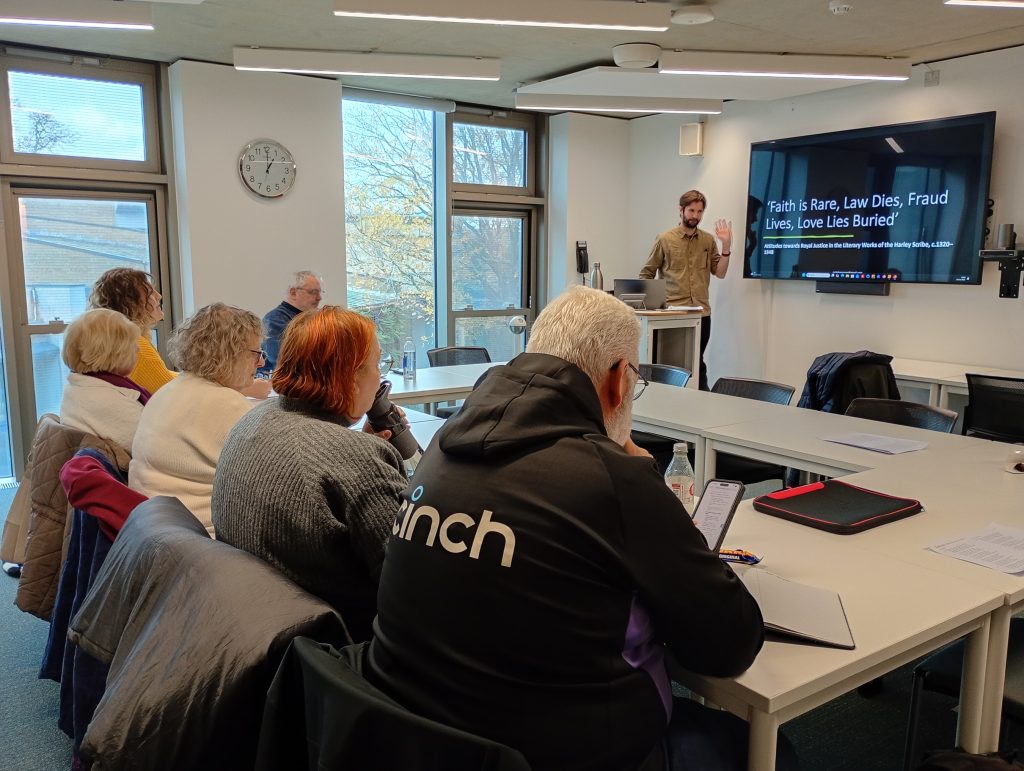
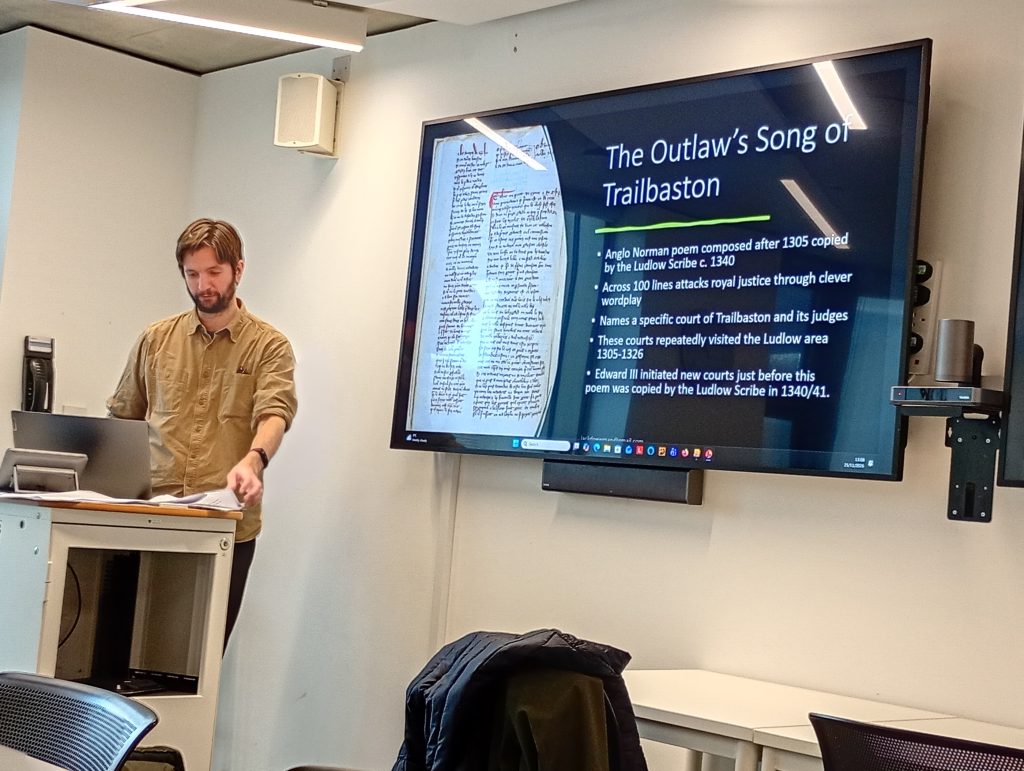
The poem’s narrator is the person we follow as someone who has been wrongly convicted due to false accusers and thus finds himself as an outlaw in the forest. However, for him the forest becomes a refuge, a place of safety away from ‘bad law’ and other treachery. As Jack said, it was the poet’s references to birds, specifically the jay, nightingale and sparrowhawk, that alerted him to there being far more to this poem and its potential use as a discussion on the misuse of royal power and the dislocation between the court and the provinces. Moreover, he has found important links between aspects of the poem and the Mortimer family, which reinforces these political connections, especially for the poem’s reworking/copying in 1340.
This was a fascinating close reading and there were plenty of questions and discussion after his presentation, not least because his approach and findings have parallels with the research of others among the group. Thus, another excellent meeting and in time honoured fashion the conversation continued over coffee afterwards.
Categories
academic Blog Posts Canterbury Events Heritage Kent Lecture Middle Ages NewsHome