
Celebrating Kent at MEMS Fest
I thought because things are currently very busy, it makes sense to report on the latest meeting of the Kent History Postgraduates, the Kent topics in three presentations at MEMS Fest (MEMS Lib will be providing a blog on this too) and the reception for the exhibition linked to the Canterbury Medieval Weekend.
However, before that I want to flag up the Cinque Ports conference on Friday 26th and Saturday 27th June because there are still places available. As Martin Crowther one of the key organisers said:
“The Maison Dieu is delighted to host this important academic conference in a building so connected with the history of the Cinque Ports, and which will provide a fitting backdrop to its colourful stories. Furthermore, the short, illustrated talks by historians and archaeologists will appeal to a wide range of people, from academics to armchair history enthusiasts. For delegates will discover the role of the Cinque Ports in the defence of England, their governance and administration and the lives of those living in the Cinque Ports towns, including subjects as diverse as writing and record keeping in the Cinque Ports (Justin Croft), and the civic uses on churches and hospitals (Sheila Sweetinburgh) to the history of Dover Harbour (Jon Iveson) and Victorian shipwrecks! (Daisy Turnbull)
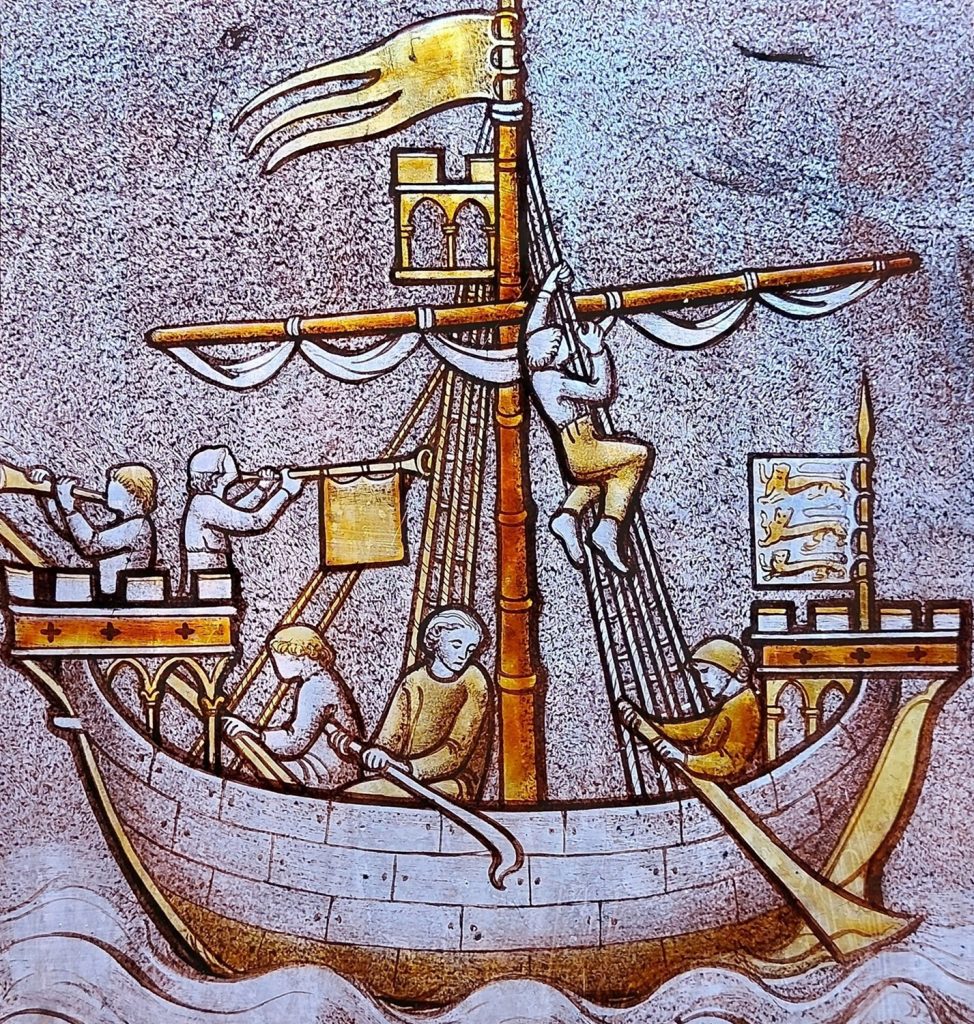
Several talks highlight the important role of Dover and the Maison Dieu, including Professor David Carpenter’s paper on the Maison Dieu’s founder Hubert de Burgh, castellan of Dover, earl of Kent and saviour of Englandand Andy Plumbly’s The Naval Brewhouse at Dover – a well-kept secret. Equally, other presentations are certainly intriguing, such as Claire Bartram’s “We are both friends to Dover Harbour”: Scripting Performances of Community in late Elizabethan Dover and James Lloyd’s The Runaway Armorial of the Constables of Dover.”
Consequently, if this sounds interesting, and the conference includes guided tours of parts of the Maison Dieu not commonly open to the public, please do see further details and how to book at: Cinque Ports Conference | UK Talk/Panel Discussion Reviews | DesignMyNight
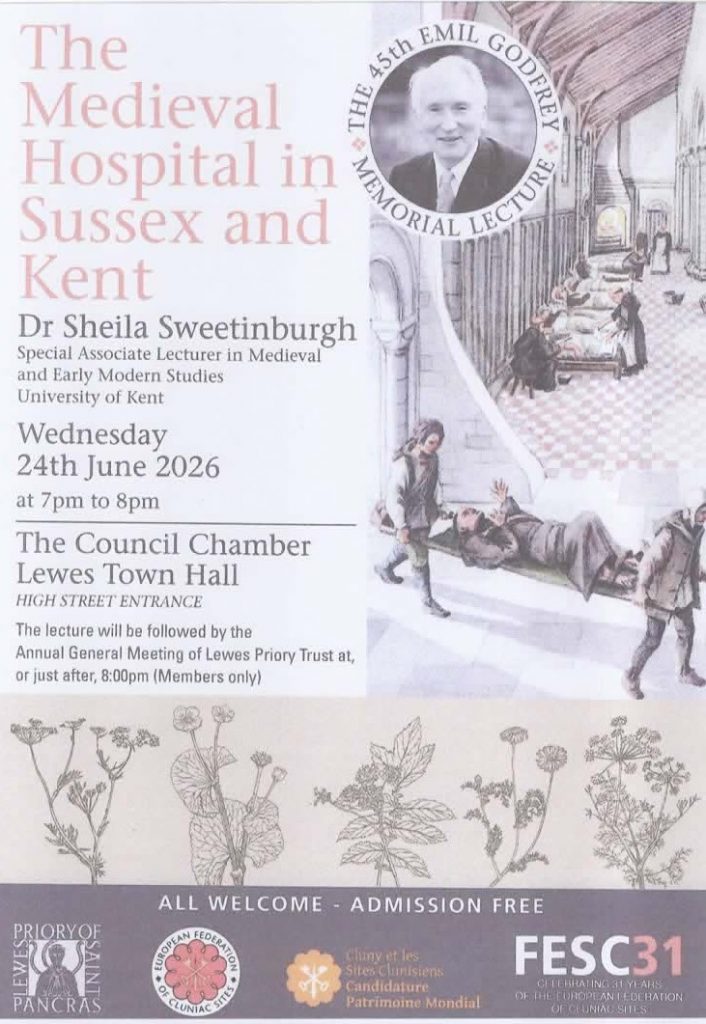
I have two other talks coming up very shortly, first on Wednesday 24th June, I’m giving the annual Emil Godfrey Memorial Lecture for the Lewes Priory Trust on ‘The Medieval Hospital in Sussex and Kent’ at The Council Chamber, Lewes Town Hall at 7pm, free and all welcome.
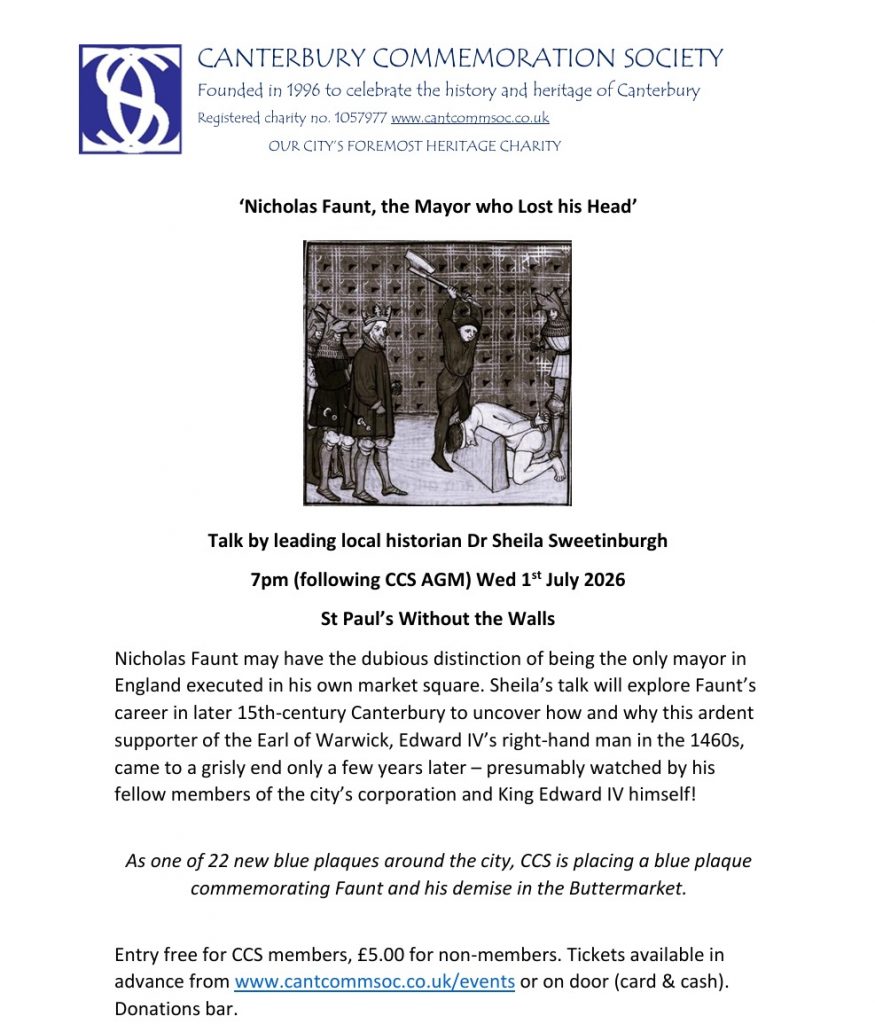
Then on Wednesday 1 July at St Paul’s church, Canterbury at 7pm I’ll be talking about ‘Nicholas Faunt, the Mayor who lost his Head’ for the Canterbury Commemoration Society to highlight the new Blue Plaques. This talk is free to CCS members, tickets £5 available on the door for non-members.
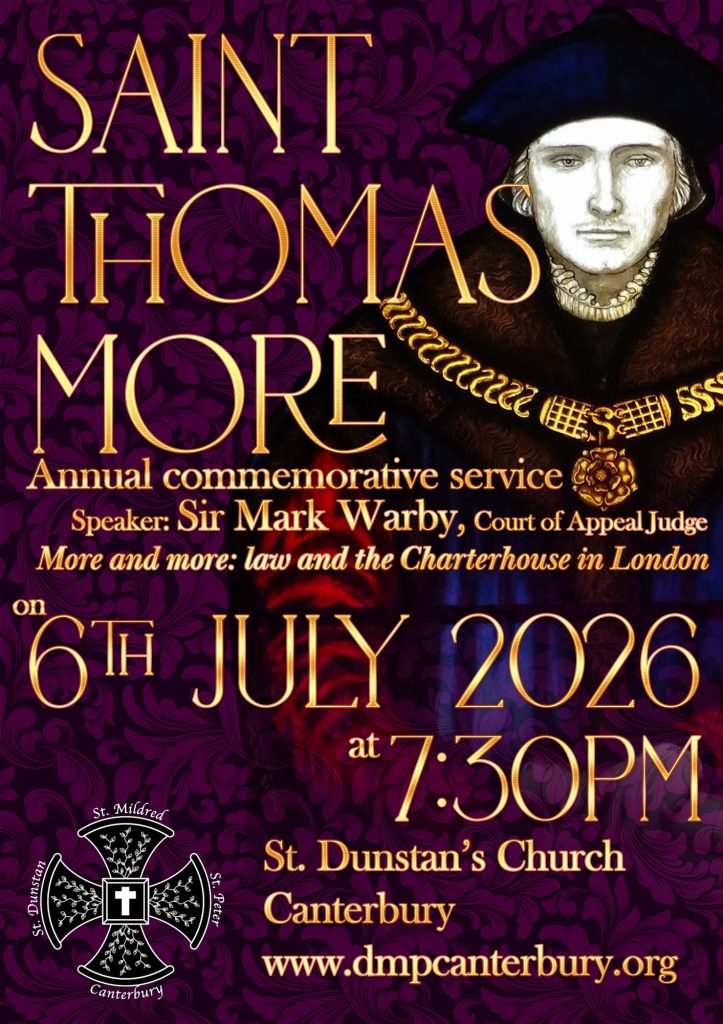
Not that that is everything in early July because there will be the Saint Thomas More commemoration service on Monday 6 July at 7.30pm in St Dunstan’s church, Canterbury. This year the address will be given by Sir Mark Warby, Court of Appeal Judge, on ‘More and more: law and the Charterhouse in London’ and all are most welcome to attend the service.
Furthermore, here are items as advance notice for September. Firstly, the annual Fifteenth Century conference which this year will be at Canterbury and is being organised through MEMS, University of Kent from Thursday 3rd to Saturday 7th. Details of the programme and how to book are at: 2026 Conference – The Fifteenth Century Conference
Also under Kent MEMS, in association with CAMEMS and Brook Rural Museum is the annual Michael Nightingale Memorial Lecture which will take place on Tuesday 22 September in the Templeman Lecture Theatre, University of Kent at 7pm (wine reception from 6.30pm). Our speaker will be Professor Mark Bailey (UEA) and he will be speaking on ‘English Agriculture in the Age of the Black Death, 1350–1500’. All are welcome, and the lecture is free, booking not required, and there will be a retiring collection in aid of the Museum and CAMEMS. In addition, I have been asked by Professor Jackie Eales to draw your attention to a symposium she has organised on ‘Strangers, Silk Weavers and Citizens: the Lives of Walloon and Huguenot Immigrants to England 1575 to 1800’. This will be held on Wednesday 30th September from 11.00-4.30pm at Rochester Huguenot Museum. To book please see: Symposium Tickets, Wednesday, Sep 30 from 11 am to 4:30 pm | Eventbrite
Now to Dr Maureen Mcleod’s presentation to the Kent History Postgraduates group on life after PhD by looking at the section in her doctoral thesis that she intends to take further. Maureen’s thesis explored the history of deer parks and chases using Tonbridge as her case study. As she said, there has been useful recent scholarship on the creation and development of these medieval hunting grounds, but far less attention has been paid to the subsequent acts of disparking. Even more pertinent for an extension to her research, the historiography demonstrates that very little has been done on land ownership and land use thereafter, as well as how this affected and was also the product of demographic, social and economic changes into the 18th century.
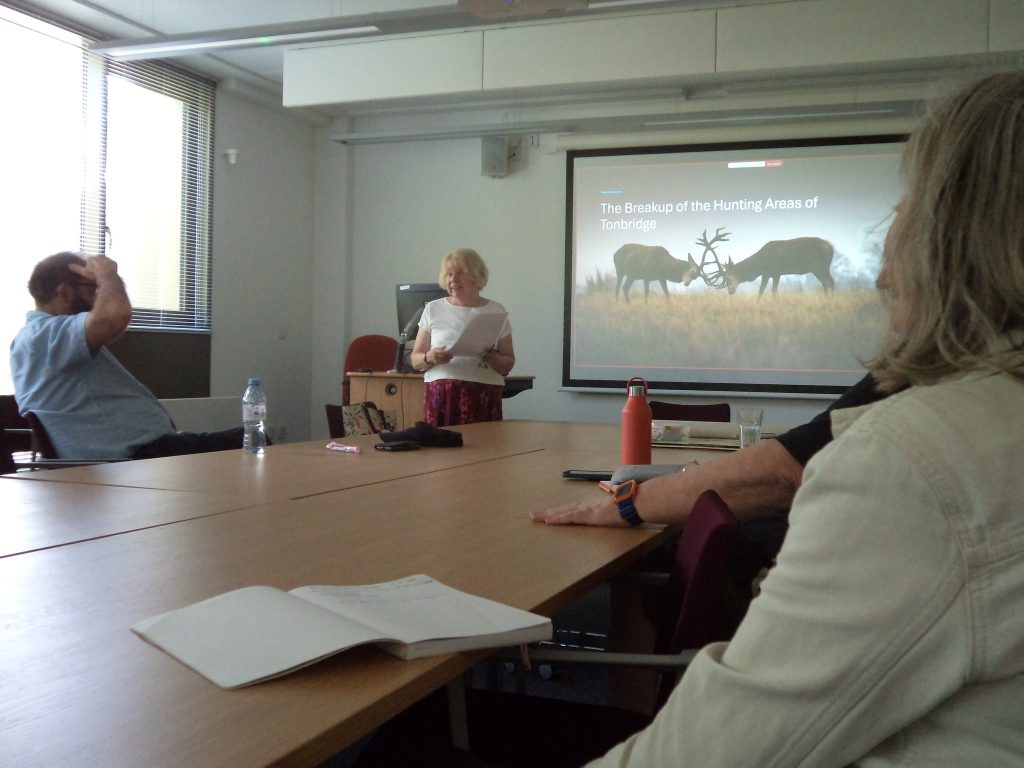
To offer a context for her assessment of the first stages of disparking, Maureen provided the group with a summary of how the Tonbridge hunting areas (two parks and two chases) came into being, their subsequent history under the de Clare family, lords of Tonbridge from the Norman Conquest until the male line failed after the battle of Bannockburn, and the various holders through to the 16th century. Such a shift meant the holder’s priorities had changed because the opportunity to hunt was generally less appealing to later wealthy lawyers and others compared to the earlier nobility, for whom hunting was envisaged as a suitable and necessary pastime to provide gifts, replenish manorial stocks and provide food for itinerant lords and their households. Yet if hunting was no longer the draw it had been, other uses were seen as suitable albeit they began (in some ways continued) changes to the landscape. Exploitation of these areas came in different forms. The production of charcoal had always happened but the scale of this and other operations was similarly important. For allied to charcoal production was the exploitation of iron ore found in these areas, and while this was not totally new, the scale was and generally the new landholders were much more interested in profit. One owner who was especially keen to make money was David Willard, who was behind much of the deforestation as the land came to resemble scrub.
Having given her audience a good picture of matters up to later Tudor times in Tonbridge, Maureen turned her attention to the 17th century and the effect of a long-drawn out chancery case involving landownership (think Jarndyce v Jarndyce). Other contributory factors were similarly highlighted in Maureen’s nine case studies as she traced how this land became agricultural and the impact of this and allied changes on farming and the community more broadly.
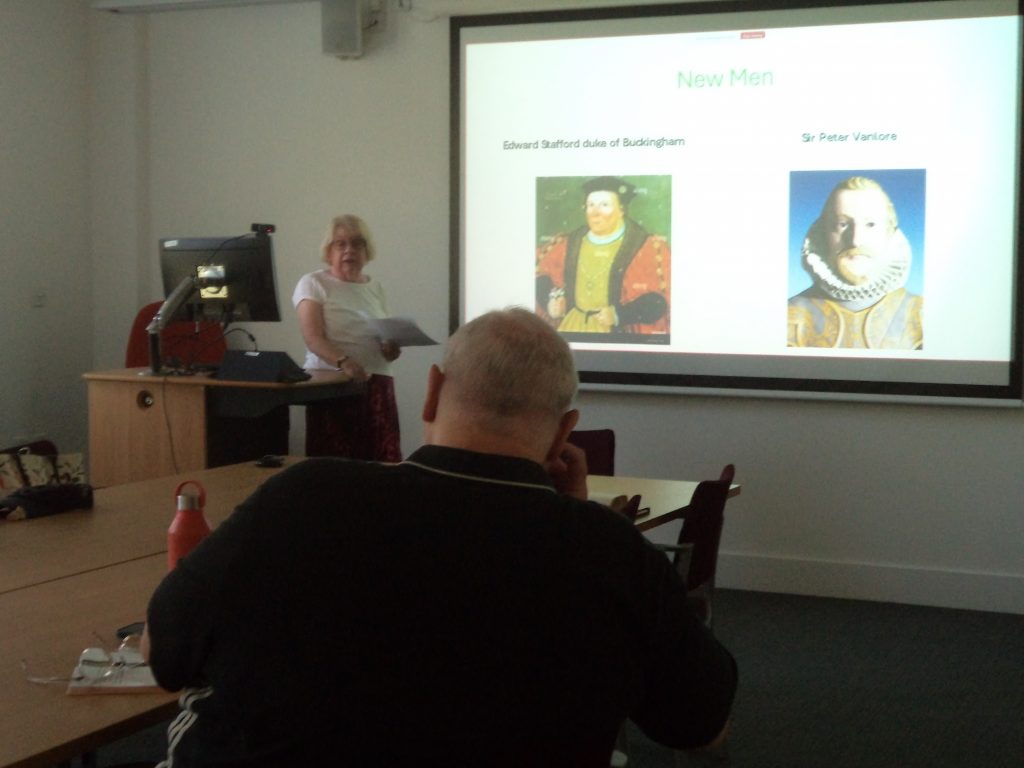
Maureen’s presentation generated an excellent discussion and there was a general feeling that it would be great to hear more in the future. Finally, all agreed that she should publish her findings with the potential to generate two articles about disparking.
Moving on to MEMS Fest, it is good to be able to thank the organisers, Emily Allison and Vincent Kennedy and their fellow postgraduate team of helpers for their hard work beforehand and over the two days to ensure everything went smoothly. Good also to mention Dr Clare Wright who was there to help them and to Dr Suzanna Ivanic, head of MEMS, for her help and support throughout. While there were many interesting presentations, here I’ll keep to the 3 on Kent topics from MEMS PhD postgraduates, giving a brief summary.
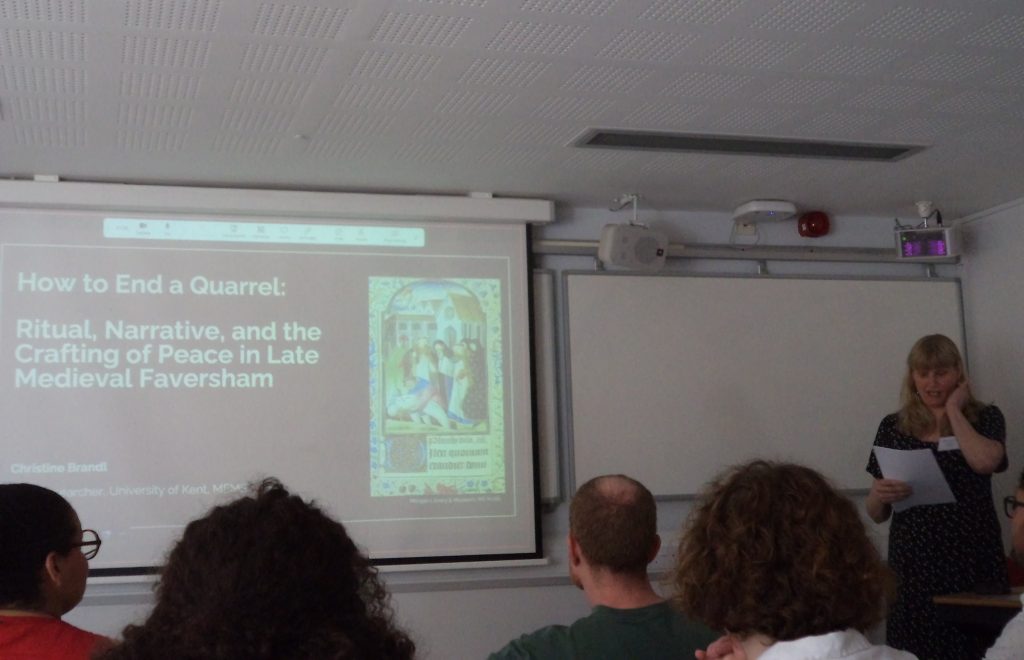
Working through the programme, on the first morning Christine Brandl offered a thought-provoking account of a complex, long running, and at times violent, dispute in Faversham that took place during the 13th century. Christine has been gathering evidence from chronicles, letters, various central government documents, including royal writs, and town sources as she seeks to explore how the different parties acted and inter-acted with each other, their uses of various ritualised actions and responses, and the roles textual sources played in themselves, as well as matters of memorialisation. Her investigation of process certainly struck a chord with her audience, and this generated several questions and discussion.
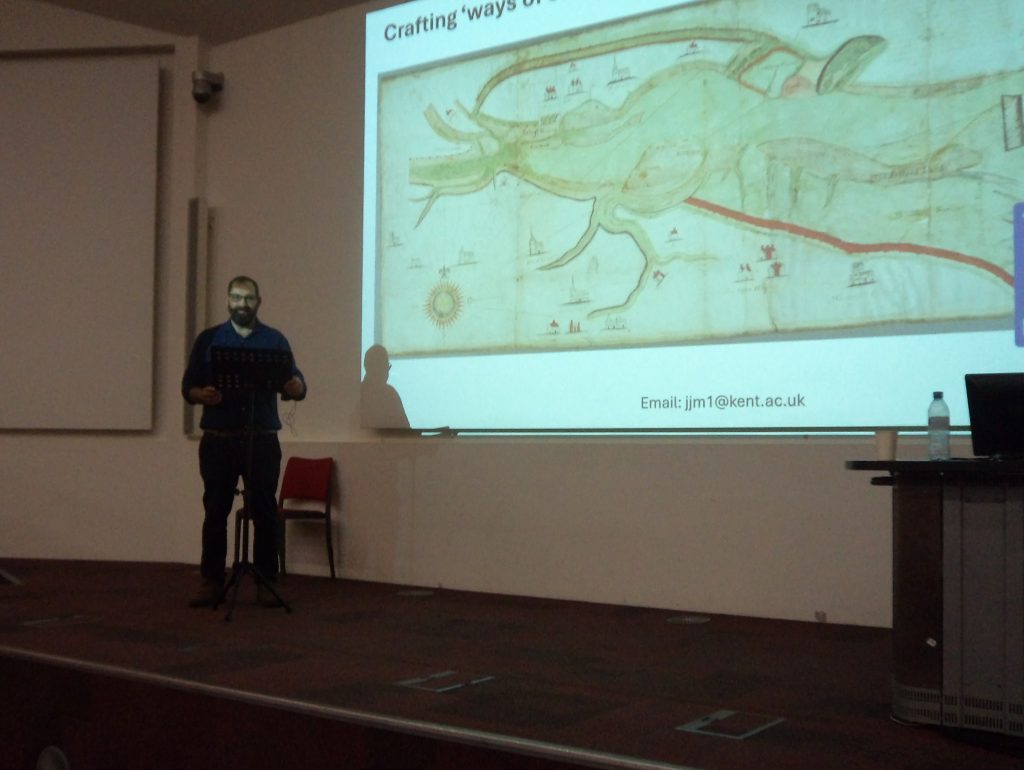
Turning to yesterday (Saturday 20th), due to some late changes to the programme, Jason Mazzocchi and Angela Broomfield were joined in their session by Dr Ayse Tarhan who gave a fascinating presentation on Gulbenk culture and rituals in the Ottoman Empire. This would be great to explore further if you have the chance. But now to the Kent history presentations and Jason began by introducing his audience to two of the Faversham oyster maps produced as part of the dispute between the company of oystermen of Faversham against their counterparts at Milton. The emphasis in this presentation was on visual and material culture and how these maps were crafted to provide specific ways of seeing for the benefit of producers, as well as consumers – audiences locally and in London and the royal court. Having deconstructed two of the three maps by examining the broad range of signifiers deployed by the mapmakers – images of man-made features, naming practices, natural features in the seascape and landscape, and textual explanation and commentary, Jason explored with his audience how he thinks these should be read in terms of contemporary events, but equally through collective memory how these draw on a shared past, which will have specific, but still potentially changeable, meaning in the future. Again, this analysis of a complex discourse raised questions, including how collective movement – the perambulation of the fishing grounds to highlight boundaries, may have been understood, and deployed to produce these maps.
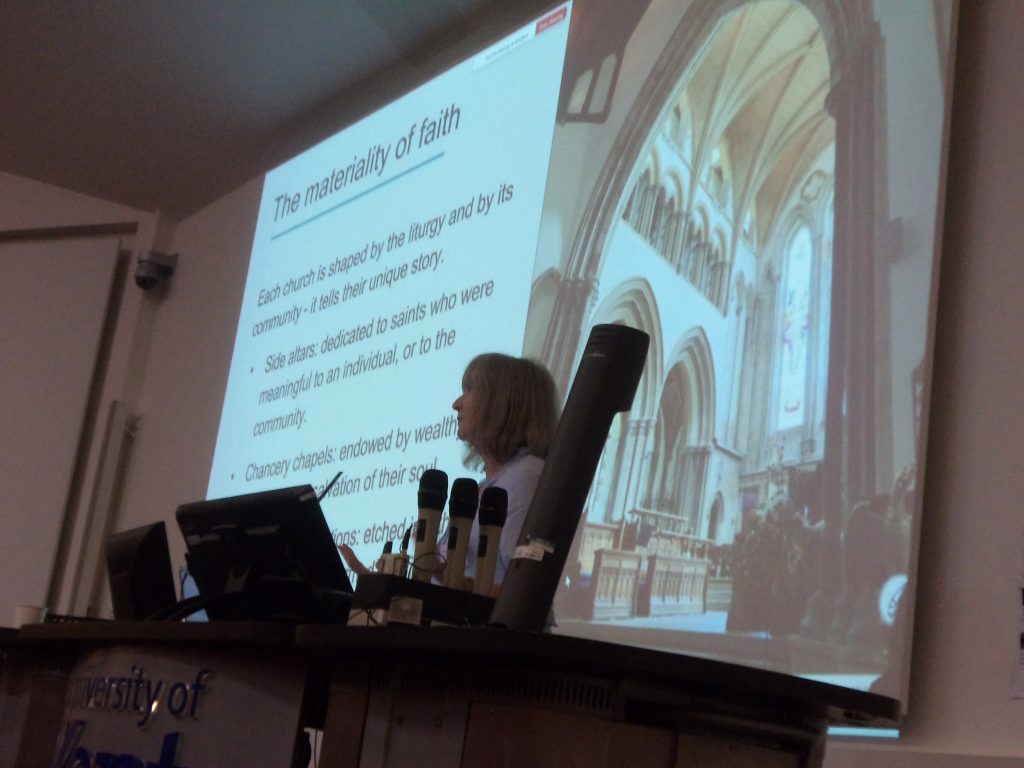
Keeping with the idea of the role of visual culture, its production and consumption, Angela’s presentation featured an aspect that has generated considerable critical attention in recent decades. In her assessment of ship graffiti in Kentish medieval churches, she was especially interested in exploring ideas of community and how such carvings might fit into collective expressions of piety by lay members of these various congregations over time. Having provided her audience with the key historians on this subject, she highlighted the know incidence of these carvings in Kent, especially among the Cinque Ports churches. Her first case study was Hythe and she discussed the three sites where graffiti can be seen in St Leonard’s parish church before going on to examples in Winchelsea’s parish church. The ideas she was keen to stress are a) location within the building, b) location in terms of height on the stonework, c) the nature of the carvings – type of ship, and finally d) are such ships close to other forms of graffiti such as crosses. Armed with this data, Angela sees these carvings as recognised and communally endorsed – they are and would have been easily visible, would have taken time to produce, and were seemingly created by different carvers perhaps over a long period. Angela’s presentation also intrigued the audience, and all three presentations were warmly applauded.


Finally, Karen Brayshaw (Special Collections), Suzanna (MEMS) and I had decided that MEMS Fest would be an ideal opportunity to showcase the exhibition produced for the Canterbury Medieval Weekend. For it demonstrates collaboration between these constituencies in the university and outside partners: CAMEMS, the Beaney (Canterbury City Council), Torin Brown (Canterbury Cathedral), as well as Eastbridge Hospital, the Canterbury HA, CHAS, Kent Archives, Dover Maison Dieu and others. Consequently, we were delighted that the new Lord Mayor and Lady Mayoress of Canterbury could attend and hear from 3 of the MEMS postgraduates involved in the exhibition’s creation: Angela (PhD), Tris and Elijah (MA), which is a good note to end on.


Categories
academic Blog Posts Canterbury conference Early Modern Events Exhibition Heritage Kent Lecture local and regional history Middle Ages News TudorsHome