

Exploring Canterbury Cathedral’s medieval glass
Just to say Tudors & Stuarts 2027 (30 April to 2 May) is definitely up and running as there has been a flurry of ticket sales already, which is great news. Again, this is the website: https://history-weekends.org/ and I hope you find the mix of Royalty & Nobility, War & Politics, Social History, and Religion & the Arts includes lectures that appeal to you.
Also for 2027, hopefully in January and February, there will be a series of talks working with the Friends of St Mildred’s church, Canterbury, on aspects of Canterbury Castle’s history by Jackie Eales and Clive Bowley. The third speaker on Canterbury Castle’s medieval history was going to be Richard Eales, but very sadly Richard died suddenly on Tuesday (yesterday) of this week. I’m sure many blog readers will have known Richard from his many talks on castles both in this country and abroad and will want to join with me in passing on condolences to Jackie and the rest of their family.
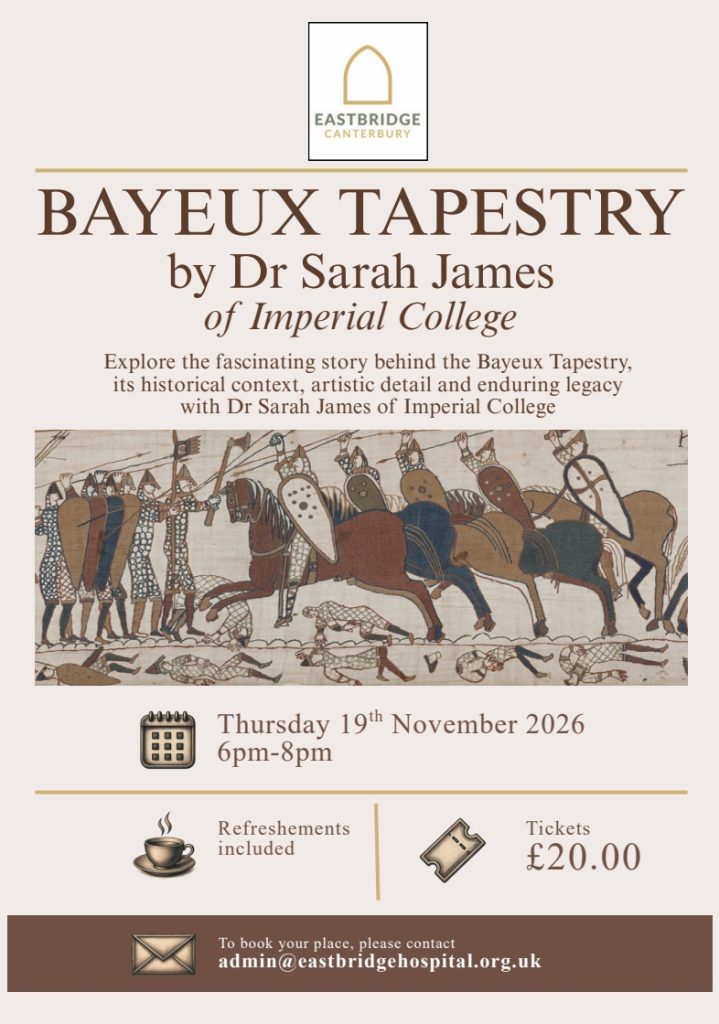
As part of this series, I’ll be exploring the history of St Mildred’s church and its people, the castle’s neighbour, during the Middle Ages. If this sounds of interest, please do watch out for dates and further details. However, before that, please do consider attending Sarah James’ talk on the Bayeux Tapestry at Eastbridge Hospital on Thursday 19th November at 6pm – see poster for details.
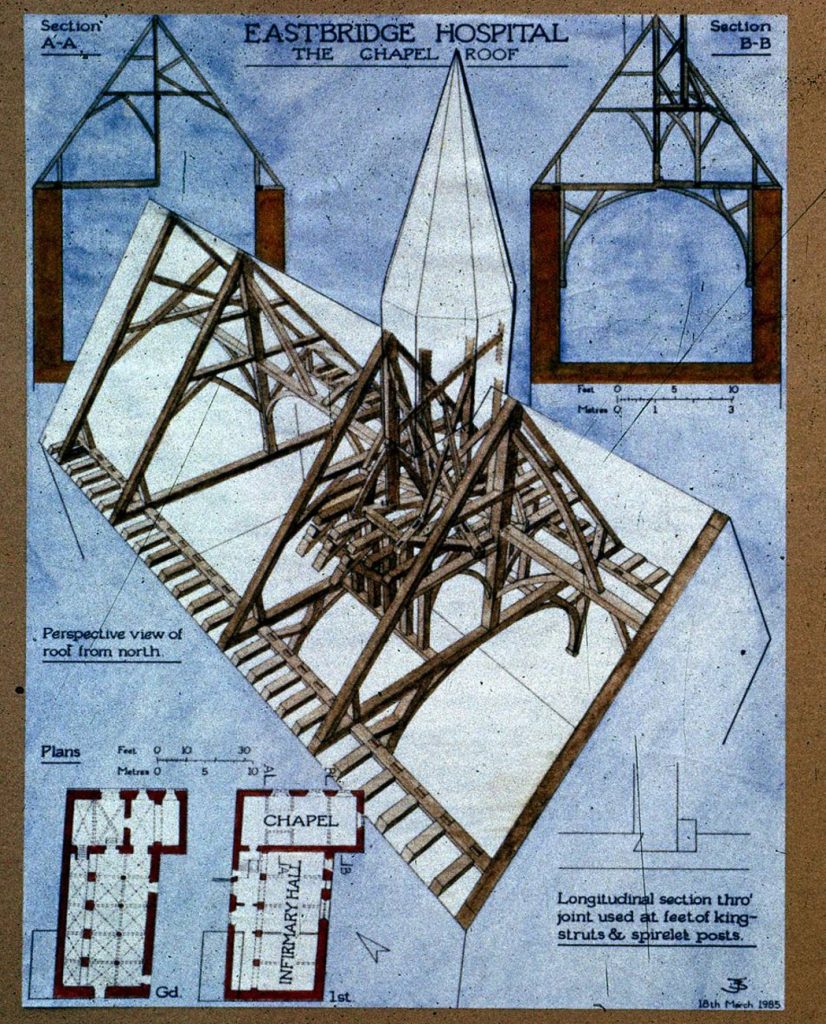
Before I come to the main report on the Becket Miracle Windows study day organised by Rachel Koopmans and Leonie Seliger with Cressida Williams and MEMS at Kent, I thought I would just mention that I took a very enthusiastic group from the Canterbury Guild of Guides with relatives and friends around Eastbridge Hospital and the Franciscan Gardens on Saturday afternoon. The 13th-century wall painting of Christ in Majesty never fails to impress, and similarly the king strut roof with its intricate bell tower in the Upper Chapel is a stunning feature!
Equally stunning is the Becket ‘Kent window’ and I’m delighted to say Rachel’s and Leonie’s book on that window is now out and in the Canterbury Cathedral gift shop. The quality of the stained glass of this very early 13th-century window is just amazing, especially the background blue glass with its intricate swirling patterns. Another book which will also be in the shops soon is the Canterbury Historic Towns Atlas, so do look out for that too.
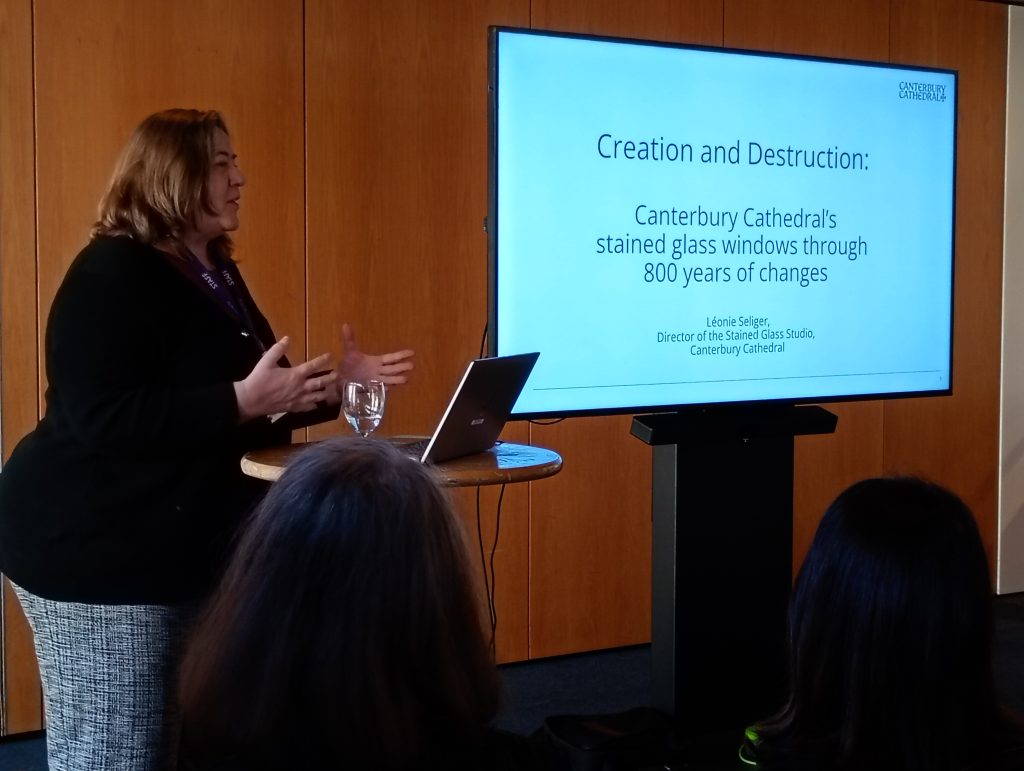
Now to the Stained Glass study day entitled ‘Lost and Found: Hidden Histories of Canterbury’s Stained Glass’ where Rachel welcomed an enthusiastic audience to the opening session where Leonie Seliger gave the first presentation. Leonie reminded people just how much medieval glass is still in Canterbury Cathedral – almost a third of the total glass, albeit the Romanesque glass from Anselm’s glorious choir of 1130 was lost in the fire of 1174. Nevertheless, this might be seen as having provided the monastic community with the opportunity to rethink the cathedral’s east end where Becket’s shrine would be situated in addition to the Corona Chapel and the Becket Miracle Windows. Taking this as her starting point, Leonie took the audience through a series of snapshots covering the history of the cathedral’s glass. She demonstrated just how much movement of the glass has taken place over the centuries, as well as the destructive impact of the Reformation and even more the Commonwealth. Additionally environmental conditions have taken a toll on the glass, especially on the south side and while such movements as the Gothic Revival can be seen as largely positive, this does not apply to everything the Victorian and the Edwardian glaziers undertook. Measures were taken during both World Wars to protect the medieval glass, but, as Leonie highlighted, not everything was quite what it seemed and she with Rachel and the glass studio team are continuing to find surprises – some good, others far less so!
This very interesting scene setter was followed by Angela Websdale’s presentation on a more detailed exploration of the Dean & Chapter’s actions concerning protecting the medieval glass during WWII and then their post-War response. Angela has been studying the Dean & Chapter’s records in the archives, and she has been struck by how large an operation the removal and post-War return of the medieval glass to its respective windows this was. Moreover, much of the Victorian and Edwardian glass had been destroyed or damaged during the war and even though restoration was partly funded by the government, other measures were required, included introducing new work. The three main glaziers were John Baker, Harry Stammers and Ervin Bossanyi, whose differing personal histories meant they each approached this commission very differently.
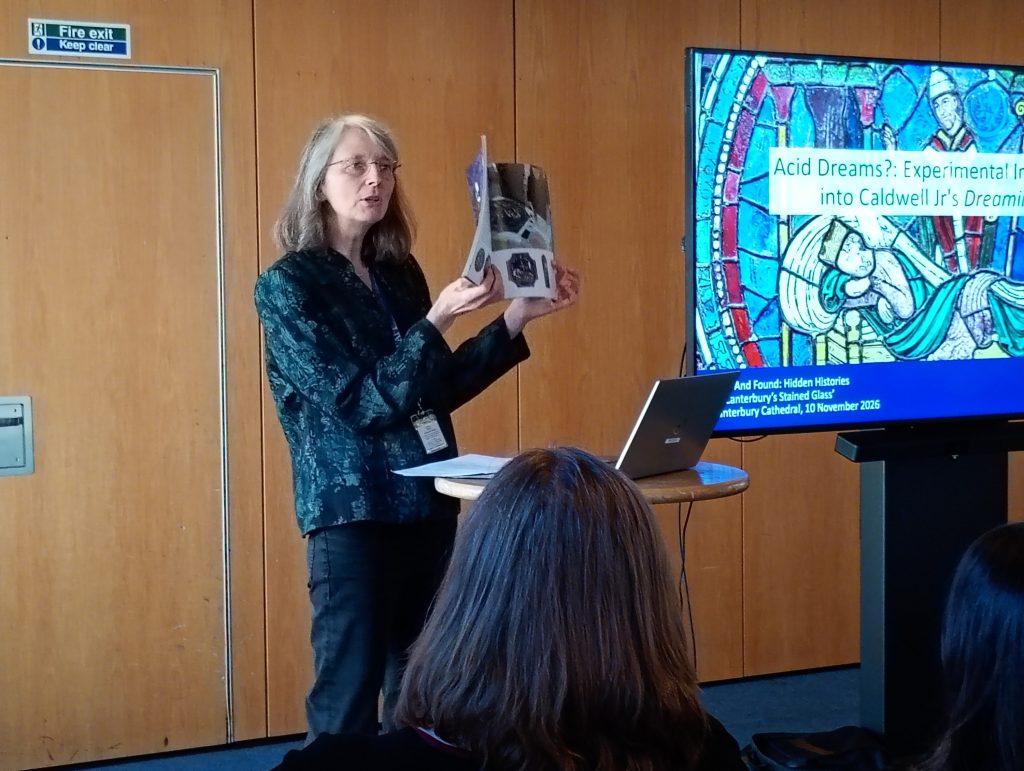
The last presentation in this session was by Isabelle Davies, who concentrated on the activities of Sanuel Caldwell jnr. She is keen to explore his methods to provide a detailed catalogue of ‘his glass’ and how he changed others’ glass, as well as the panels he produced himself which he passed off as medieval. As she said, she has identified 9 basic types of surface effects, plus some sub-types and she has been working to see how these can be replicated using acid and other materials. Moreover, having logged all of her experiments, she is in a strong position to identify Caldwell jnr’s methods, how these techniques were developed by him over time and the strategies he used to cover his tracks as he seemingly enjoyed pitting himself against the acknowledged stained-glass experts!
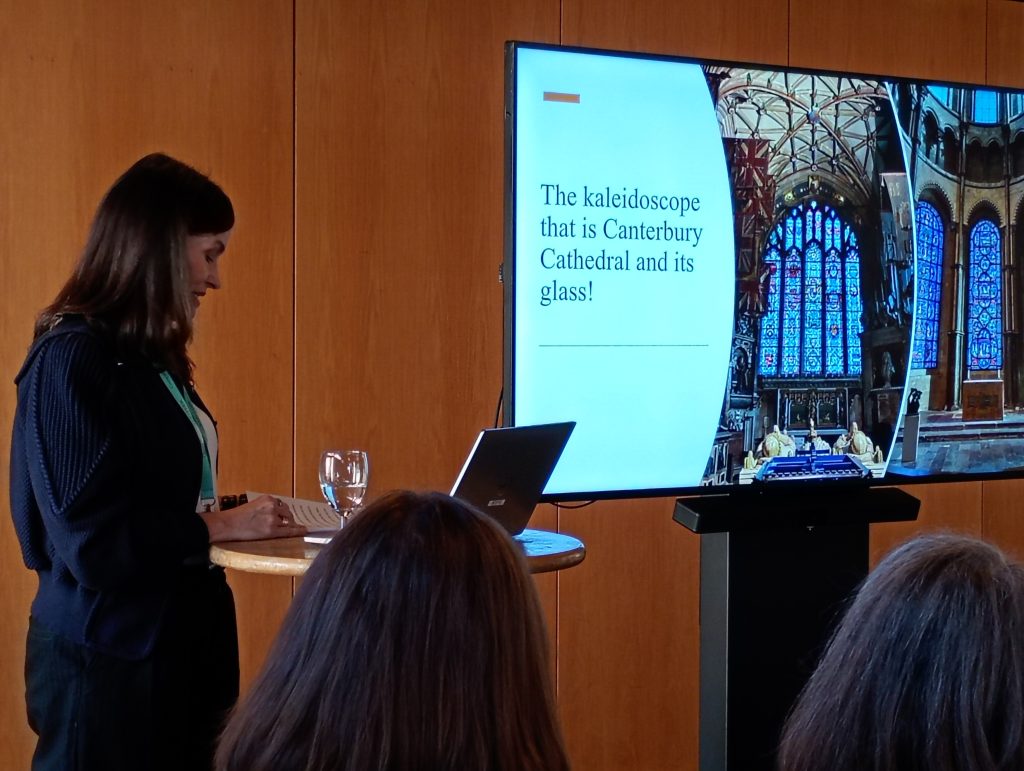
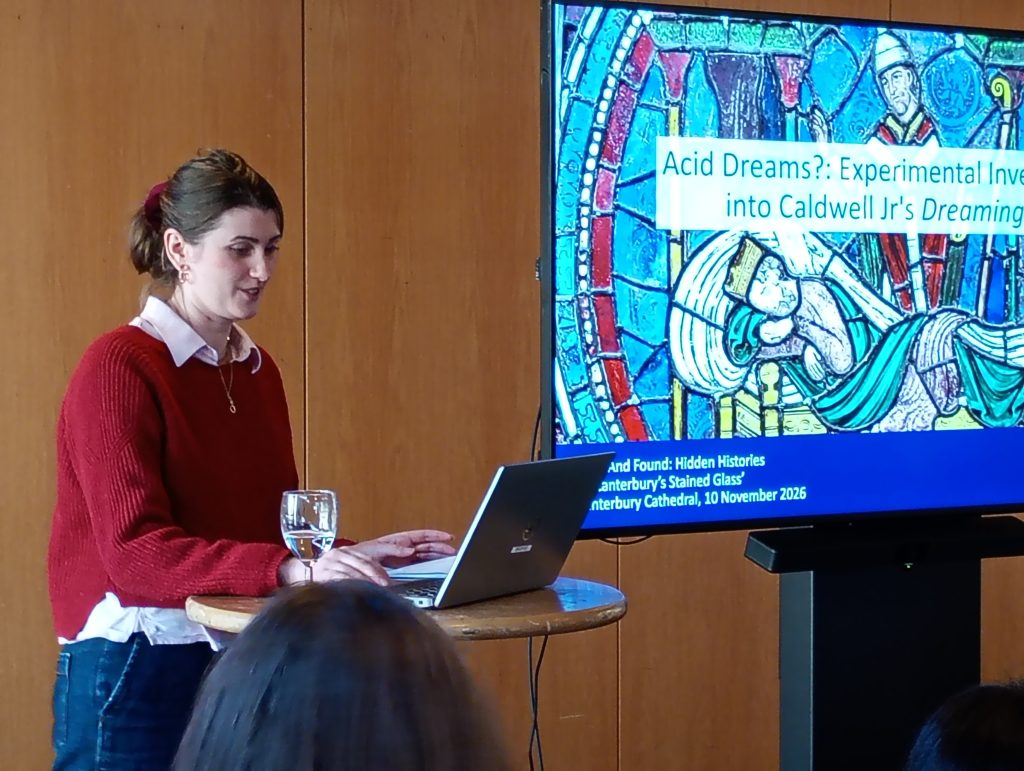
These 3 fascinating papers were followed by a Q & A session, thereby demonstrating the audience’s interest and engagement with the subject. Indeed, that was clear from the conversations over lunch and the way Rachel’s and Leonie’s new book on the Becket ‘Kent Window’ disappeared from the cathedral shop thereafter as all the copies which were on display were readily snapped up.
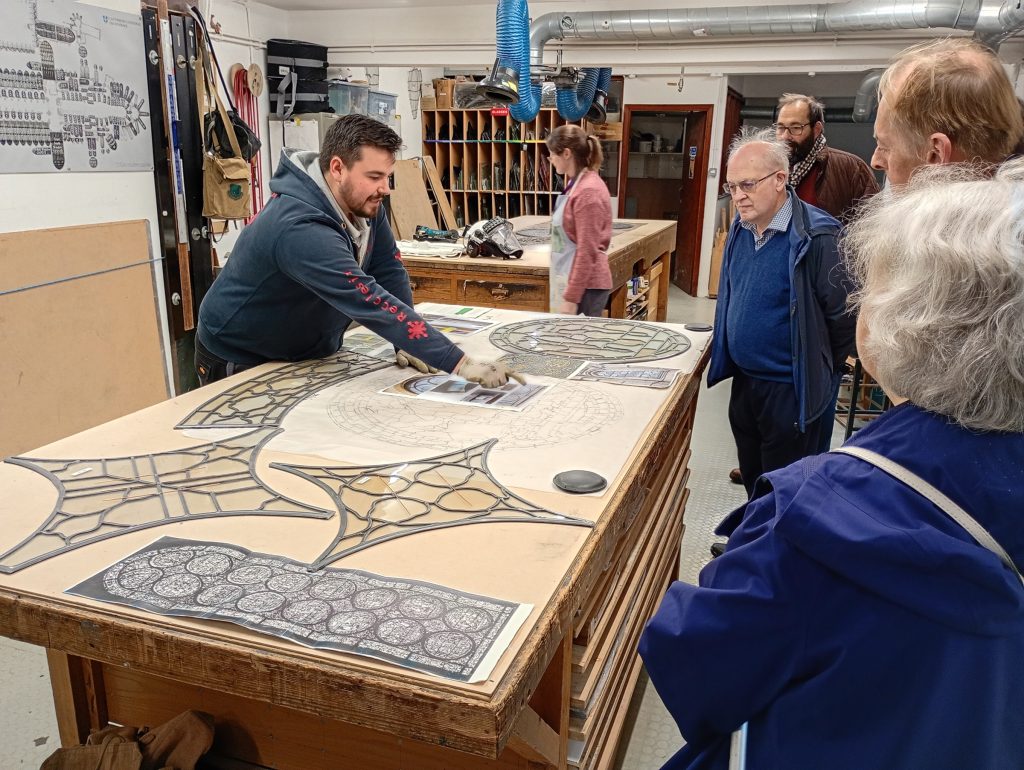
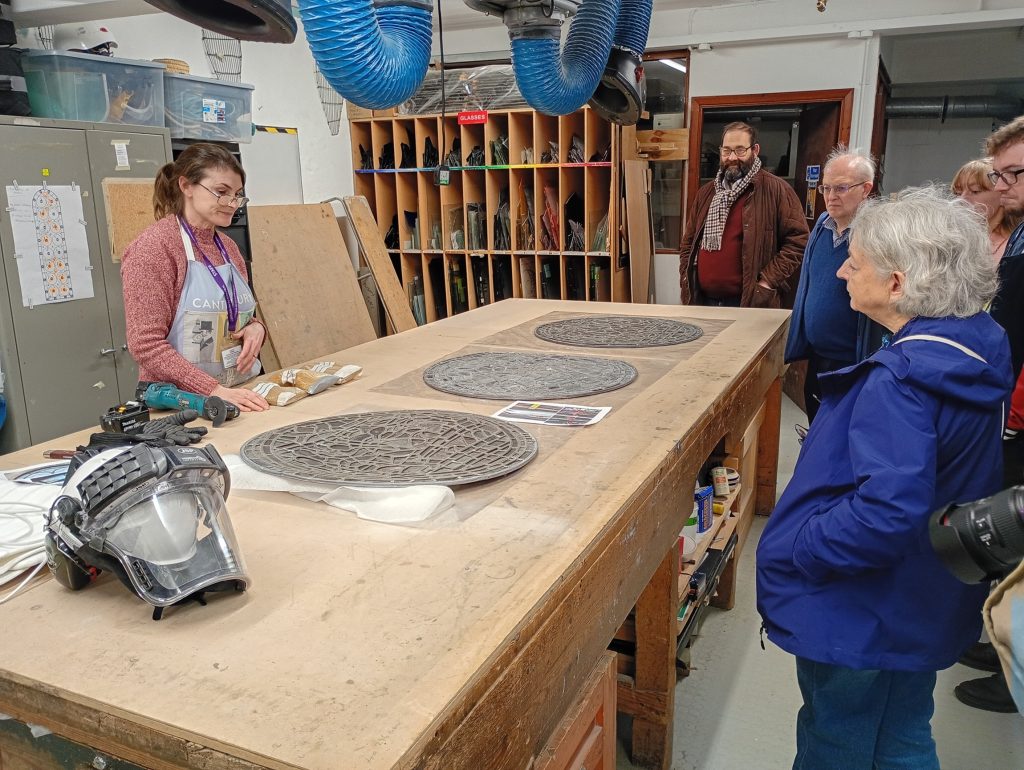
The participants then assembled for tours of first the glass studio to see what has been taking place concerning one of the Becket Miracle Windows from the south side: sII. As always, this was fascinating and it was excellent to have explanations from various members of the team on how the new protective glazing will be done, the methods deployed to allow the glass to flatten from its warped (damaged) state, Isabel’s demonstration of the methods she has been exploring, an example of fire-damaged glass from Dulwich of commissioned work the team undertakes and an example of a 4-panel Becket miracle depiction that the team is seeking permission to re-arrange to provide the right sequence, thereby truly fitting it to William of Canterbury’s narrative.
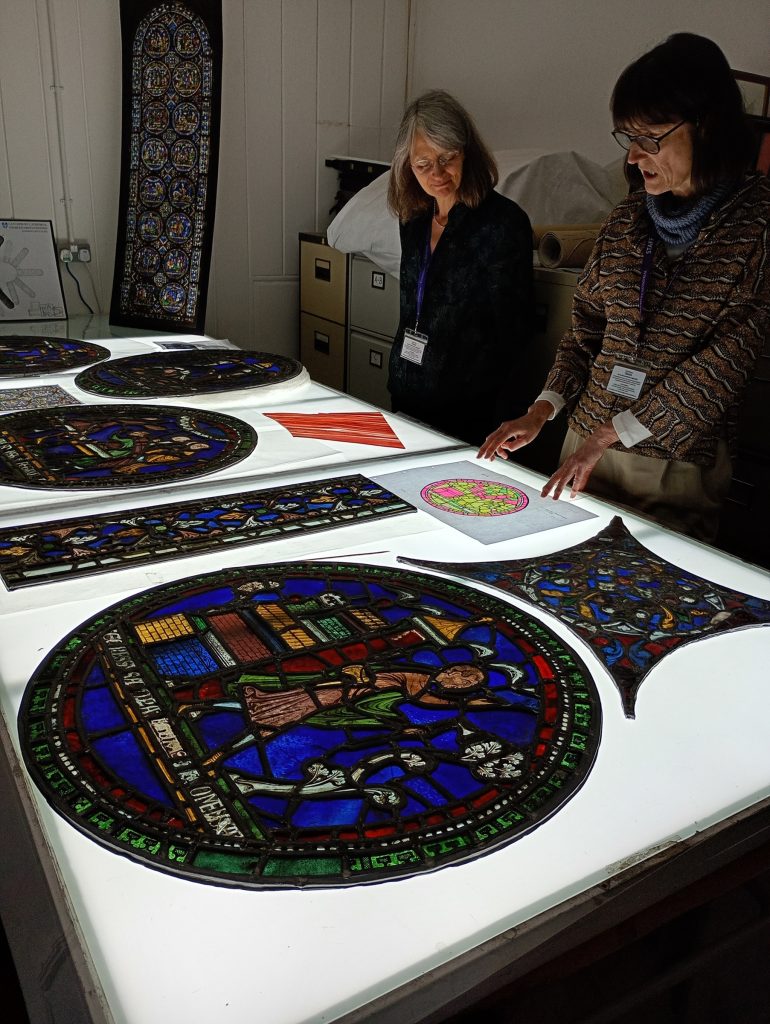
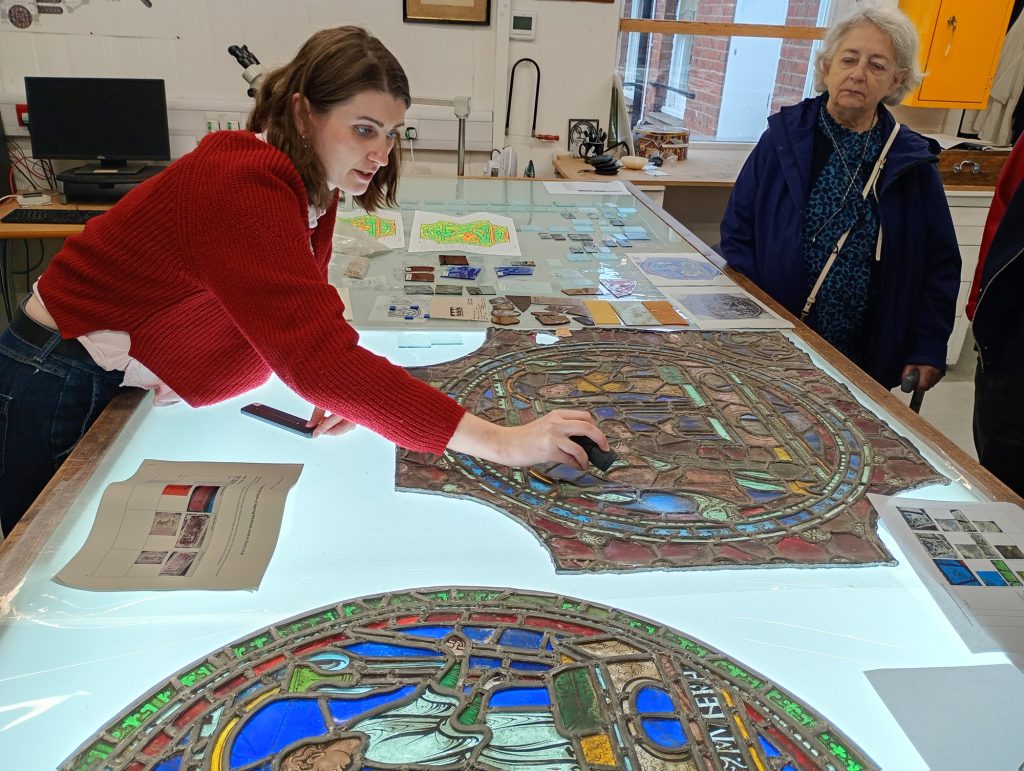
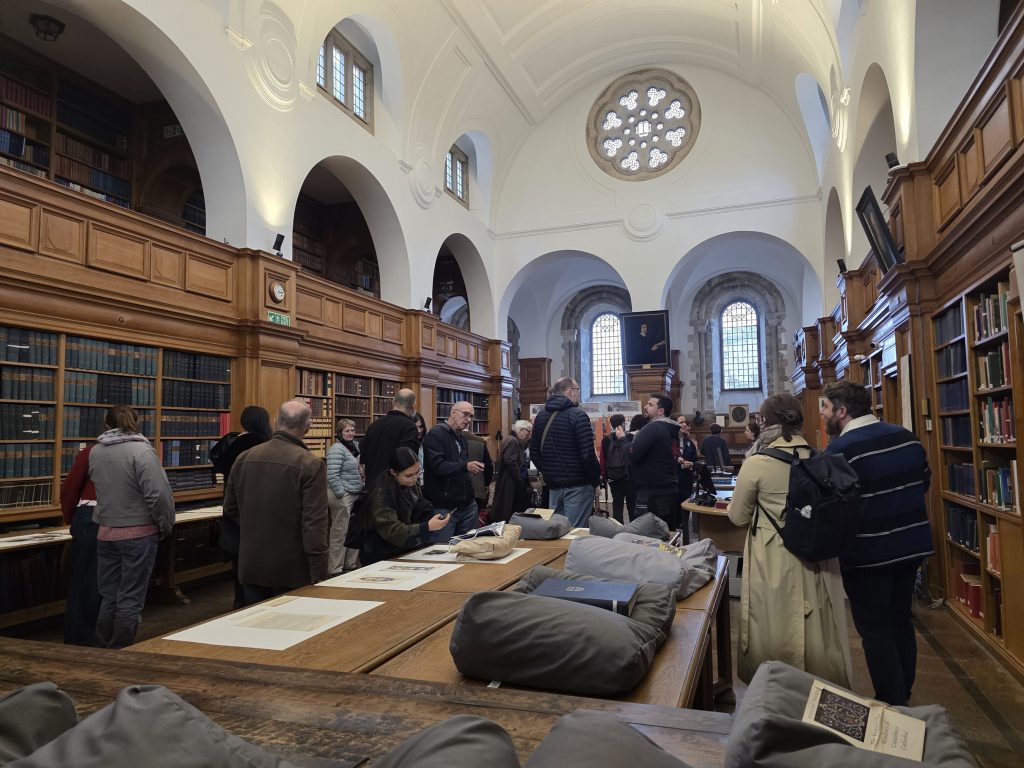
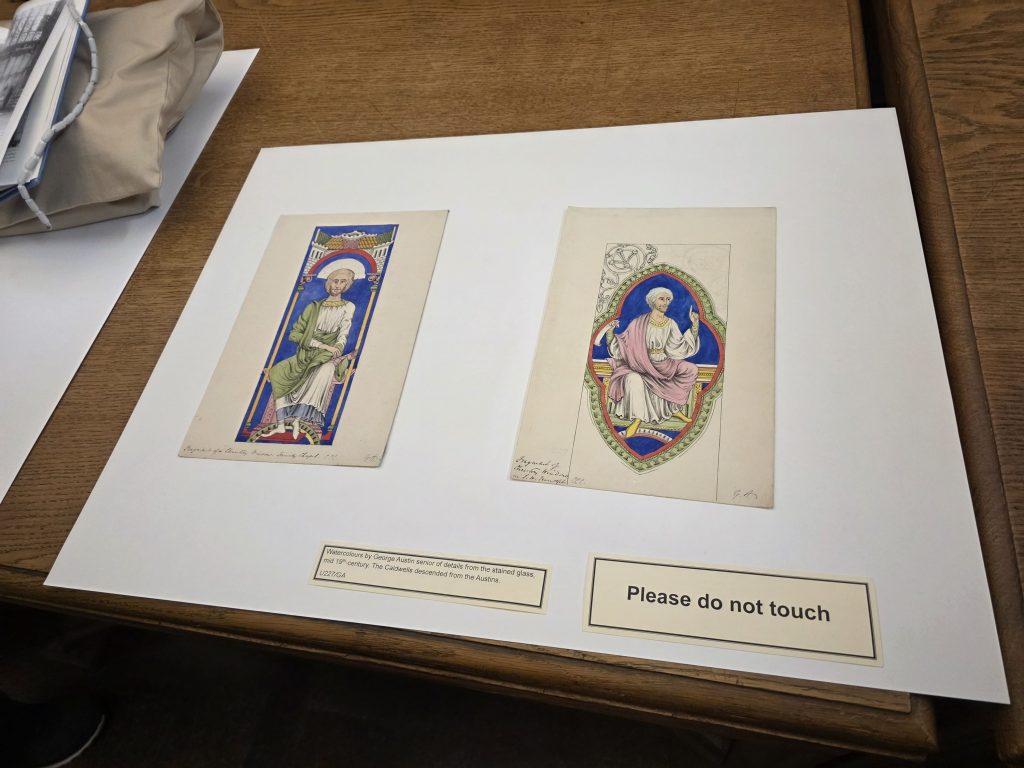
The second visit was to the cathedral archives to view items related to the morning presentations and after these two great workshops, the participants returned for tea and presentations by first Paul Binski and then Rachel Koopmans. Paul’s interesting presentation provided a western European context for Canterbury Cathedral’s late 12th to 14th-century glass, seeing Canterbury as both a recipient and provider of ideas and techniques. Indeed, he drew parallels from a wide variety of decorative features in the cathedral and chapter house with cathedrals and medieval religious houses from France in particular, exploring such matters as the specific use of colour, the role of glass and metalwork, and the importance and form of patterning.
Rachel, for the final presentation, took a different theme which echoed the title for the day’s workshop. She took us through some great detective work that she and Leonie had undertaken concerning an early Gothic border panel from Canterbury Cathedral that had been sold at auction at Sotherby’s in 2022. This very high quality, distinctive panel had certainly travelled around the cathedral over time, such as during the 18th and 19th centuries as part of what might be called a tidying up of the windows as pieces were used or copied to replace plain glass to make up full windows. Furthermore, by the early 20th century, its fellow border pieces had similarly been on their travels, leading to 6 in the east end of the crypt where they didn’t belong, 1 in the great south window, and 1 in Caldwell jnr’s workshop. This he sold on his own account, and it is this piece that Rachel has been able to track through its travels well beyond the cathedral, including time spent in Ireland and America before finally arriving in the sale room at Sotherby’s. Fortunately, Leonie was able to alert the authorities, and it is heartwarming to know that the buyer was willing to return it to the auction house, and the seller was prepared to donate it back to the cathedral in memory of the deceased owners. Consequently, Leonie and Rachel were able to go and collect it, and it is now back where it belongs. Yet there is still a considerable amount of stained glass which Caldwell sold during his time as an independent contractor at Canterbury Cathedral that remains out there somewhere!
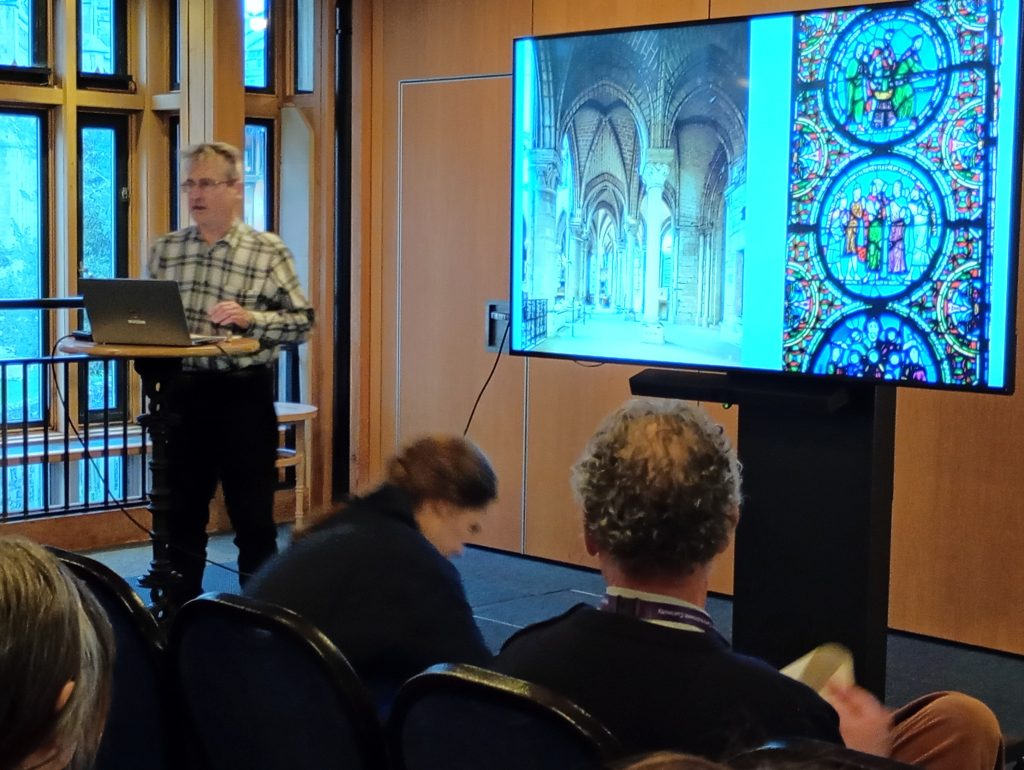
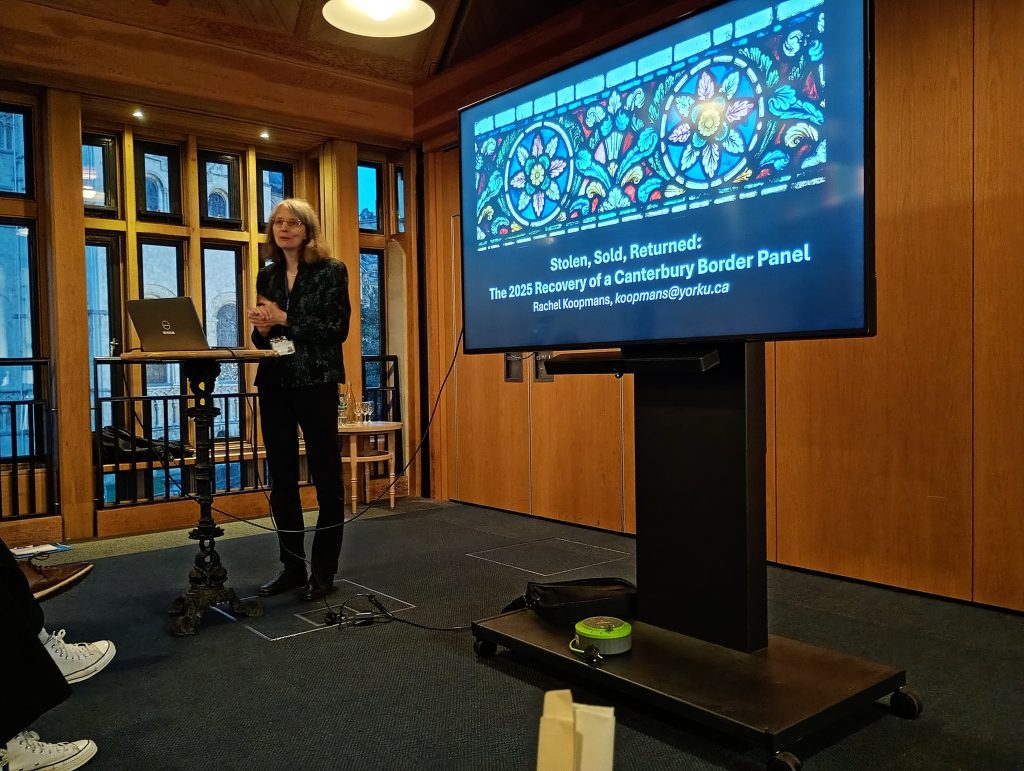
This was in many ways a tantalising note to end on of what had been a great day, as you could tell from the buzz around the room as people prepared to leave. Indeed, the presentations had been excellent, but I think for many it had been their visit to the glass studios which will last long in the memory because there is almost nothing better than getting up close to top quality early 13th-century glass. So many thanks to all those involved in the planning and execution who made the day such a success.
Categories
academic Blog Posts Canterbury Early Modern Events Heritage Kent Lecture local and regional history Middle Ages News VictorianBack