
Saintly Archbishops and Pastoral Care texts – exploring the Middle Ages
For this second, much shorter blog of the week as a way of getting up to date, the two events are John Manley’s presentation to the Kent History Postgraduates group and my talk to the Friends of St Mildred’s church.
I dedicated this talk to the memory of Paul Bennett because he considered St Mildred’s to be a very special Canterbury medieval parish church. It was one he and I used for many years as part of the Kent MEMS MA ‘Medieval Canterbury’ option module, as his exposition of the development of the church structure – still to be seen – from early 11th century to the early 16th century is legendary among generations of Masters students. Thus, a very special place and a very special person, which made it a wholly appropriate occasion to celebrate Paul, not least because he would have enjoyed the talk.
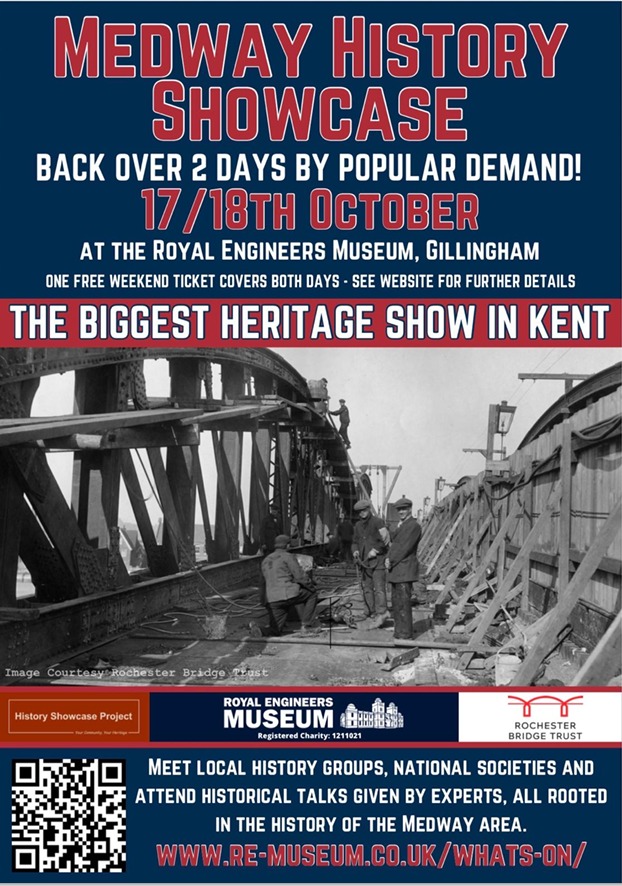
Before that I want to mention more of the speakers and their topics who will be presenting at the Medway History Showcase 2026 on the weekend of 17 and 18 October at the Royal Engineers Museum, Gillingham, Peter and Jane Joyce having put together a great programme. Consequently, at this free event you can go along and hear a diverse range of free talks, including (in alphabetical order): Robert Flood – Chatham Intra, the part of Chatham called Rochester; Martin Hubbard – Shorts Bros; Jason Mazzocchi – oyster disputes in early modern north Kent coastal communities; Andy Robertshaw – Eye deep in hell: The reality of trench warfare; me – Eastgate House, Rochester, and Alison Young – The Brook Theatre.
Keeping with the Medway towns, this coming Wednesday (30th September), Jackie Eales has organised a one-day conference on ‘Strangers, Silk Weavers and Citizens: the Lives of Walloon and Huguenot Immigrants to England 1575 to 1800’. This will be held at Rochester Huguenot Museum and in part stems from Jackie’s funded project on the Strangers who came to Kent in the 16th and 17th centuries as religious refugees.
Additionally, it is good to be able to record that Diane Heath was one of the speakers on Friday at the Maison Dieu in Dover as part of the ‘William Burges and the Maison Dieu: Reawakening a Gothic Fantasy’ conference. As many blog readers know, Diane is an expert on medieval animals and in her paper, she explored the fabulous Neo-gothic beast designs of William Burges. In particular, she examined their symbolism and meaning, focussing on those portrayed in the stone carvings, stained glass and decorative scheme at the Maison Dieu.
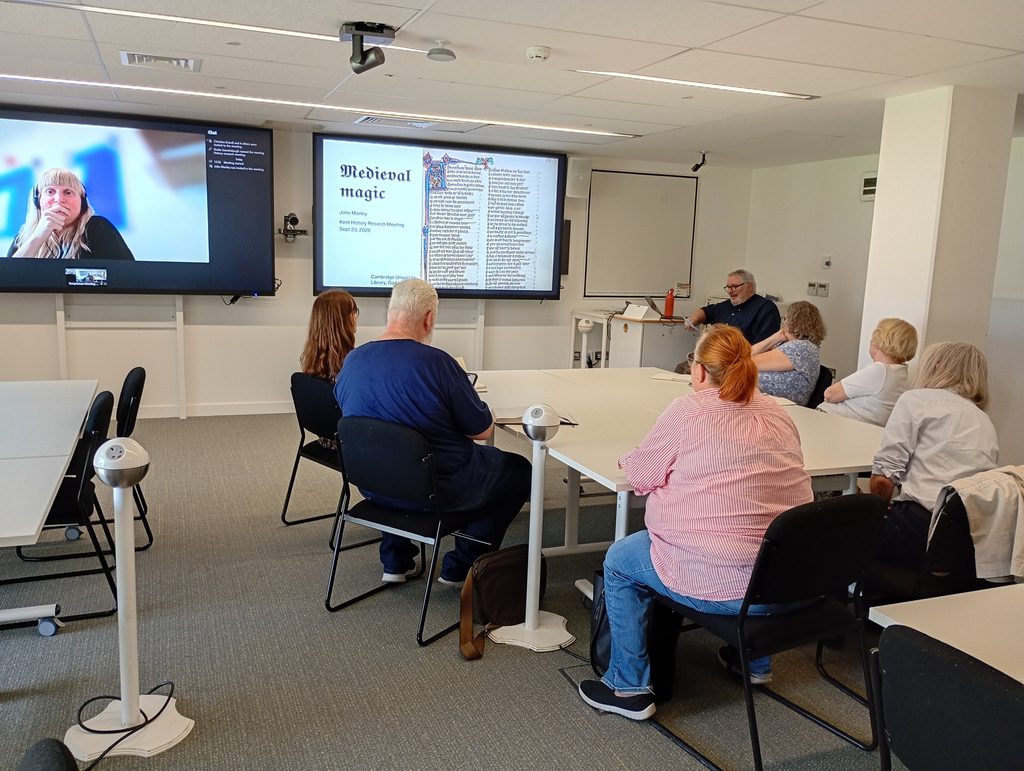
Now to John’s presentation and for his doctoral research, he is exploring clerical concerns and writings on magic in Anglo-Norman and Middle English texts on pastoral care (or pastoralia) following on from the directives of the 4th Lateran Council in 1215. He became interested in this area after working on Robert Mannyng’s Handlyng Sinne. These Anglo-Norman Miroir and Middle English Mirror texts of sermons were to provide parish clergy with the means to steer their parishioners away from a whole range of sinful activities that included the use of magic through a combination of education and punishment – carrot and stick. John took his audience through a whole range of magical practices as described in the sermons, as well as showing how the various texts related to each other, there being a remarkably good survival in several university libraries and other archives. Interestingly, as he said medieval clerical responses to magic were far less draconian compared to those of Protestant society, especially those of the 17th century, albeit it was understood that such activities contravened the First Commandment.
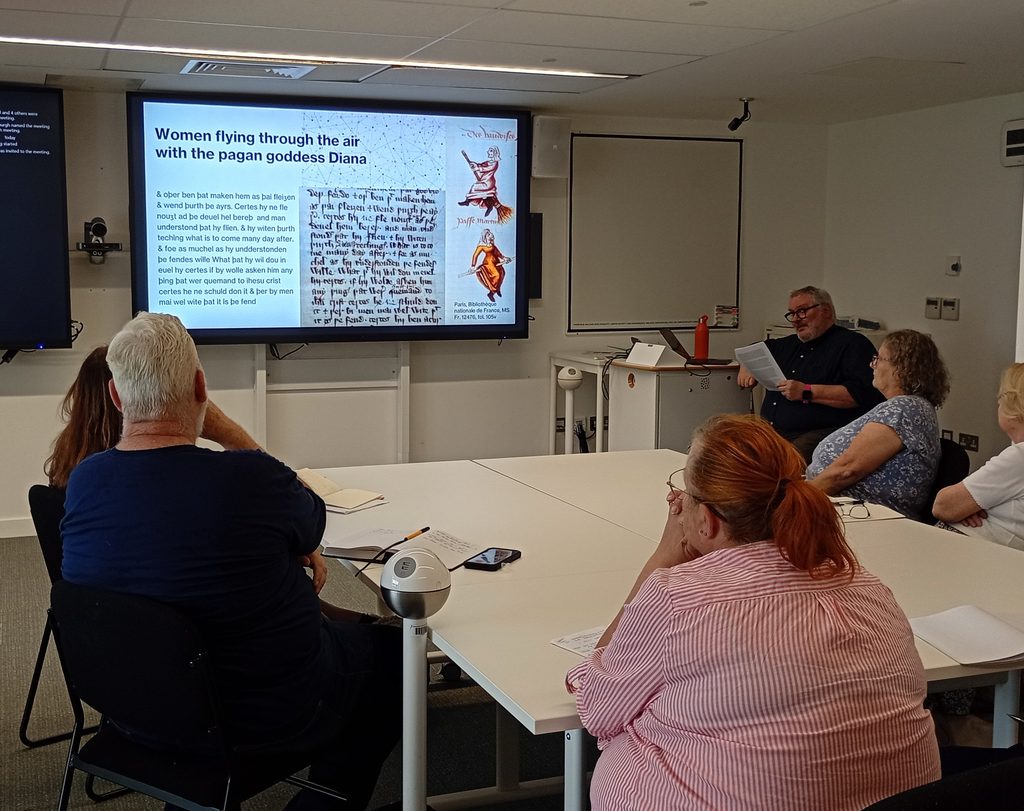
This was a fascinating exposition on these texts and contemporary responses to them, as far as they can be uncovered. Consequently, John’s presentation drew numerous questions and comments from his audience, including matters relating to responses to late medieval heresy in the form of Lollardy and how these texts developed as a result. Another point of considerable interest the drew comments was the way verse was used because poetry was similarly the methos used for texts about corruption of royal officials. Thus, this was another very successful informal research seminar and next month it will be Amilia Gillies’s presentation to the group.
Turning very briefly to my talk to an audience at St Mildred’s church on Friday, I was looking at the similarities and differences among the cults of three medieval Canterbury archbishops: Becket, Winchelsey and Sudbury. Hence, we have one canonised in the late 12th century and two from either end of the 14th century neither of whom were canonised (albeit Winchelsey was closer to making it). Nevertheless, in terms of longevity today Becket is not alone because Sudbury, too, continues to be remembered and commemorated annually in Canterbury.
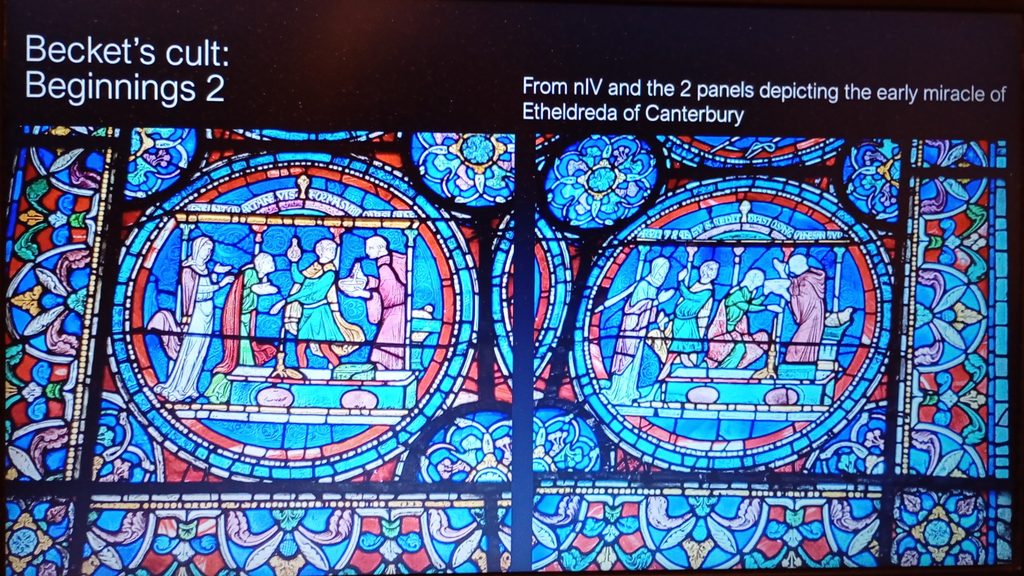
Furthermore, we explored the different factors that led to the development of such saintly cults, such as biography, manner of death, occurrence of miracles, popular appeal and patronage and a suitable focus point with miracles being a primary issue. Becket, of course, is known for the major miracle collections made by Benedict and William in the early years following the murder, and we also looked at how some of these are depicted in the windows of the cathedral’s Trinity chapel. As Rachel Koopmans, working with Leonie Seliger and her team at the cathedral’s glass studio have been discovering, the work of the late 12th and early 13th century glaziers is amazing, both in terms of the quality of the workmanship but also matters relating to composition and the portrayal of specific features, including aspects of the city such as one of the gates, possibly the old Westgate, but sadly not St Thomas’ hospital, now more often called Eastbridge Hospital, a stunning medieval building.
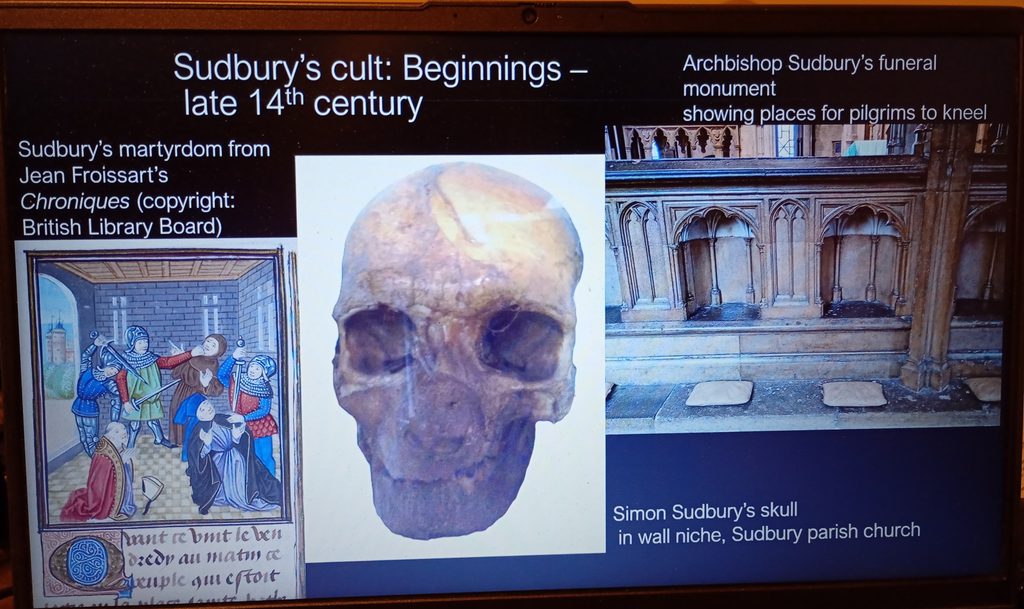
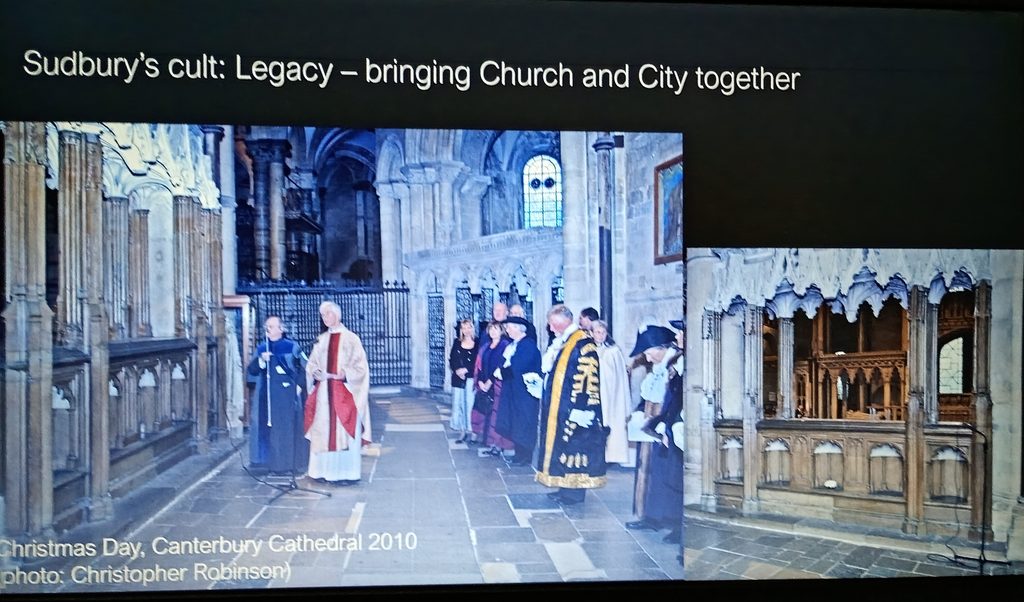
We also examined how these different cults had fared over the centuries and why some had been more successful than others. For it is interesting that it was not solely Becket’s shrine that was obliterated during the early period of the Reformation, Sudbury’s effigy received the same treatment a few years later and Winchelsey’s tomb similarly under Edward VI. This brought us to thinking about the legacy of these cults and their meanings in today’s world, a fascinating commentary on belief, communities working together, legacy and heritage.
I finished by exploring the history and heritage of the three Becket birds, which I think could equally be called Canterbury choughs, but that’s for another time. However, just to say I had a good number of questions from a local through to an international audience – Canada to South Korea, as Rachel reminded me this morning! Then the audience members enjoyed wine and snacks, which are a feature of these events – thanks Tessa, Graham and others from St Mildred’s, and it is great to know that the evening raised £600 towards church funds for this gem of a parish church.
Categories
academic Blog Posts Canterbury Events Heritage Kent Lecture local and regional history Middle Ages News Stuarts TudorsBack