
Cinque Ports conference – Maison Dieu, Dover
Now to Dover, and last Friday and Saturday (26 and 27 June) was the Cinque Ports conference at Dover’s Maison Dieu – thereby keeping the hospital theme going and the Earl of Warwick also got a mention. However, before I start, I should like to thank the conference organisers, especially Stuart Bligh and others from the Maritime Special Interest Group, Jon Iveson and colleagues from Dover District Council, the mayors and officers from the Cinque Ports, and Martin Crowther with his team of volunteers at the Maison Dieu.
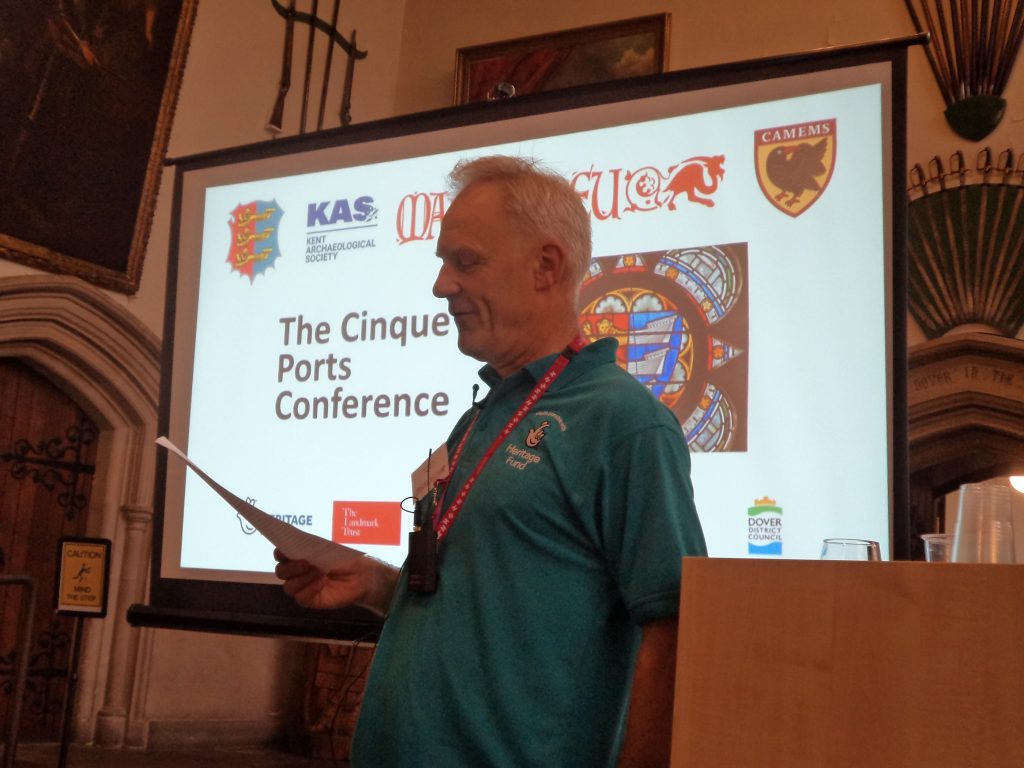
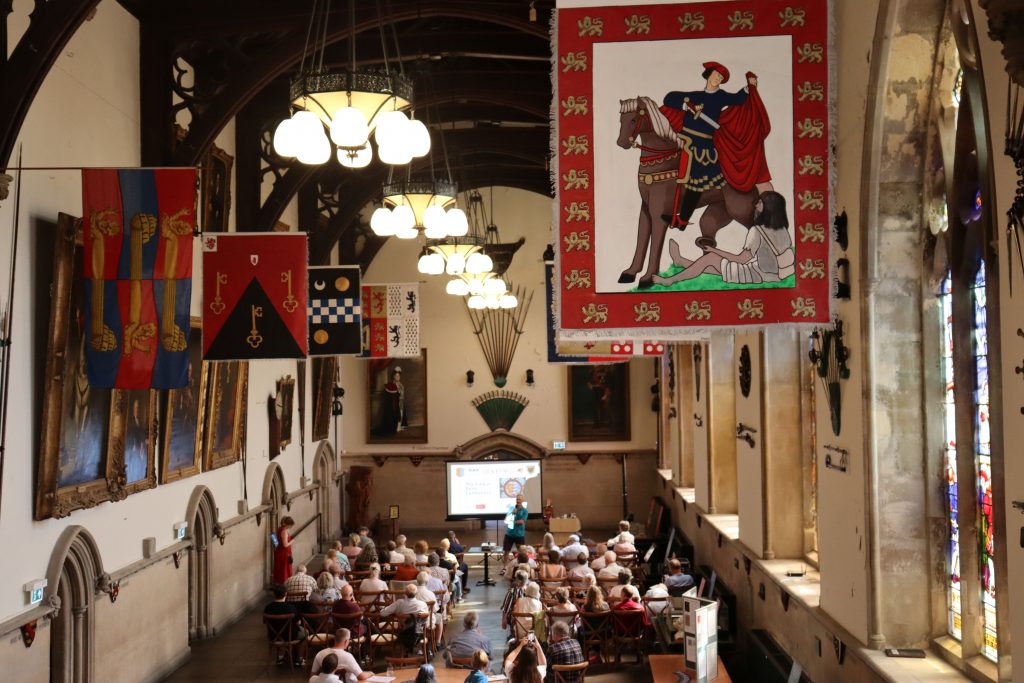
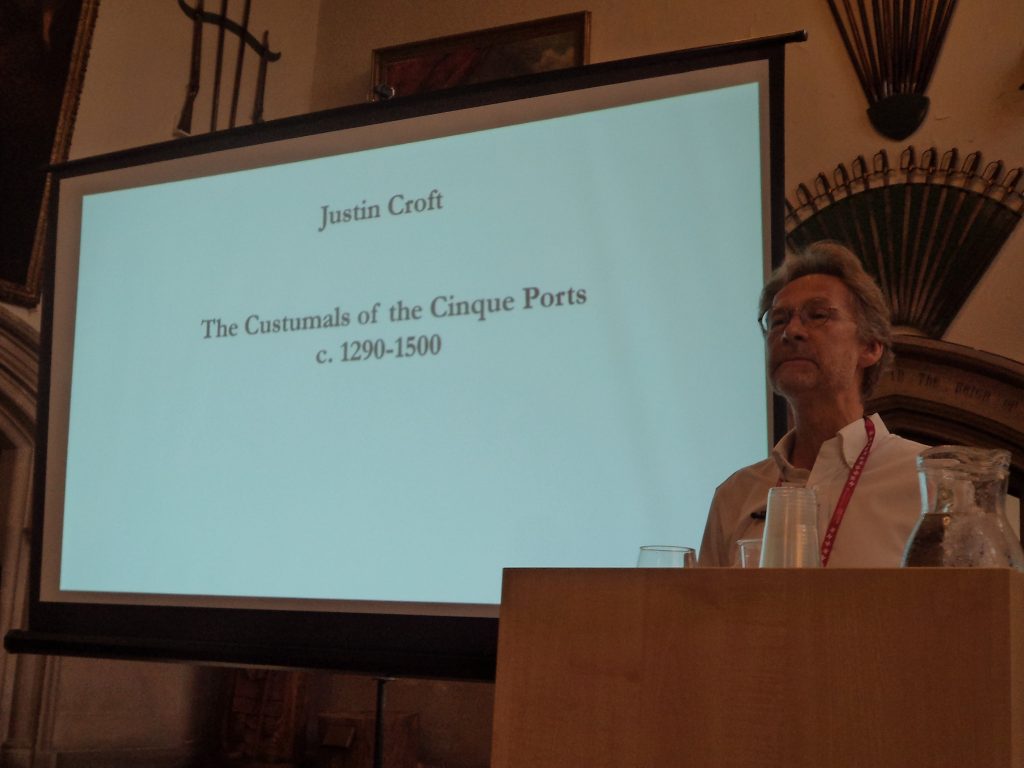
Martin opened proceedings by welcoming his expectant audience to Session One, and I followed Dr Justin Croft’s fascinating presentation on the medieval Cinque Ports custumals. This was a rich exploration of the significance of these as crucial documents in the battle for autonomy, so I’m just going to mention a couple of points briefly. Firstly, the Ports understanding of the importance of the written record and how such texts could be deployed by their town clerks, thereby demonstrating how they were in the vanguard of medieval literacy. Secondly, that this emerging book culture was a shared endeavour, and thus can be viewed as a reflection of their valuable and valued long-standing confederation.
Taking this second point, as the other presentation in this session on ‘Administration’, I moved from the custumals to the churches to explore how the civic authorities in the Ports had deployed sacred space, as well as specific objects such as chests, to establish and maintain their authority. Thus, we looked at civic elections, the holding of town courts, the confederation’s own court of Brodhall, and the more contested Lord Warden’s court of Shepway. Taking these ideas, I moved on to civic hospitals, a special feature of the Cinque Ports, and how through the governance of these charitable institutions the leading citizens demonstrated their collective social responsibility to those inside and outside the town.
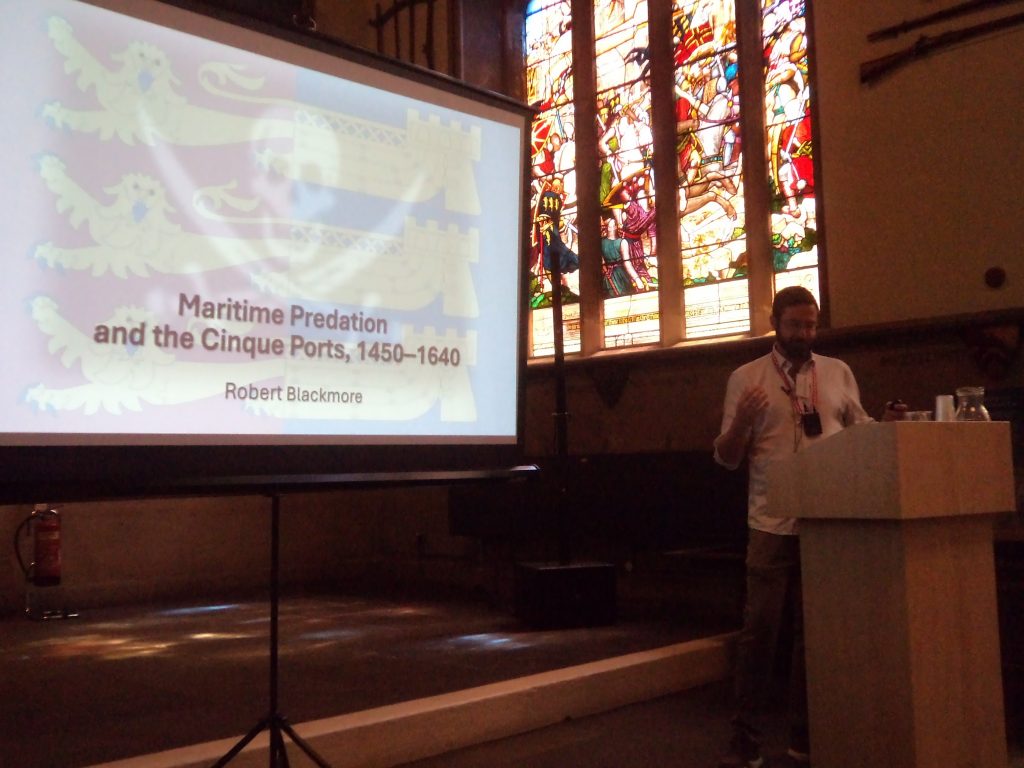
After coffee we reconvened for Session Two: Administration of the Cinque Ports 2 to hear two papers from the editors of Kent and Europe, 1450–1640: Merchants, Mariners, Shipping and Defence (2025). Firstly, Dr Robert Blackmore offered an intriguing presentation on the activities of those we might label as pirates, yet who at times and in many ways were operating in the early modern ports in co-operation with royal officers, town officials, the freemen and the wider maritime communities. Indeed, this might be seen as a continuation of earlier activities for as far back as Matthew Paris in the 13th century, he had commented on the Portsmen’s willingness to act ‘in the manner of pirates’. In part, too, such activities were a response to the large quantities of seaborne trade that was taking place on the Ports’ doorstep, and, as Rob explained, when there were economic difficulties at home, mariners and others saw the advantages of such ‘windfalls to be had from the sea.’
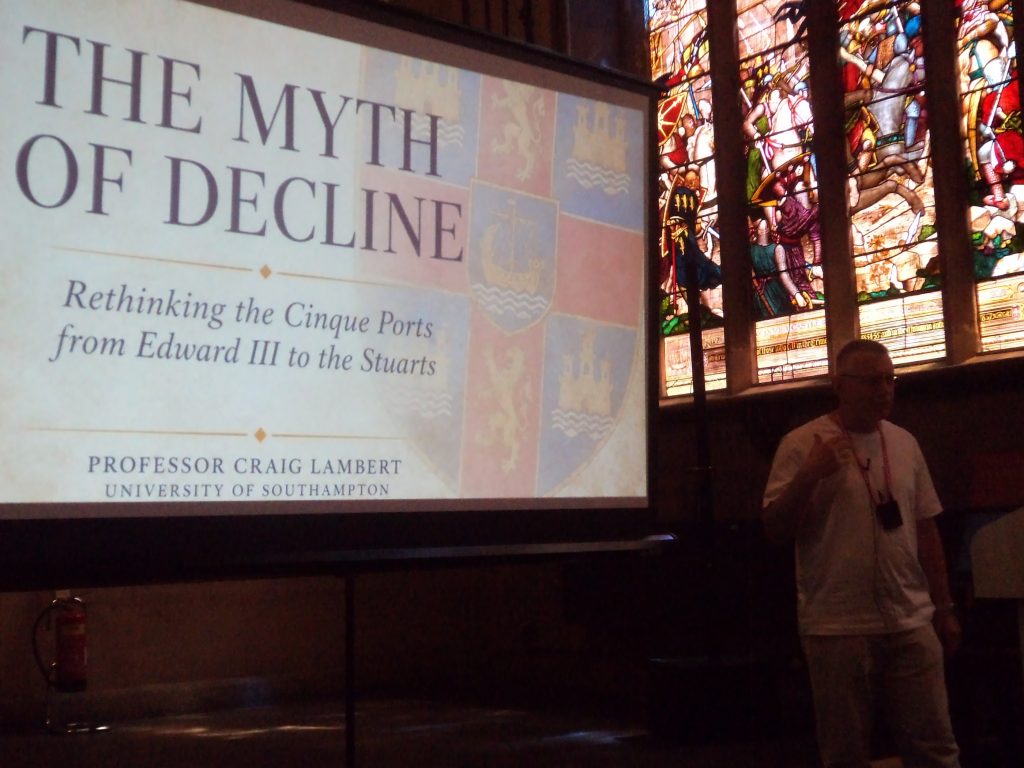
Rob’s colleague at the University of Southampton, Professor Craig Lambert followed and he challenged the oft-quoted idea that after the 13th century the Ports were in a downward trajectory. As he discussed, this is the wrong focus and instead he has been examining the quantitative data on naval requisitioning between 1320 and 1453, as well as the records of commercial activity up to 1630. Taking these figures, he considers that the Cinque Ports continued to be integral to English maritime warfare, and equally significant, the tonnage of the fleets at some Ports increased during the 16th and 17th centuries. Like the previous session, this generated lots of questions and discussions which continued into the lunch break.
After lunch attendees could go on one of a choice of 4 tours, which proved very successful, and then all returned to the Stone Hall for Session Three: Defence and the Royal Navy 1 chaired by Jason Mazzocchi. Turning back to the Middle Ages, Dr Susan Rose explored the roles played by the ships of the Cinque Ports during this period. In particular, she looked at how their value to the Crown meant that they were deployed in different ways in response to changing royal policies and strategies. This meant in broad terms they were rarely employed in naval warfare, but they were at times hugely valued for the logistical support they could provide for land armies in France and elsewhere.
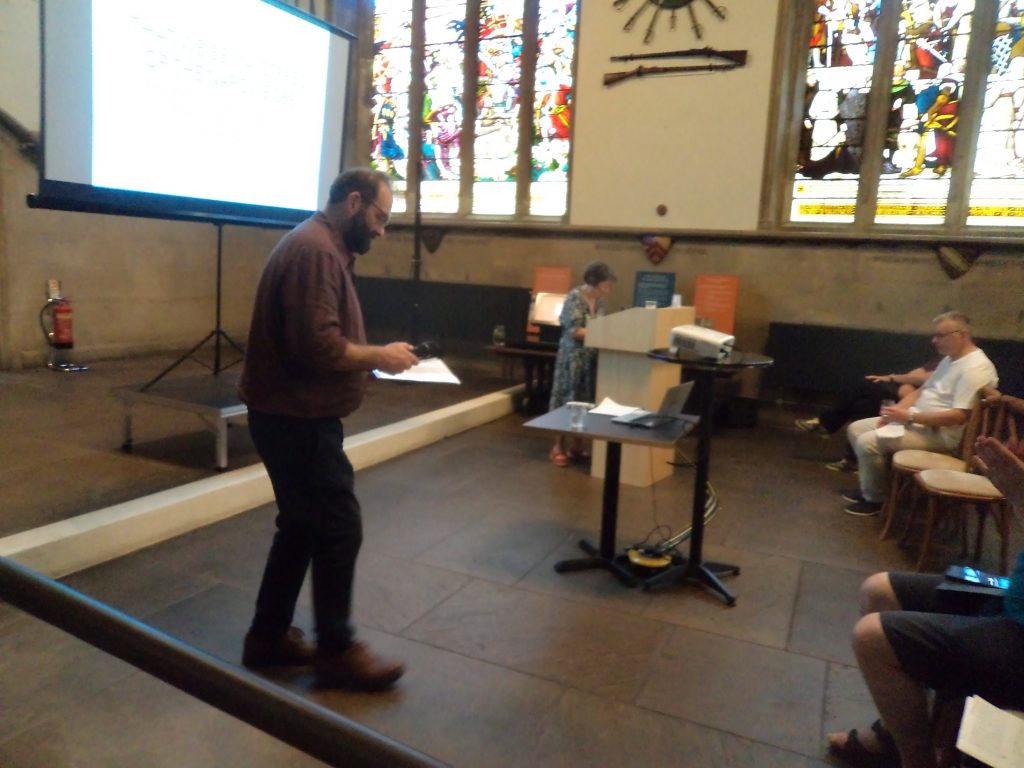
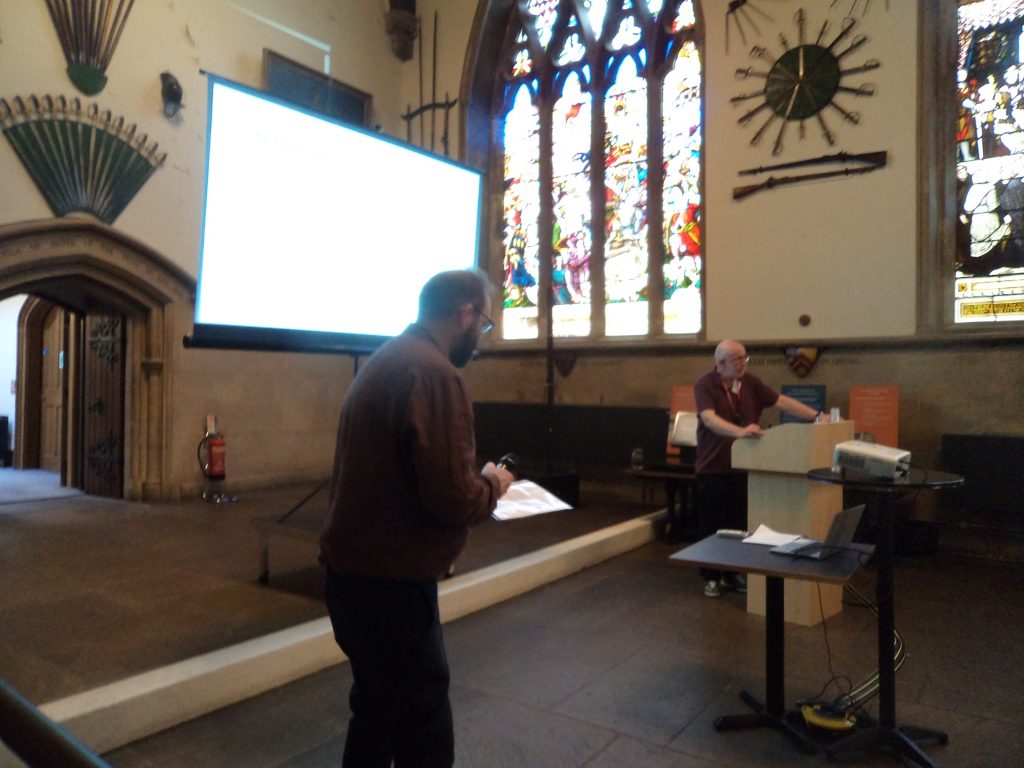
The second presentation in this session was by Dr Chris Ware who highlighted the point that 17th century defence of southern England involved an important mix of ships, forts and fixed lines, yet during peace time maintenance was often minimal, both in terms of manpower and structures. Yet, as he discussed, this did improve towards the end of the century and in the early 18th century attempts to stop the smuggling of wool similarly meant matters improved.
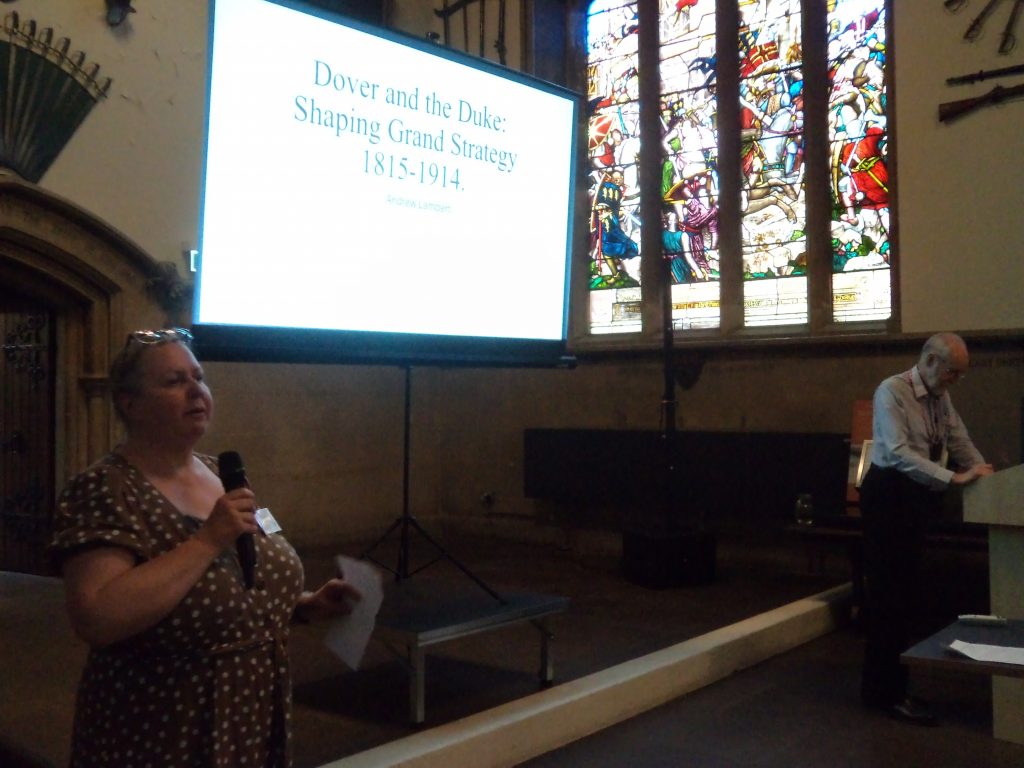
This interesting session fitted extremely well with the final session of the day, which was chaired by Kieron Hoyle, where we moved into the 19th century and Professor Andrew Lambert’s assessment of the British Grand Strategy in which the Duke of Wellington put Dover at the forefront of this strategy. While Wellington is normally seen as an army commander, Andrew showed how he was thinking much more broadly, seeing Dover as a defensive position, the base for sea control, and especially interesting, the departure point for a British Expeditionary Force. This coincided with the growth in steam ships, and such innovations and their consequences were equally considered.
Another aspect explored in this session was victualling for the Navy, and Dr Andy Plumbly explored the naval brewhouse at Dover as a case study. The Maison Dieu’s transformation from pilgrim hospital to victualling yard had begun in Henry VIII’s reign but gathered considerable pace from the 1680s. The brewhouse was one of several operated by the Victualling Board, and Andy tracked its history, as well as considering Dover in the context of naval beer supplies as a whole. The session too, generated questions and discussion, this part of the day concluding with my closing remarks, which I kept short because it was still exceedingly hot and it seemed sensible to give people a chance to get some fresh air before the evening reception.
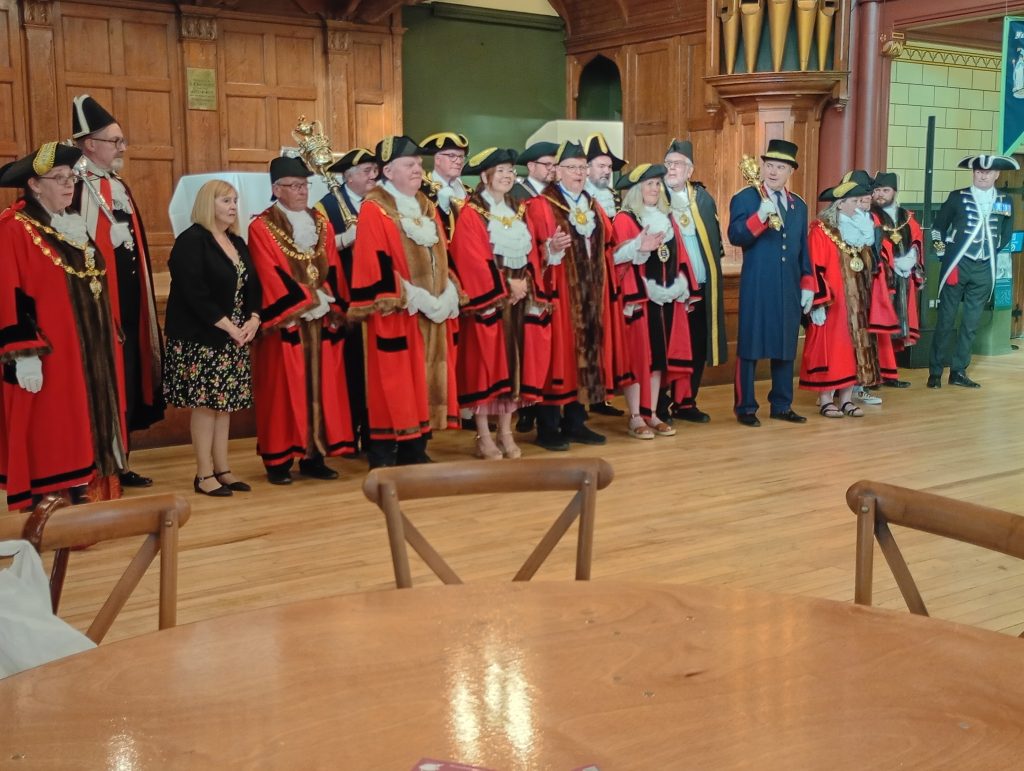
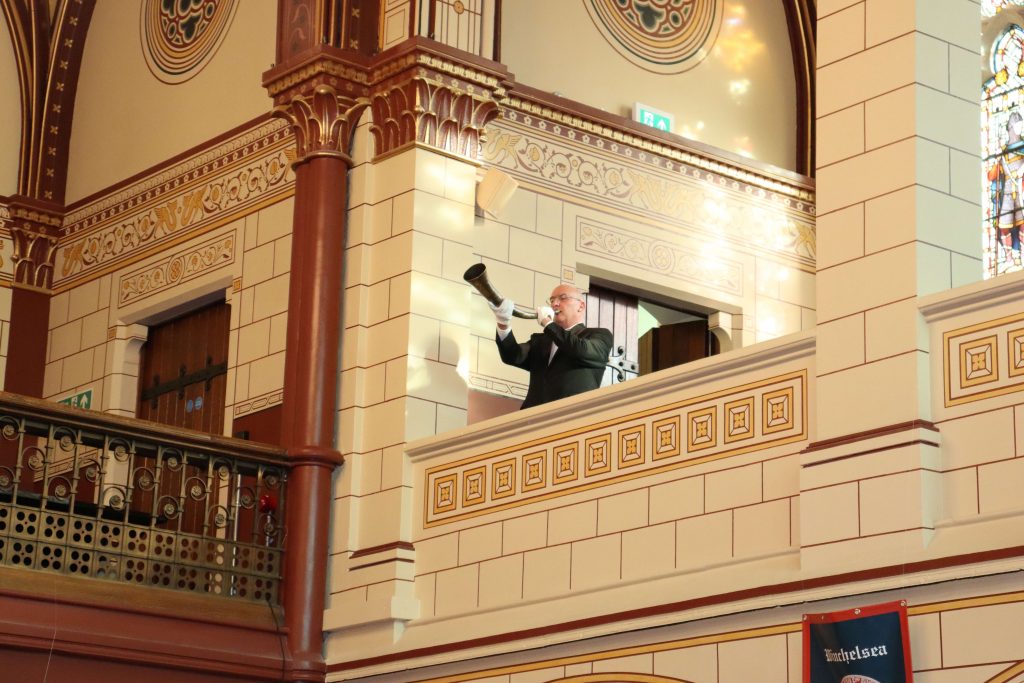
We learnt later that the collective term for mayors is a chain, and those at the Evening Reception were treated to the blowing of the Dover moot horn – amazing, and an equally spectacular procession into the Connaught Hall by almost all of the Cinque Ports mayors and other officers. This was an excellent occasion and a fitting end to the conference’s first day.
Day two opened with Martin again chairing Session One: Cinque Ports Maritime Communities 1 where I stood in for Dr Gillian Draper to deliver her paper on ‘People and Places: the Cinque Ports, London and other connections’. Having provided some background on the make-up of the Ports, Gill deployed two case studies to explore how outsiders used the privilege of becoming a freeman there to advance themselves and their families through trade, office holding, property acquisition and marriage.
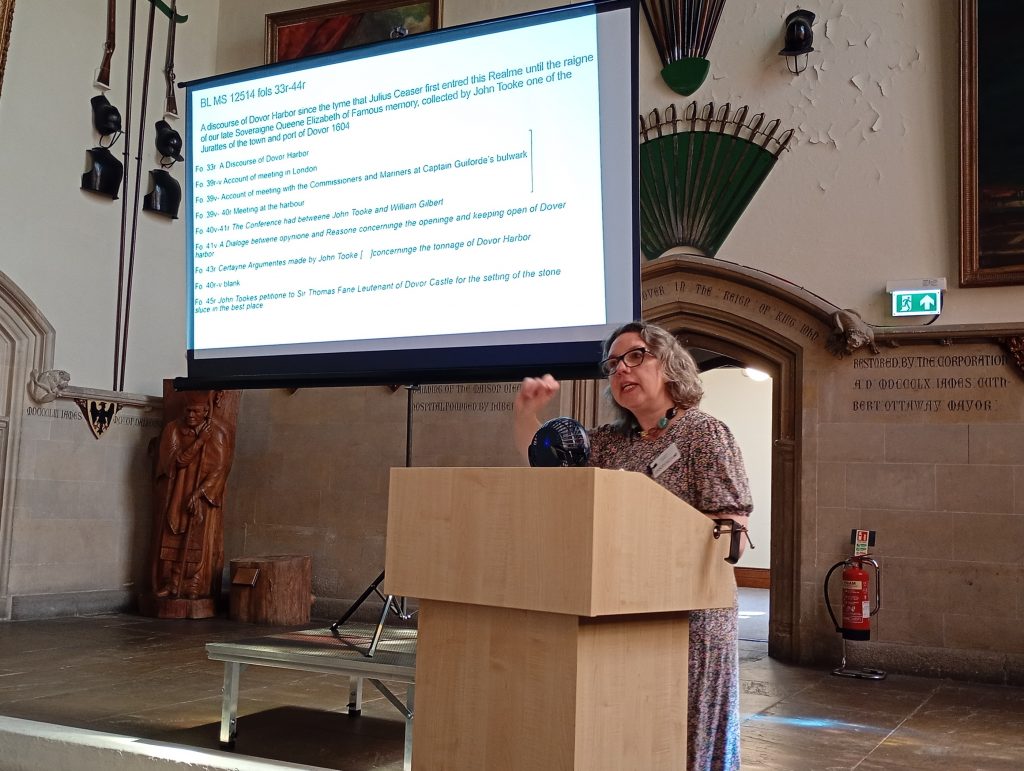
The second paper in the session was given by Dr Claire Bartram, who explored John Tooke’s Discourse of Dover Harbour, a diverse collection of writings that chart Tooke’s involvement in the new harbour works either side of 1600. Claire employed an innovative approach by seeing his work as a script because she thinks Tooke, too, perfectly understood the dramatic potential of his writings as a way to reinforce his standpoint. Furthermore, as she discussed, this she considers underlines the continuingly high bureaucratic expertise of town officials in the early modern period. Thus, the two papers dovetailed beautifully and generated a range of comments and questions.
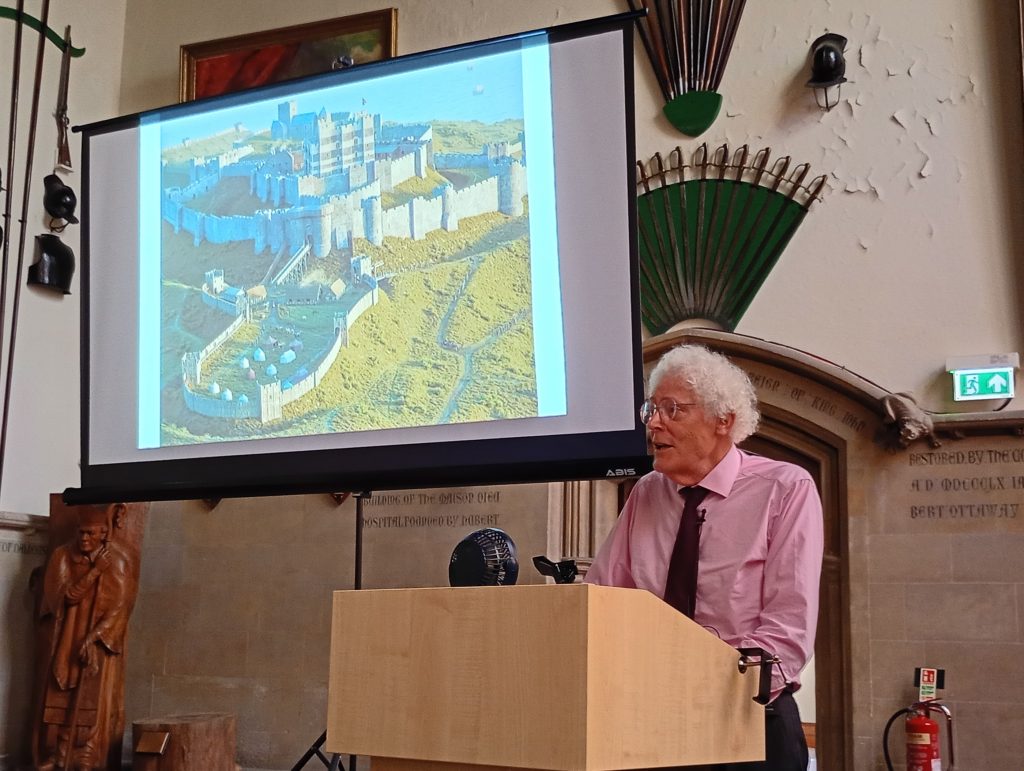
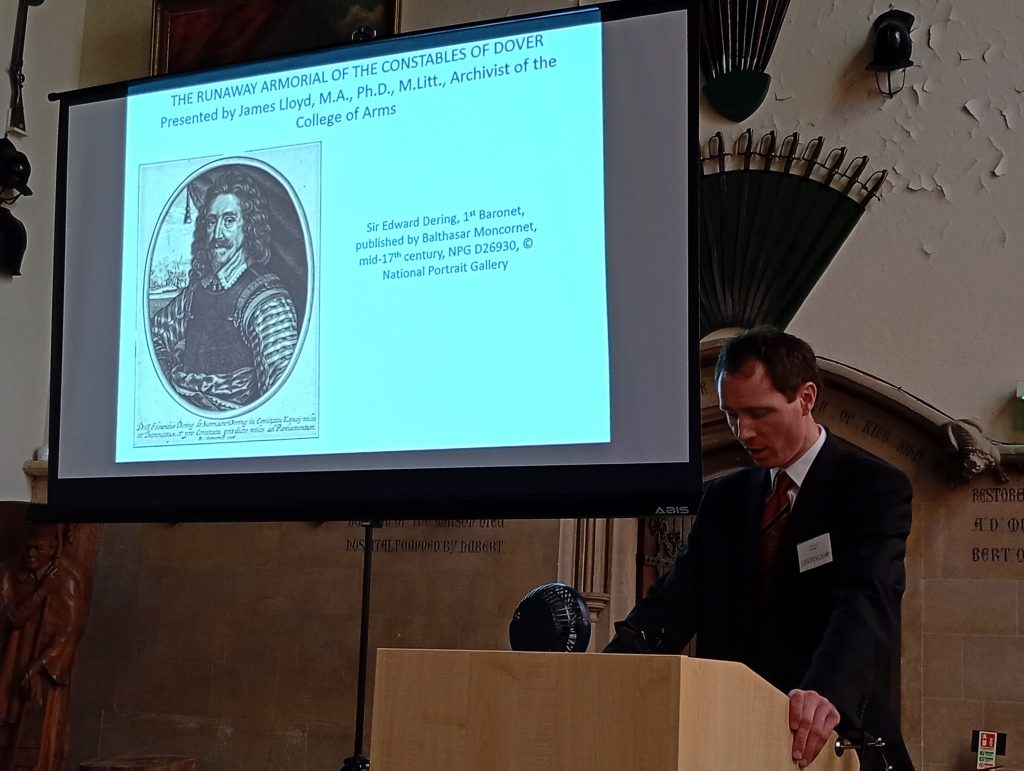
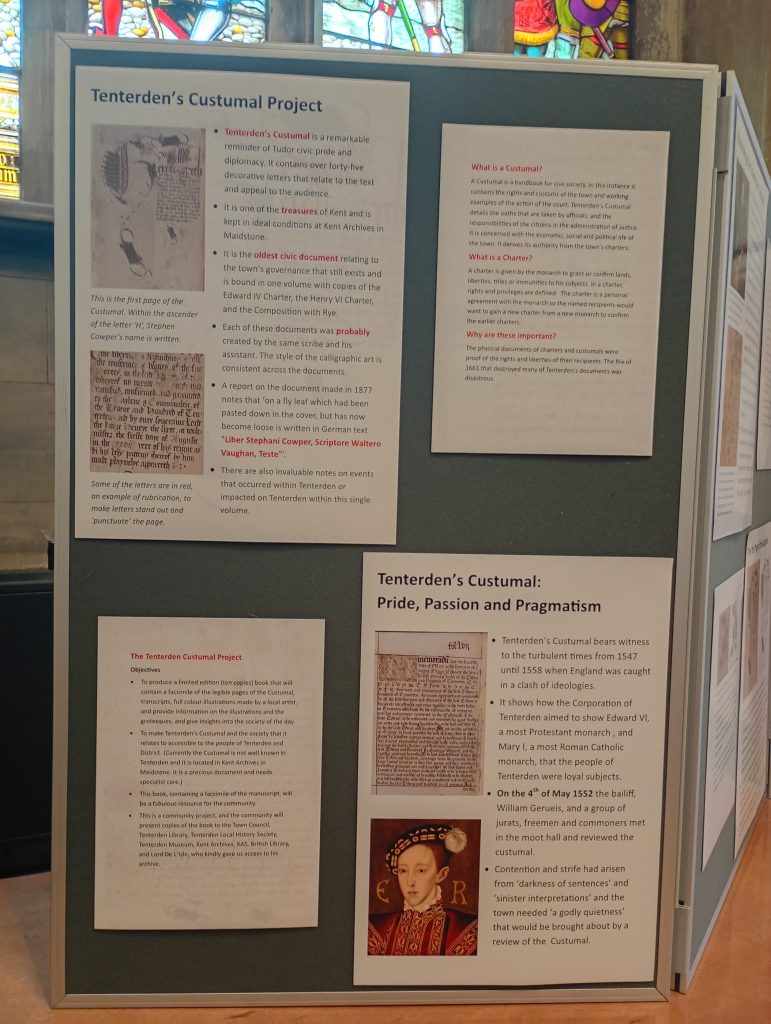
Session Two under the same heading looked at aspects of the lives of two Constables of Dover. Firstly, Professor David Carpenter provided a thoughtful assessment of Hubert de Burgh, who was involved in many of the momentous episodes in the first half of the 13th century, and whose career as a leading magnates took in exceptionally high points, but equally some disastrous episodes. David was followed by Dr James Lloyd who took a different but complementary approach by examining the Cinque Ports Custumal and its predecessors in terms of the early 17th-century fascination and desire to provide coats of arms for all the Constables of Dover Castle. Such an interesting session drew a broad range of questions, and having the Dering Manuscript on display at the back of the hall was an added bonus. The organisers were delighted that Sarah Stanley and Dr Mark Bateson of the Kent Archives Service had kindly agreed to come along to display a few Cinque Ports items and to talk to attendees about them during both days of the conference. In addition, Sue Hatt had brought along a display about the Tenterden Custumal project, which also sparked plenty of interest.
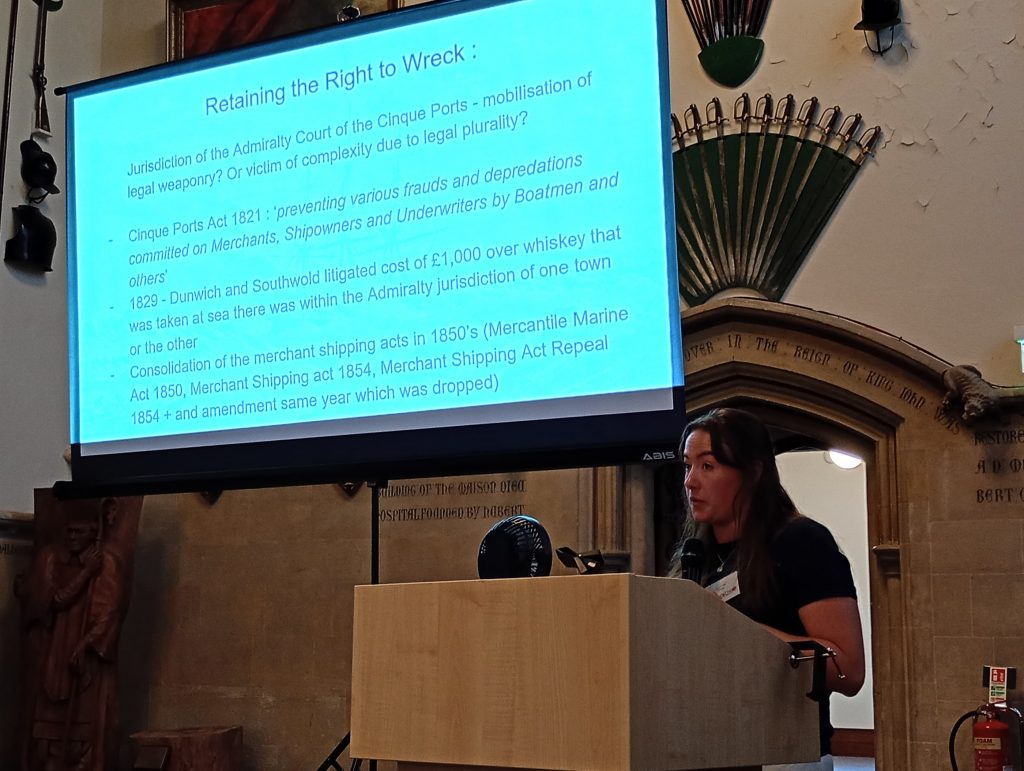
Lunch was followed by tours and then it was the last session of the conference. Session Four was chaired by Catherine Holt who introduced Daisy Turnbull. Daisy is nearing completion of her doctoral thesis on shipwrecks and the practice of wrecking. For the purposes of the conference, she confined her paper to the Cinque Ports and the culture of wrecking, as well as also touching on smuggling, another pertinent maritime activity.
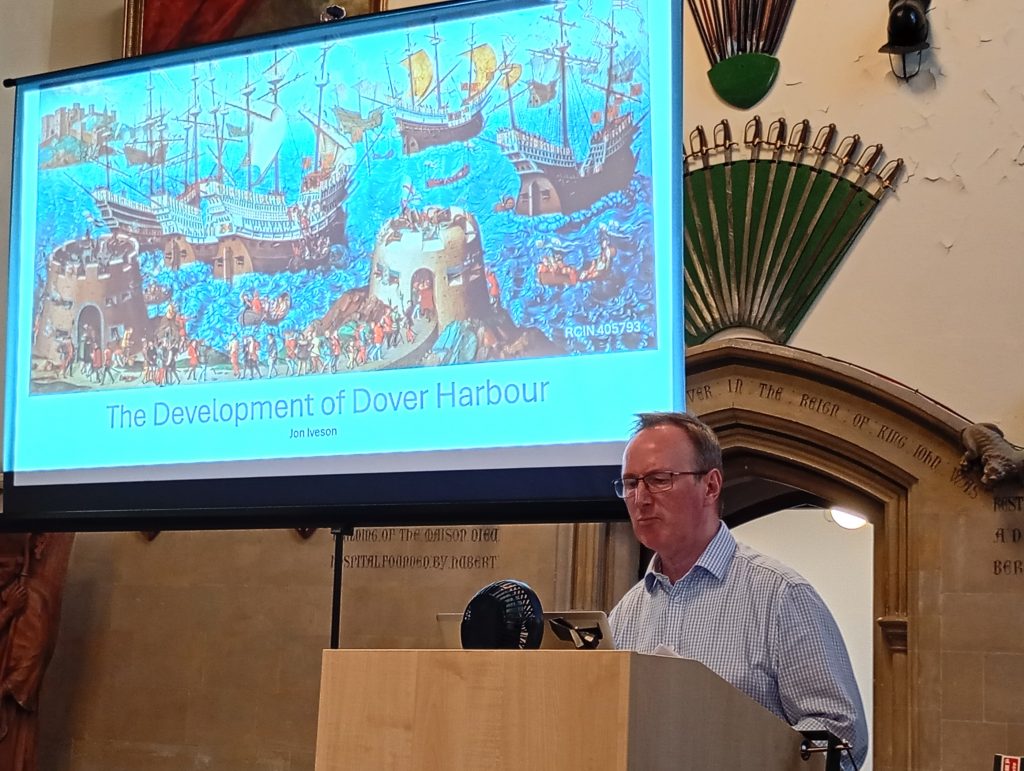
The final presentation was given by Jon Iveson who used contemporary maps to trace the development of Dover harbour during the Tudor period. These maps and plans are fascinating, and Jon took his audience through the successes and failures during this critical period in Dover’s maritime history. Moreover, he showed how mapmaking had developed over the period which saw several innovative techniques introduced, as well as demonstrating how useful such maps can be in tracing specific building.
Both presentations generated questions and comments and after these, Martin drew the conference to a close, the final act being the sounding of the moot horn, a fitting end to a brilliant conference, so thanks to everyone involved and, as always, that includes those attending and who had braved the heat in this record-breaking year!
Categories
academic Blog Posts conference Early Modern Events Kent Middle Ages News Stuarts Tudors VictorianBack