
Lots of exciting Kent MEMS events in 2026
I’ll come to some updates on various planned events in 2026, but I thought I would mention that it is excellent to see word is getting out, which means we ie CAMEMS are picking up bookings for the Canterbury Medieval Weekend 2026. Many thanks to those who have booked thus far, and if you don’t know about these annual History Weekends, please do explore the website. It has details of all the talks, useful information about the venues, car parking details, the provision of a bookstall throughout the Weekend, and matters relating to where refreshments can be purchased. This is the link: Canterbury Medieval Weekend 2026 and Ben Cornwell has done a brilliant job putting it all together.
Now to some of the other events which will be happening involving some of the Kent MEMS community, CAMEMS and other organisations, primarily from east Kent. Details are being worked on, which means this is mainly a ‘save the date’ notice and far more details will be available soon. Working chronologically, I met up with Dr David Rundle and Karen Brayshaw, head of Special Collections at the University of Kent, last week to work on the format of a ‘History Study Day’ in Special Collections that will take place on Saturday 14 February. The idea being to showcase some of the antiquarian and other books on Kent history held in Special Collections and the main library holdings, as well as some of the original documents that have come into Special Collections as deposits from local historians and others who had worked on Kent. Having had the chance to have a preparatory look at the considerable holdings in the basement, I’m sure participants will have a great day. More details very shortly, but just to say the day will include a session on early modern Kent maps.
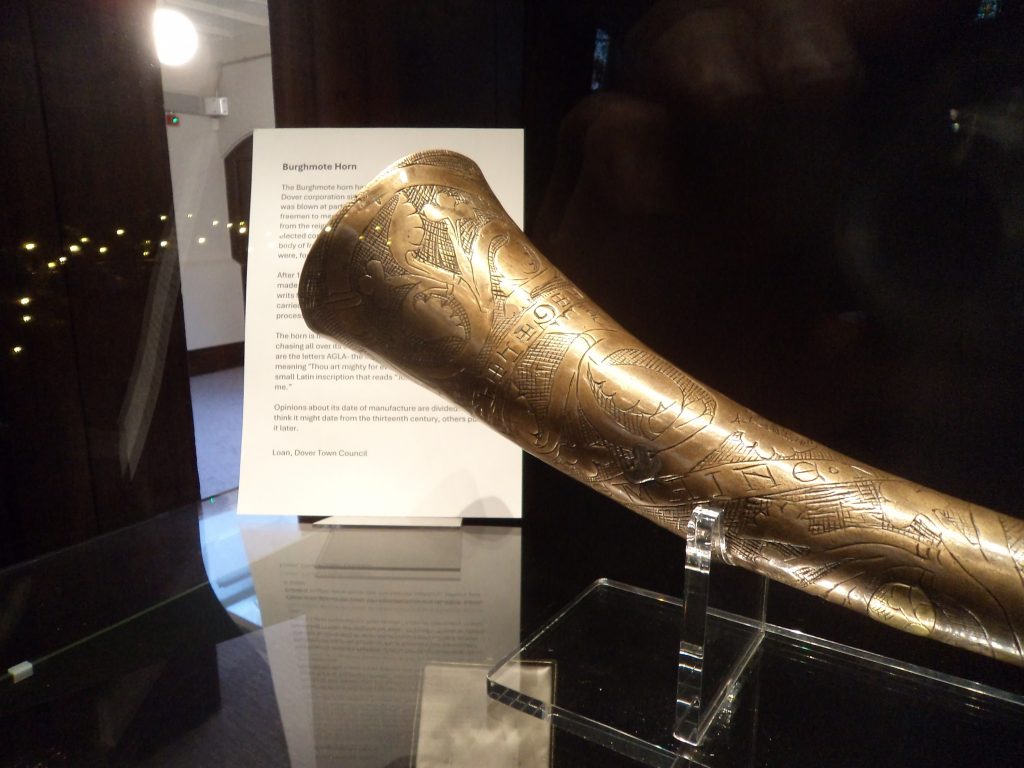
Moving away from Canterbury, the next event that will involve members of the Kent MEMS community is ‘Dover at Night’. The CKHH was there last year at St Mary’s church (and St Edmund’s chapel) and on Friday 20 March 2026 between 5 and 9pm, some if not all of the same people, plus potentially a few more, will either be at the church again or at the Maison Dieu. Having attended an online meeting last week, it is good to know that the theme in 2026 is ‘Dover’s Past, Present and Ecological Future through the Maison Dieu’. Due to my own research interests in the medieval history of the Maison Dieu, as well as Dover more broadly, and Kieron Hoyle’s doctoral project on the Maison Dieu in Tudor times, thereby bringing in its and the town’s development in terms of the new harbour works, the Royal Navy and its role as a victualling yard, it would be great to be there, but either venue will be fine. Again, more information soon, but just to say it was very well supported last year and it would be brilliant if 2026 is even bigger!

Of course 1st to 3rd May will bring the Canterbury Medieval Weekend 2026, and then later in the month on Thursday 21st it will be the annual Renaissance Lecture, which will be given by Professor Catherine Richardson, formerly of the University of Kent and now of the University of East Anglia. Again, once I have more details, I’ll let you know, however I’m sure Catherine’s lecture will be fascinating. Sadly, I shall have to miss it because I shall be giving a talk to Bridge Local History Society on ‘A Gateway County: Migrants in 15th-Century Canterbury and Kent’ that evening.
Once we get to June, it will be time for the now well-established Kent MEMS Fest, which is likely to be on Friday 19th and Saturday 20th. This annual feast of medieval and early modern scholarship mostly comprises presentations by postgraduates and some early career post-docs, as well as some workshops. Again, there will be more on this in due course.
Staying in June, we’ll be back in Dover, specifically Friday 26th and Saturday 27th June for a ‘Cinque Ports’ conference which is being organised by Dover (Museum and Maison Dieu) and the Kent Archaeological Society (KAS) Maritime History group. It will be held at the Maison Dieu, being part of the celebrations to mark its ‘re-awakening’. Again, members of the Kent MEMS community are associated with both and therefore Kieron and I have been involved in the preparatory meetings. The intention on the Friday is to have sessions on ‘Administration’ and ‘Defence and the Royal Navy’, with Saturday reserved for ‘Maritime Communities’. Among the confirmed speakers so far are Professors Craig Lambert, Andrew Lambert and David Carpenter, as well as Drs Susan Rose, Justin Croft, Claire Bartram and me. Additionally, there will be tours of the Maison Dieu, a fascinating building, so please do keep these dates and it will be possible to come for either day or both.

Then to early September when Dr David Rundle and I will be hosting the annual Fifteenth Century conference from Thursday 3rd to Saturday 5th. The call for papers has now gone out: 2026 Conference – Call for Papers – The Fifteenth Century Conference and we have a few speakers in place already. This is another exciting opportunity for the Kent MEMS community to get involved and hear presentations by leading historians of the period. Moreover, the intention is also to provide a chance for early – mid stage doctoral students to showcase their research through posters. On the Saturday there will be an optional, extra trip to Sandwich which has been called ‘the completest medieval town’.
Now this is not everything that will be happening this academic year, but hopefully gives a flavour of the range and variety of the events in which CAMEMS and members of the Kent MEMS community will be engaged in.
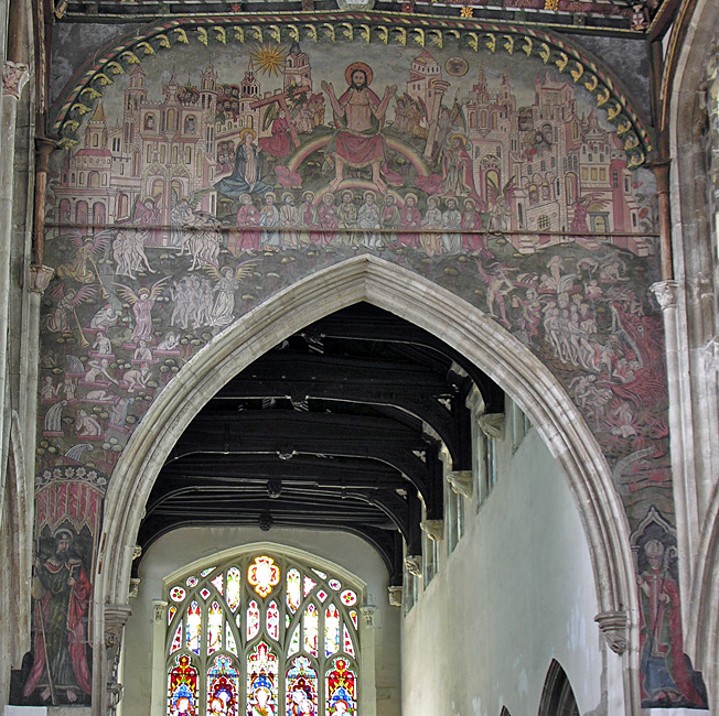
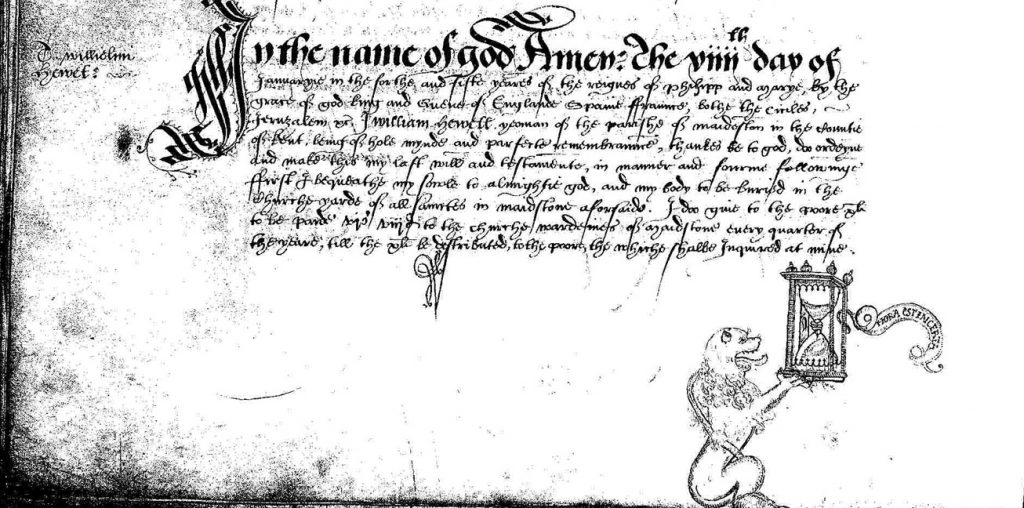
Finally, I thought as a follow up to the Southern History Society conference on ‘The poor and the parish’ that I reported on a couple of blogs ago, I would mention that I will be back in the archives doing more on wills from the Canterbury diocese. However, for the purposes here, I’ll just provide a couple of examples to illustrate what I discussed at Winchester in relation to Canterbury can similarly be seen for Maidstone. Thus starting pre-Reformation and the last chance whereby testators’ articulate provisions for good works, Roger Tylden’s (1502) last charitable bequests included 12d to the fraternity of Corpus Christi which had its own almshouse, 40s on his burying day, on his month’s day and on his 12 months’ day to priests, clerks and poor people, with a further 16d to 4 poor men to pray for his soul and on his burying day to carry him to the church. This is what one might expect concerning late medieval belief, seeing the value placed on good works in terms of lessening time in purgatory and bringing salvation, as exemplified by the Doom or Day of Judgment wall paintings found in many parish churches on the chancel arch above the rood – Crucifixion to Resurrection to Christ in Majesty – see the two rainbows Christ is seated upon at St Thomas’ church, Salisbury, exemplifying the First and Second Covenant.
Ardent ‘Protestant’ testators condemned such ideas, as in the case of John French (1579), whose highly explicit will preamble ends with “… that my synnes are cleane wyped away and forgiuen by the only merits and passion of Jesus Christ my sauior and not for any merites or Workes of myne owne being not so fomurly as once able to thinke a good thought of my self”. Yet the practices linking charity, the poor and the funeral adopted by others in Elizabeth’s reign appear remarkably similar to that of a century earlier, albeit the belief system had changed. For example, John Fowe, clothier, in 1584 intended that 40 poor people on the day of his burial at the discretion of his executors should receive 10s, a charitable bequest that Roger would have seen and endorsed as highly appropriate, albeit for different reasons, and it is this mix of continuity of practical actions and change of ideology and belief that is, I think, very interesting concerning cultural issues across the Tudor period.
Indeed, in some ways such charity, although in terms of the provision of education, will feature in the next blog because I’ll be able to report on a trip to Gloucester concerning the Crypt School there.
Categories
academic Blog Posts Canterbury conference Events festival Heritage Kent Lecture local and regional history Middle Ages News TudorsBack